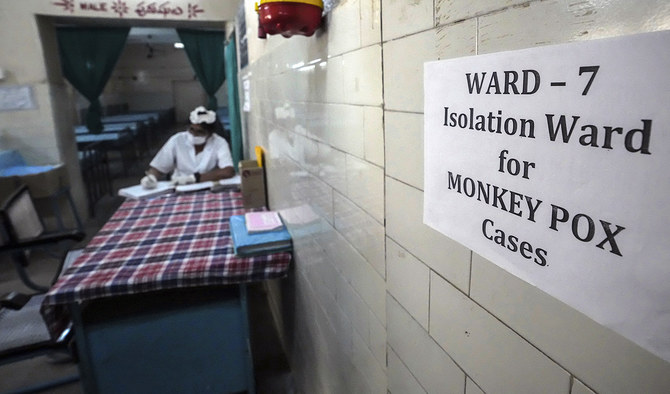

The rapidly spreading monkeypox outbreak represents a global health emergency, the World Health Organization’s highest level of alert, WHO Director-General Tedros Adhanom Ghebreyesus said on Saturday.
The WHO label — a “public health emergency of international concern (PHEIC)” — is designed to trigger a coordinated international response and could unlock funding to collaborate on sharing vaccines and treatments.
Members of an expert committee that met on Thursday to discuss the potential recommendation were split on the decision, with nine members against and six in favor of the declaration, prompting Tedros himself to break the deadlock, he told reporters.
“Although I am declaring a public health emergency of international concern, for the moment this is an outbreak that is concentrated among men who have sex with men, especially those with multiple sexual partners,” Tedros told a media briefing in Geneva.
“Stigma and discrimination can be as dangerous as any virus,” he added.
He said the risk of monkeypox — which spreads via close contact and tends to cause flu-like symptoms and pus-filled skin lesions — was moderate globally, except in the Europe, where the WHO has deemed the risk as high.
Previously, Tedros has typically endorsed expert committee recommendations, but the two sources told Reuters earlier on Saturday said he had likely decided to back the highest alert level due to concerns about escalating case rates and a short supply of vaccines and treatments.
So far this year, there have been more than 16,000 cases of monkeypox in more than 75 countries, and five deaths in Africa.
The viral disease has been spreading chiefly in men who have sex with men in the recent outbreak, outside Africa where it is endemic.
Health experts welcomed the WHO’s decision to issue the PHEIC declaration, which until now had only been applied to the coronavirus pandemic and ongoing efforts to eradicate polio.
“The right result is clear – not declaring an emergency at this point would be a historic missed opportunity,” said Lawrence Gostin, a professor at Georgetown Law in Washington, D.C., calling the decision politically brave.
The decision should help contain the spread of the viral disease, said Josie Golding, head of epidemics and epidemiology at the Wellcome Trust.
“We cannot afford to keep waiting for diseases to escalate before we intervene,” she said.
The WHO and national governments have been facing intense pressure from scientists and public health experts to take more action on monkeypox.
Cases of the viral disease have ballooned since the committee first met at the end of June, when there were only about 3,000 cases.
At the time, the expert group agreed to reconsider their position on the emergency declaration if the outbreak escalated.
One of the key issues driving a reassessment was whether cases would spread to other groups, particularly children or others who have been vulnerable to the virus in past outbreaks in endemic countries.
On Friday, the United States identified its first two monkeypox cases in children.
WHO officials said on Saturday they were exploring the possibility of the virus spreading via new modes of transmission.