

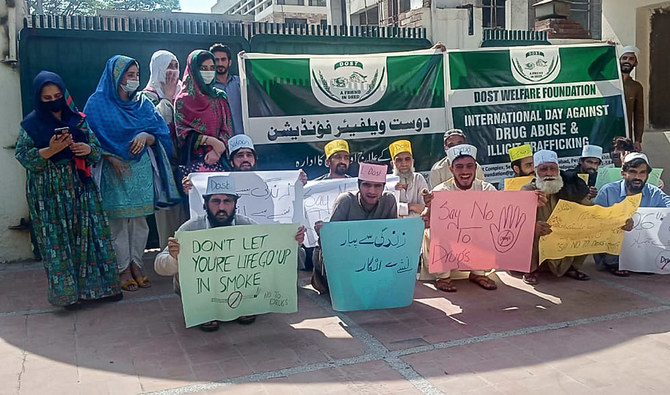

PESHAWAR: The government in Khyber Pakhtunkhwa will expand its drug rehabilitation campaign, officials said on Saturday, after it yielded “tangible results” in the provincial capital, Peshawar.
Dost Welfare Foundation (DWF), a welfare group that provides services to marginalized and vulnerable groups including drug users, estimates that about 3 million people, or nearly 10 percent of Khyber Pakhtunkhwa's population, has been affected by drug abuse.
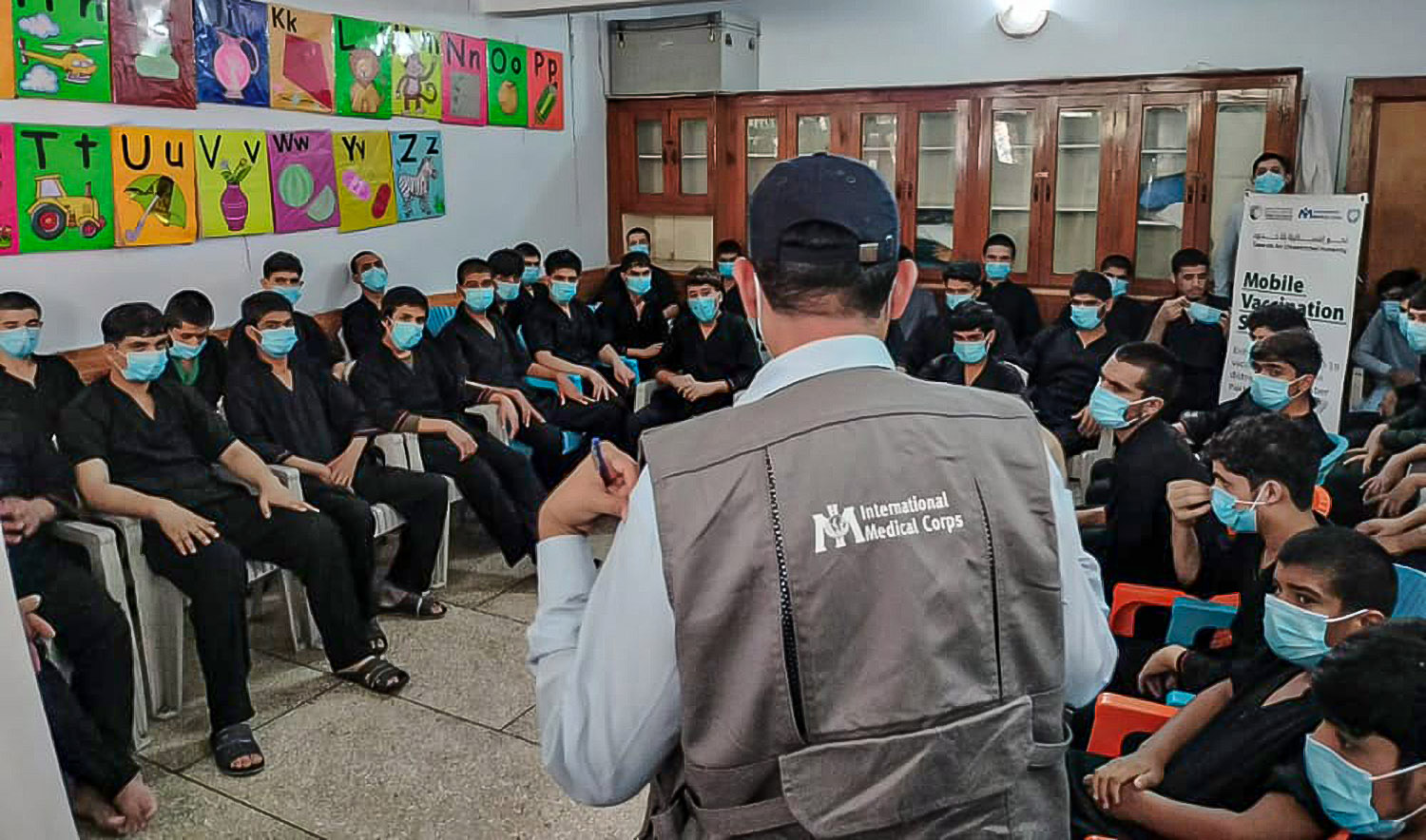
In this undated photo, a paramedic addresses patients undergoing a three-month rehabilitation program at a Dost Welfare Foundation center in Peshawar, northwest Pakistan. (Photo courtesy: Dost Welfare Foundation)
To address the problem, provincial authorities launched a pilot rehabilitation program in Peshawar in May, involving 1,000 people — men and women.
“After noticing the campaign yielded tangible results, we plan to extend the program to the entire province,” Khyber Pakhtunkhwa government spokesperson Barrister Muhammad Ali Saif told Arab News.
The three-month program included treatment and counseling.
“We have three phases for their rehabilitation, including detoxification, rehabilitation through different psychologists and social adjustment, which is a challenge,” Tehreem Shah, Peshawar additional assistant commissioner said, as she estimated that over a half of the city’s drug users were participating in the program.
“We have a detailed plan for their social integration in different fields and factories to make them useful members of the society.”
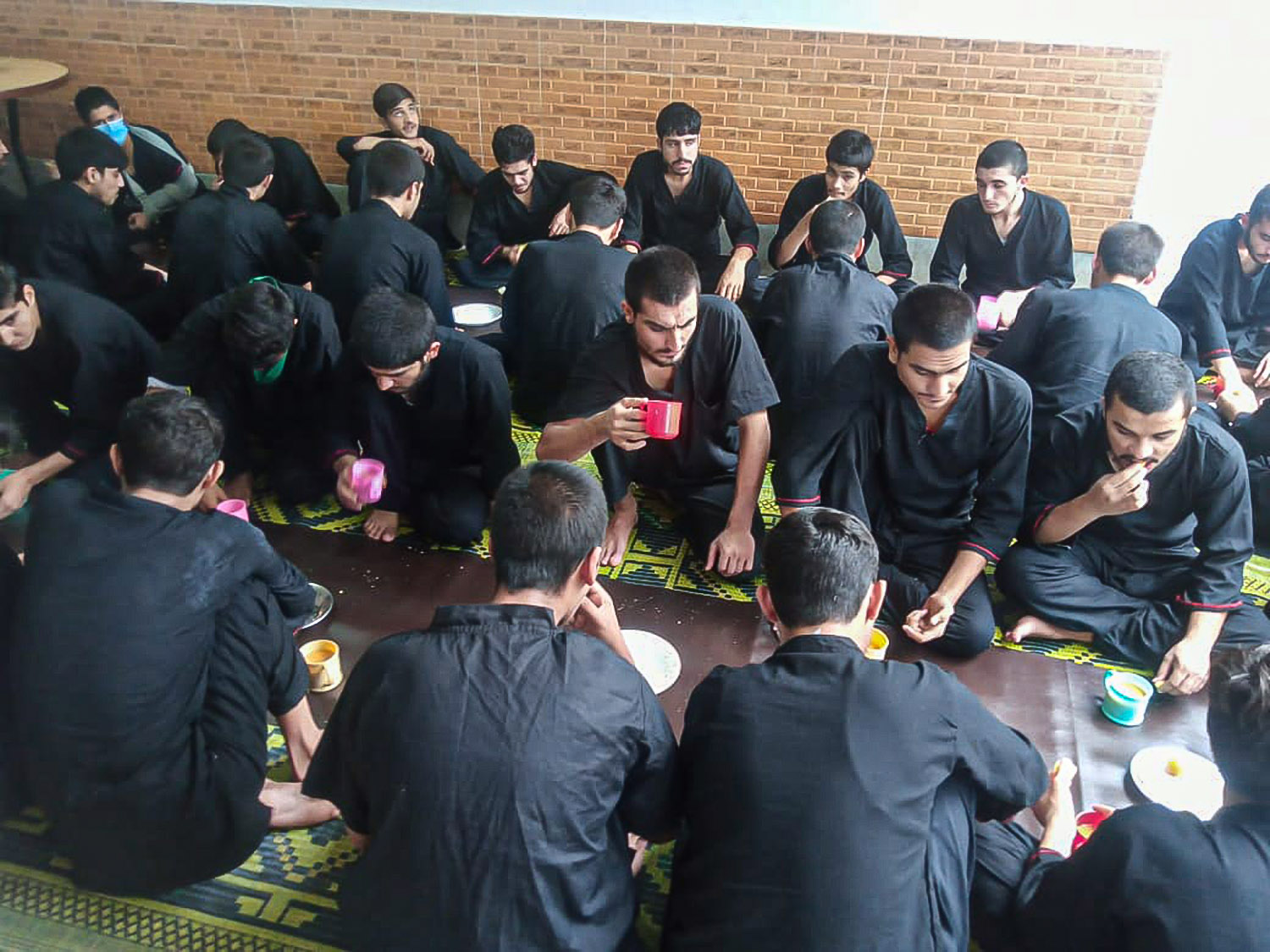
In this undated photo, patients undergoing a three-month rehabilitation program have breakfast at a Dost Welfare Foundation center in Peshawar, northwest Pakistan. (Photo courtesy: Dost Welfare Foundation)
Peshawar Commissioner Riaz Khan Mehsud said the provincial government had allocated Rs60 million ($264,000) for the Peshawar campaign and another Rs180 million ($790,000) to expand it to other regions.
“It would really hurt me to see drug users lying on the streets or under the bridges in miserable conditions,” Mehsud said. “To make them useful citizens of the society, we launched a seamless and well-coordinated campaign.”
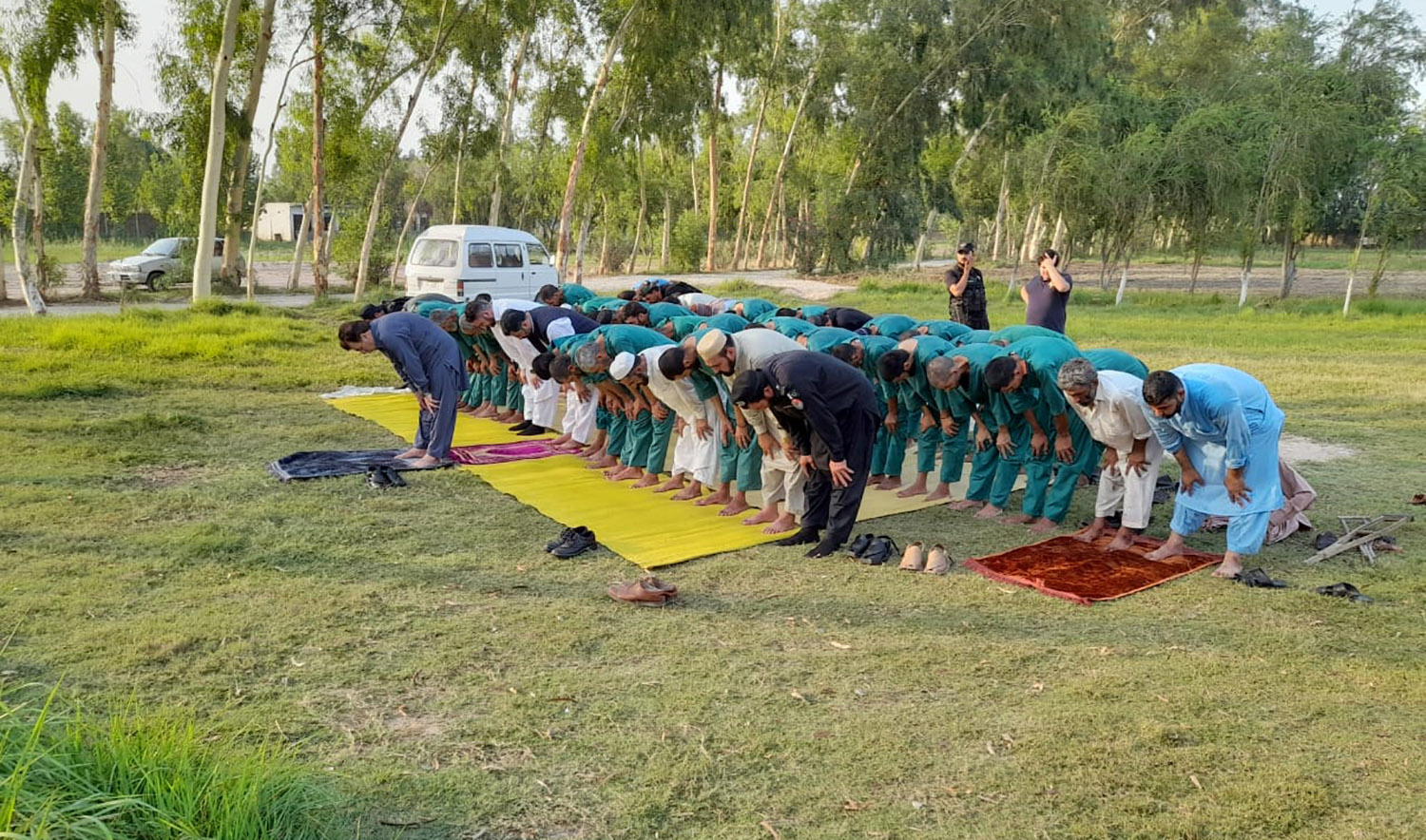
In this undated photo, patients undergoing a three-month rehabilitation program offer prayers at a Dost Welfare Foundation center in Peshawar, northwest Pakistan. (Photo courtesy: Dost Welfare Foundation)
The campaign is a public-private partnership between the provincial government and nine welfare organizations, including Al-Khidmat Foundation and the DWF.
Asad Bilal, a psychologist who treats drug addicts at a DWF facility, said they were brought into the rehab centers by force.
“But their rehabilitation process is going well because of a friendly environment and availability of resources at the rehab centers,” he said. “I’m sure these addicts can return as normal citizens to the society as the three-month timeframe for their rehabilitation is more than enough.”
Farman Khan, whose brother Irfan Khan, 30, has been undergoing treatment under the anti-drug abuse program, said the addiction has taken a heavy toll on the whole family.
“My mother died of shock two years back because my addicted brother wouldn’t quit drugs despite her repeated requests,” he told Arab News. “I met my brother soon after this Eid at the rehabilitation center and he is doing quite well now. I will request the rehab center to keep him for long so that he recovers fully.”
Lubna, a 35-year-old who is undergoing rehabilitation at an Al-Khidmat Foundation center, told Arab News she has four children and was hopeful to start a new life.
“I don’t know how I landed in this treatment center but some officials brought me here,” she said.
“I intend to start a new life after rehabilitation. I’ll work at someone’s home as a maid to eke out a livelihood for myself.”


