



ISLAMABAD: When 90-year-old Indian citizen Reena Varma returns to India after visiting her ancestral home in Pakistan’s Rawalpindi city, she plans to take back with her a message of “love, peace and prosperity” for the people of the two countries.
Varma, the only survivor of six children and two parents, is the only member of the family who visited her ancestral home after over seven decades since the family crossed the border into neighboring India in May 1947.
In August 1947, British India was divided into two separate dominions— Pakistan and India— along religious lines. Millions of Muslims migrated from India to Muslim-majority Pakistan while millions of Hindus from the subcontinent’s Muslim-majority areas headed toward India, in the opposite direction.
The partition caused families to be separated and resulted in a massacre that claimed the lives of thousands of people. Over seven decades later, relations between nuclear-armed states India and Pakistan, who have fought three wars over the disputed Kashmir territory, remain tense.
Varma was 15 years old when she left for Solan, a hilly station in India, along with her siblings for vacations shortly before the partition, in May 1947. The family never returned to their home and settled in Pune, a sprawling city in the western Indian state of Maharashtra.
Varma spoke highly of the welcome she received in Pakistan upon returning to her ancestral home.
“[People here are] not only welcoming but more than welcoming, they all gave a lot of love to me. Of course, my feelings were the same,” Varma told Arab News in a one-on-one interview on Wednesday.
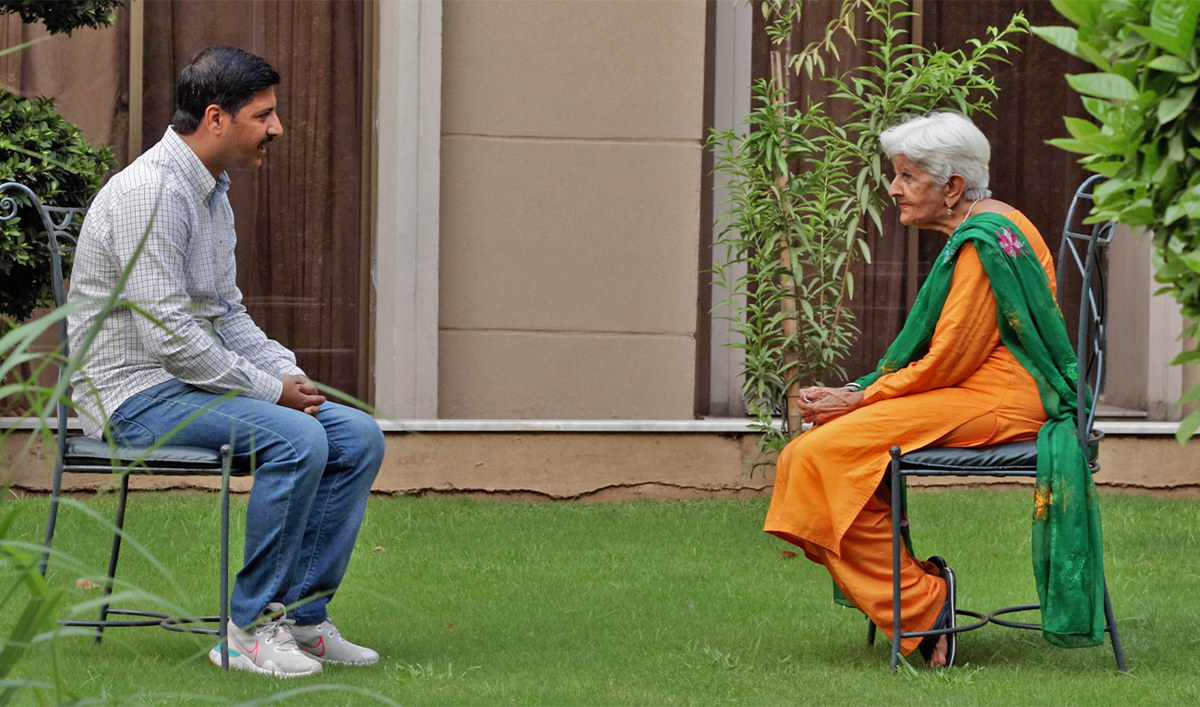
Reena Varma, 90-year-old Indian citizen born in Pakistan, speaks to Arab News Pakistan's reporter Aamir Saaed in Rawalpindi, Pakistan July 20, 2022. (AN Photo)
“The major takeaway of my visit to Pakistan is peace, love and prosperity and I’ll be taking this message back home,” she added.
“I have mixed feelings. I’m missing my family. We were six siblings and parents, but I’m the only survivor now,” she said after visiting her childhood home.
Varma’s daughter last week drove her to Wagah border in Pakistan’s Lahore city, which separates the two countries, to cross over to Pakistan for the visit. She was received by the members of an ‘India Pakistan Heritage Club’, a Facebook group trying to reconnect people on both sides of the border who swapped countries during partition and left behind their families and belongings.
Crossing over into Pakistan after such a long period of time was an emotional moment for Varma. “I got emotional by reading the board [on the border]. I wept profusely for the first time, but otherwise, I was very happy,” Varma said, adding that she was ecstatic to see her home in Rawalpindi after decades of struggle.

Reena Varma, 90-year-old Indian citizen born in Pakistan, stands at a neighbour's house next to her ancestral home while visiting after 75 years, in Rawalpindi, Pakistan July 20, 2022. (REUTERS)
“My home is in original condition and I’m lucky they [the owners] are keeping it well,” she said.
Varma recalled how her mother used to weep after leaving their ancestral home and how she always wanted to return to Pakistan but wasn’t able to do so.
“For some time we used to talk about our home like where we will go now, what will we do, but then we accepted it [the partition],” she said. “We accepted that there are two separate countries now, and we can’t go back,” Varma added.
She briefly visited Lahore in 1954 to watch an England-Pakistan cricket match but couldn’t visit her home in Rawalpindi. In 1965, Varma got her passport to visit Pakistan, where she planned to go with the family of one of her friends. However, the plan got canceled.
Varma’s desire to visit her home was reignited when Imran William, one of the admins and members of the heritage club Facebook group, located her home in the garrison city of Rawalpindi and shared photos with her. She applied for a visit visa to Pakistan in March but the request was turned down.
“I would like to complain about it, if somebody hears, as to why I wasn’t allowed,” she complained, adding that the visa rejection left her disappointed. However, Varma always believed she would get the visa clearance to enter Pakistan.
“All who would meet me would say it is difficult to get the visa [for Pakistan], but I believed they won’t reject mine,” she said.
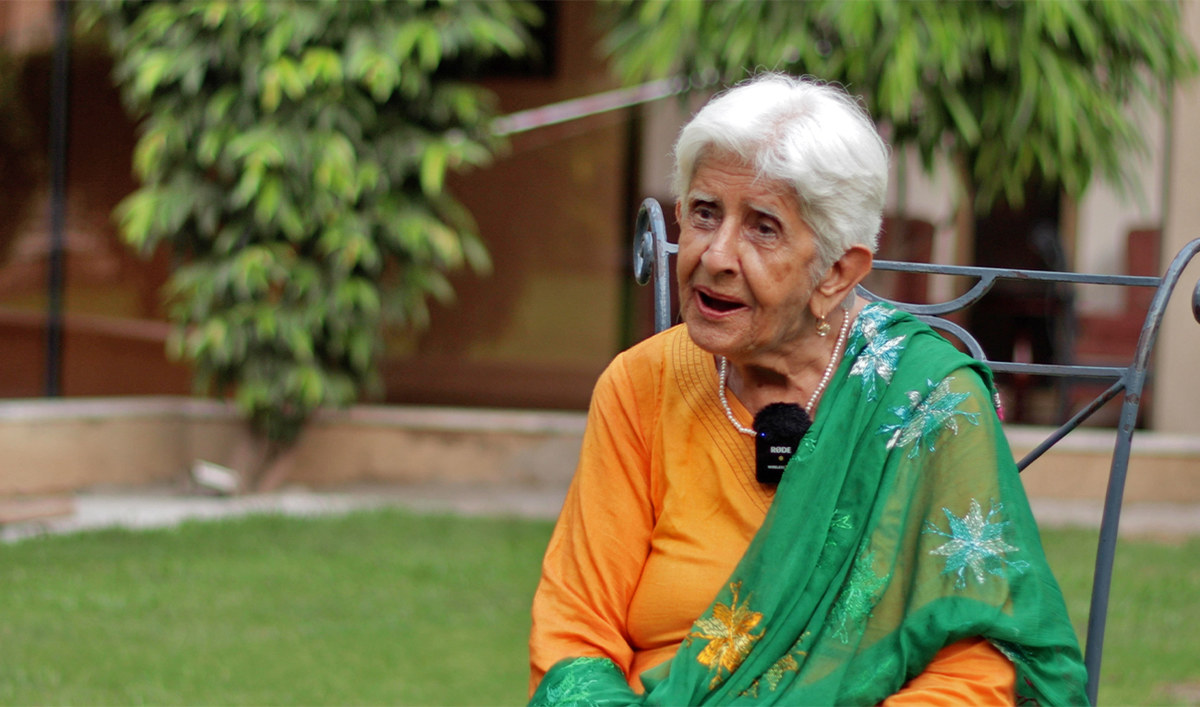
Reena Varma, 90-year-old Indian citizen born in Pakistan, speaks with Arab News in Rawalpindi, Pakistan July 20, 2022. (AN Photo)
Varma was finally able to get a visa to Pakistan after State Minister for Foreign Affairs, Hina Rabbani Khar, helped her obtain the travel document after one of her video interviews started doing the rounds on social media.
Her visa is expiring on July 26 and she will return to India in a couple of days. However, Varma has a very important message to take back to India about the two countries.
“I would like to give a message that it has been 75 years now, by forgetting whatever happened, the next generation should live like friends,” she said.
Varma also urged authorities on both sides of the border to ease the visa process, especially for elderly people who want to visit their ancestral homes.
“People are very keen, people on both sides want to see each other, but governments on both sides don’t make it easy,” she said.
“Visa should be easy. Or whatever it may take, people should be facilitated to see each other,” she pleaded.


