

Biden visit ‘huge opportunity’ to increase $30 billion annual Saudi-US trade: Saudi Chambers President

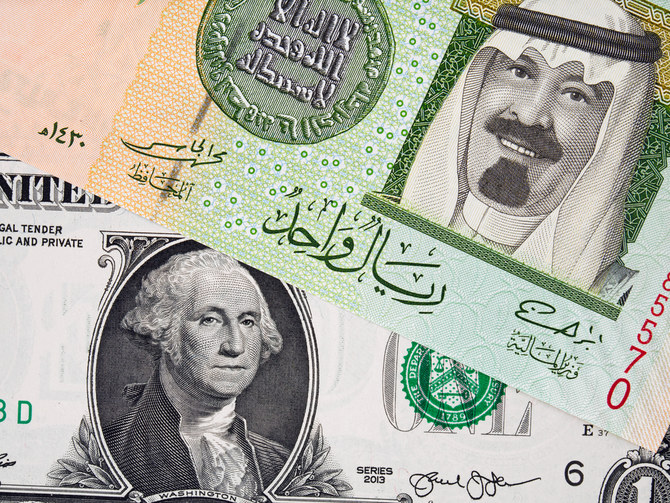
The energy sector was flagged as one area of possible growth, as were tech and space (Shutterstock)
Short Url
Updated 16 July 2022
Follow

Biden visit ‘huge opportunity’ to increase $30 billion annual Saudi-US trade: Saudi Chambers President

  • Relationship between the two countries is fruitful, says Ajlan bin Abdul Aziz Al-Ajlan

US companies have a “huge opportunity” to develop trade with Saudi Arabia, the president of the Federation of Saudi Chambers said on the eve of President Joe Biden’s visit to the Kingdom.

Ajlan bin Abdul Aziz Al-Ajlan has insisted there are potential avenues for increased business between the two countries, with Saudi-US trade reaching SR114 billion ($30 billion) last year alone.

The energy sector was flagged as one area of possible growth, as were tech and space.

Speaking to Asharq, Al-Ajlan said: “The Saudi-US relationship is old, extended and fruitful for both sides, even on economic level where trade reached SR114 billion last year, and over SR600 billion in the past five years, and today, in line with Vision 2030, there are huge opportunities for US companies in the Kingdom.”

A recent report by the Federation of Saudi Chambers showed the US ranks sixth for countries to which the Kingdom exports, while it comes in second to the countries from which the Kingdom imports.

The most important non-oil exports of goods to the US in 2021 were organic chemical products, at SR1.9 billion;  fertilizers at SR1.6 billion; and aluminum and its products at SR1.3 billion.

The most important commodities imported from the US during the same year were machines, devices, tools, and mechanisms and their parts at an amount of SR9.6 billion; transportation equipment and its parts such as vehicles at SR8.5 billion; and arms, ammunition and their parts and fittings with an amount of SR7.7 billion.

The US and Saudi Arabia already share more than $100 billion in active foreign military sales, and defense ties have been further cemented by Lockheed Martin’s space technology partnership with the Kingdom.

Other key areas of trade involve electrical equipment, the digital economy, and e-commerce.
Druze: the great survivors
How the world's most secretive faithhas endured for a thousand years

Enter


keywords

Aramco rises nearly 3% as Gulf stocks fall on Middle East tensions

Updated 15 sec ago
Follow

Aramco rises nearly 3% as Gulf stocks fall on Middle East tensions

RIYADH: Saudi Arabian Oil Co. shares rose nearly 3 percent in intraday trading on March 1, outperforming regional markets as escalating tensions in the Middle East weighed on Gulf equities.

The stock climbed as much as 3.2 percent to SR25.76 ($6.87) before easing slightly to SR25.64, up 2.72 percent from the previous close of SR24.96, according to Tadawul data. More than 12 million shares were traded, with turnover exceeding SR306 million as of 12:20 p.m. Saudi time.

The gains came even as most Gulf markets declined after Israel and the US launched strikes on Iran, triggering retaliatory attacks and raising fears of a broader regional conflict.

The Kingdom’s benchmark Tadawul All Share Index dropped as much as 4.6 percent in early trading, putting it on track for its sharpest intraday fall since April, Reuters reported.

Elsewhere in the region, Boursa Kuwait suspended trading as a precautionary measure. Oman’s main index trimmed losses to 1.5 percent after falling more than 3 percent earlier, while Bahrain’s benchmark slipped 0.6 percent. Qatar’s market was closed for a bank holiday.

Investors are now closely watching oil markets, particularly the Strait of Hormuz, a key shipping route that carries about 15 million barrels of crude per day, nearly 30 percent of global seaborne oil trade.

“The most immediate and tangible development affecting oil markets is the effective halt of traffic through the Strait of Hormuz,” said Jorge Leon, senior vice president and head of geopolitical analysis at Rystad Energy.

“Unless de-escalation signals emerge swiftly, we expect a significant upward repricing of oil at the start of the week,” he added.

Leon said some supply could be rerouted through alternative pipelines, including Saudi Arabia’s East-West pipeline to the Red Sea, which has a capacity of about 5 million barrels per day, and the UAE’s Abu Dhabi pipeline, with a capacity of around 1.5 million barrels per day. Even so, he estimated the disruption could temporarily remove 8 million to 10 million barrels per day from global supply.

Barclays raised its Brent crude forecast to about $100 a barrel from $80 a day earlier, while analysts expect prices could jump by as much as $20 per barrel when trading resumes on March 2 if tensions escalate further, Reuters reported.

“Should the Strait remain effectively closed or energy infrastructure be confirmed as damaged, the upside risks to prices would increase further,” Leon said.

Even a short disruption in Hormuz traffic could lead to tanker delays, cargo rescheduling, and supply bottlenecks, keeping energy markets volatile in the near term.