QUETTA: While the prices of coal and equipment for grilling have sharply increased since the last Eid Al-Adha, Muslims in southwestern Pakistan were undeterred by the cost, set on buying all the fittings needed to hold their traditional, meaty feasts.
Celebrations of Eid Al-Adha, the second most important festival of Islam, are traditionally marked by sacrificing livestock and distributing the meat among friends, family and the poor. In Pakistan’s southwestern Balochistan province, the holiday is accompanied by week-long barbecues and picnics.
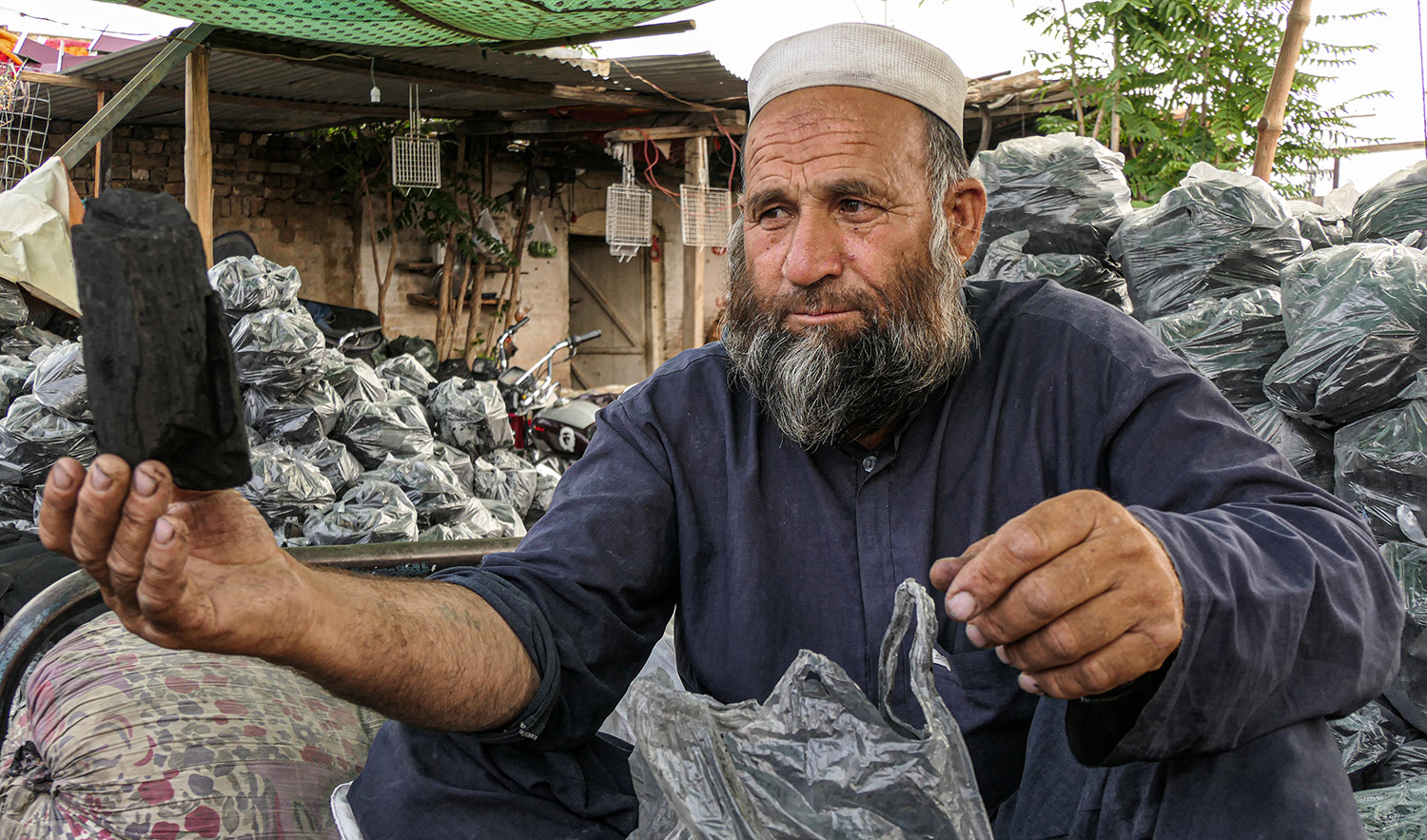
Coal vendor Khan Zada holds a piece of coal in his hand at a wood shaving plant in Joint Road in Quetta, Pakistan, on July 11, 2022. (AN photo)
“We even sell the coal after Eid because it sells a lot,” Khan Zada, coal seller in Joint Road in the provincial capital, Quetta, told Arab News. “Customers come even 10 days after Eid.”
His sales were undisrupted even as amid soaring inflation the price is now 70 percent higher.
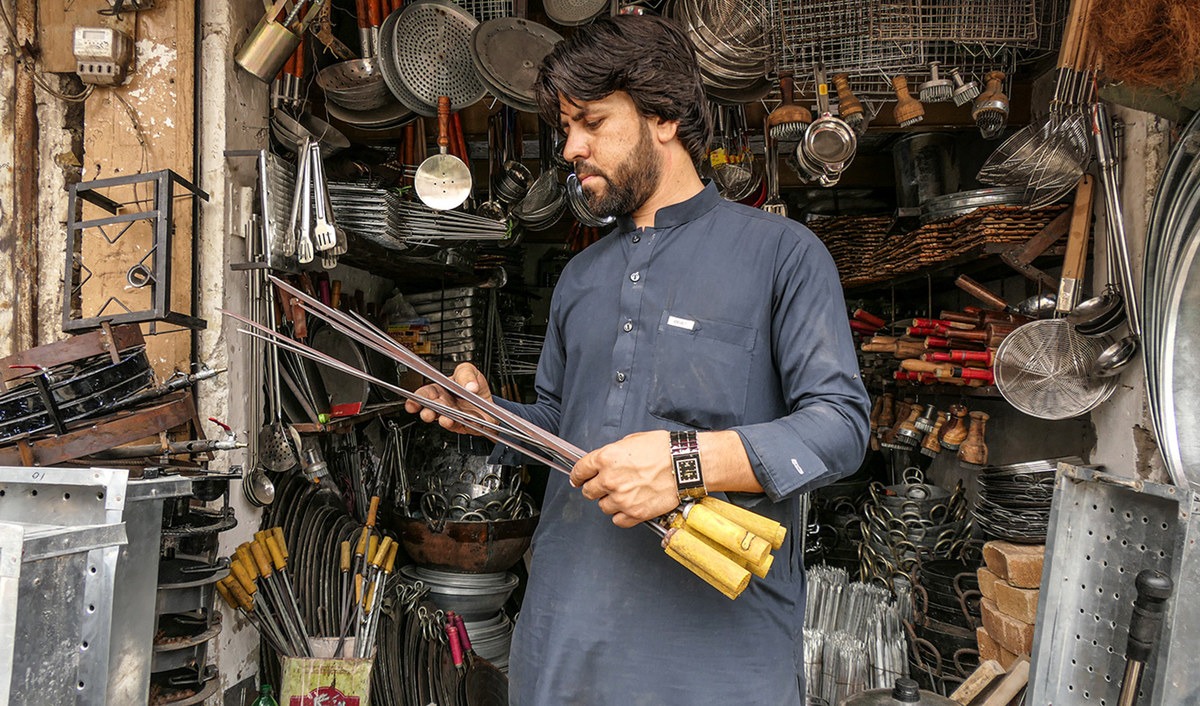
Abdullah, a local vendor, holds metal skewers at his shop in Tuk Tuk Gali, Quetta, Pakistan on July 11, 2022. (AN photo)
“We are compelled to increase the coal prices,” he said. “In 2021, I used to purchase 40 kg coal for Rs1,900 ($9) but for this season I have bought 40 kg for Rs3,000, but despite the increase people have been buying the coal for their barbecue parties.”
The price hike bites, but as coronavirus restrictions are no longer in place, residents of Balochistan want to hold their Eid barbecues in full swing.
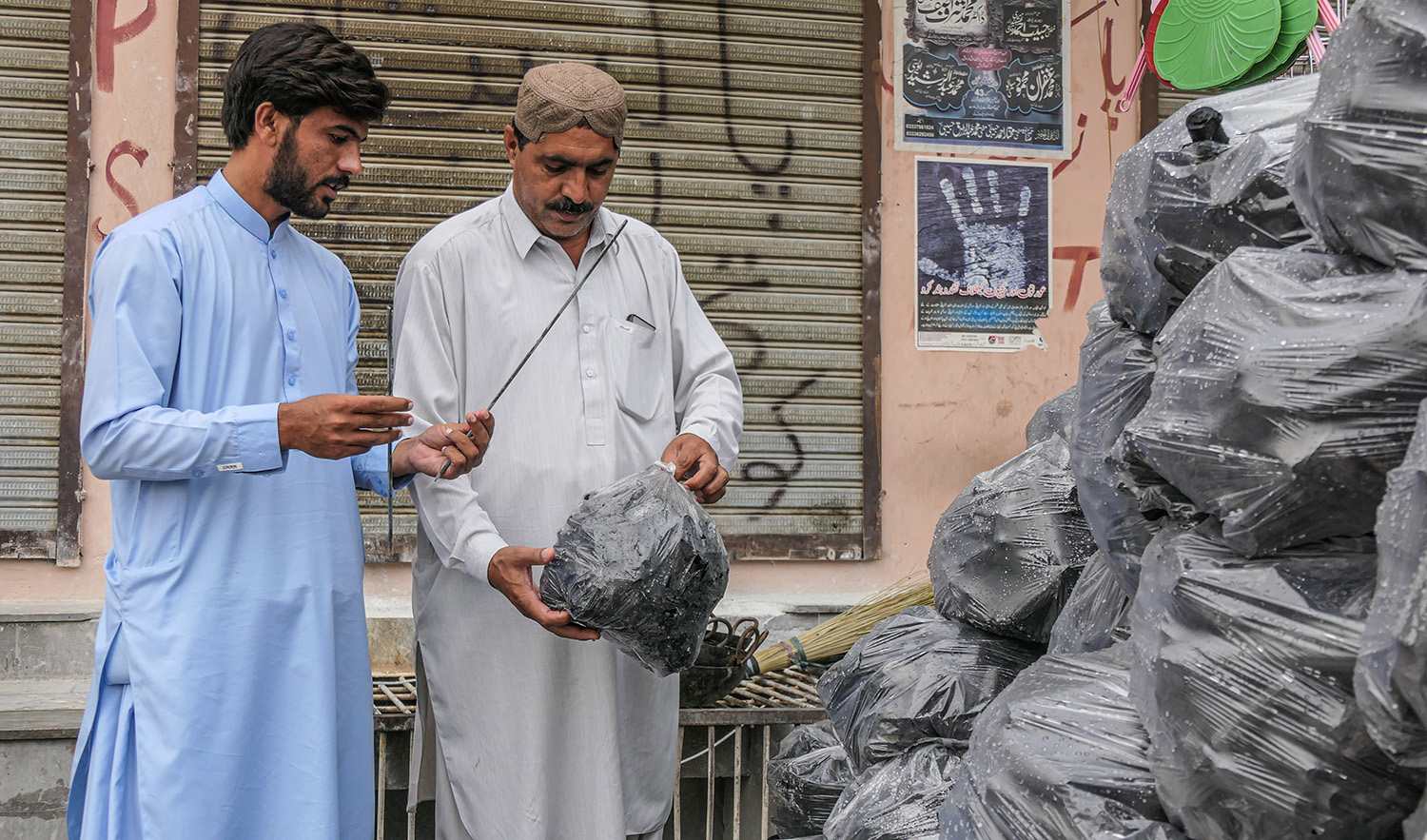
Abdul Rehman, right, holds a 5 kg bag of coal bought at a stall in Joint Road in Quetta, Pakistan, on July 11, 2022. (AN photo)
Abdul Rehman, whose family was organizing a grill party for all relatives, bought 5 kg of coal in Joint Road.
“Though the vendors have increased the prices of coal on Eid days,” he said. “(But) without this item, the barbecue party is incomplete.”

People walk in Tuk Tuk Gali, an area famous for blacksmiths, in Quetta, Pakistan on July 11, 2022. (AN photo)
In Tuk Tuk Gali, an area famous for blacksmiths who produce stoves and metal cooking sticks, high prices also have not kept customers away.
Abdullah, a 26-year-old vendor who sells grill tools has prepared 300 grill sets for this year’s celebrations — all about 40 percent more expensive than last year.
“People love to celebrate Eid,” he said. “During Eid Al-Adha, the demand for these accessories rises.”
Some customers, like Abdurrahman who came to Tuk Tuk Gali to buy skewers, mocked the sellers saying the high prices were their form of observing the holiday.
“Coal and grill sellers are celebrating their Eid,” he said.
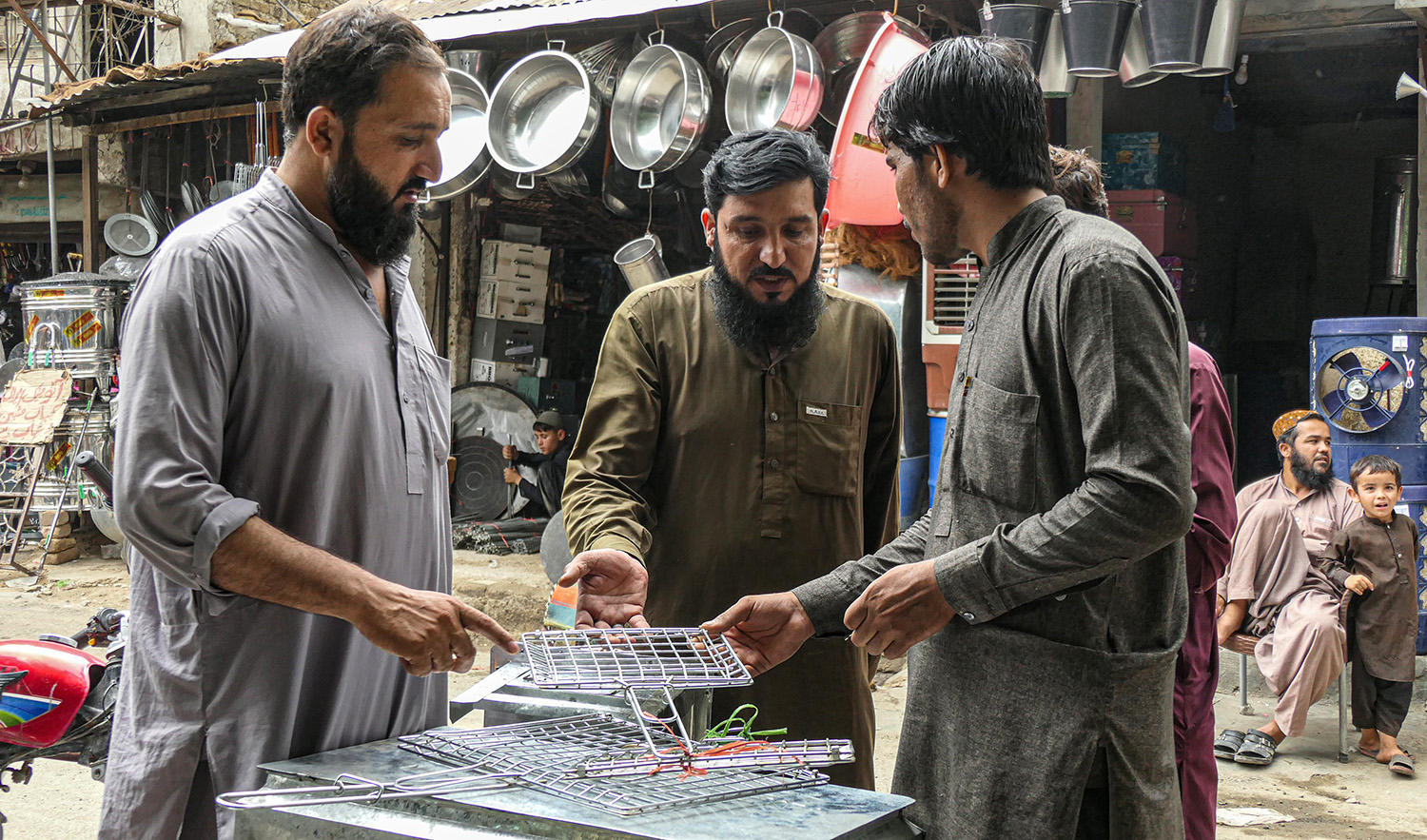
Muhammad Umar, center, bargains with sellers as he buys a barbecue set in Tuk Tuk Gali, Quetta, Pakistan on July 11, 2022. (AN photo)
But others, like Muhammad Umar, were more understanding.
“The prices of barbecue sets have increased due to high inflation in Pakistan. Before, we used to buy a grill for Rs500 ($2.4) which is now being sold for 1,000 rupees,” he said, as he bought a barbecue set for Rs7,000 ($34) to treat his friends to roasted beef.
“Without barbecue we can’t enjoy the Eid.”