


RIYADH: Saudi Arabia’s King Salman on Monday issued a royal order approving allocation of SR20 billion ($5.32 billion) to help citizens mitigate the impacts of rising global prices.
Half of the allocated money will go to social insurance beneficiaries and the Citizen Account Program.
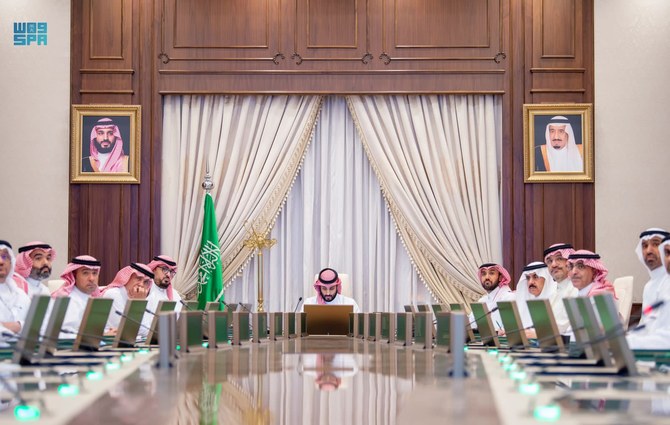
Earlier, while chairing a meeting of the Council of Economic and Development Affairs Crown Prince Mohammed bin Salman stressed the need to focus on the Kingdom’s neediest citizens in the wake of the increasing cost of some basic needs.
He laid emphasis on the important roles of ministries and government agencies in monitoring international developments, the Saudi Press Agency reported.
It includes issues related to food supply chains, monitoring markets, product availability and price levels, and protecting and encouraging fair competition, as well as combating and preventing monopolistic practices that affect legitimate competition or the interest of the consumers.
During the meeting held in Jeddah, the council reviewed several economic and development issues. The ministries of commerce, environment, water and agriculture and economy and planning jointly gave a presentation on the price levels of different products in the Kingdom.
The Health Ministry also briefed the council on the developments related to the coronavirus disease. The ministry’s presentation included an update following the decision to lift the precautionary measures related to COVID-19 and updates on administering vaccines. The council was also briefed about this year’s Hajj preparations and the state of the epidemiological situation internationally.
The top body also followed up on the periodic presentation submitted by the Ministry of Economy and Planning containing the analysis of economic activities and the impact of the pandemic.
The council has taken the necessary recommendations on these issues, SPA said.
OECD forecast
The Organisation for Economic Co-operation and Development recently predicted that Saudi Arabia is expected to enjoy lower levels of inflation at a time when the world’s economies are suffering from a spike in global food and commodity prices.
Saudi Arabia’s gross domestic product is expected to grow by more than double the rate of other G20 economies, the OECD said.
The Saudi economy will grow by 7.8 percent in 2022, while G20 economies are expected to grow by 2.9 percent, reported OECD in its economic outlook.
The OECD also revised up the Saudi gross domestic product growth in 2023 to 9.0 percent, tripling the G20 average growth, while the Kingdom’s inflation rate will remain below the G20 average of 6.3 percent.
Saudi Arabia, Argentina, and Turkey are among the few rare cases showing positive GDP growth since the Ukraine war started.
Saudi inflation
Saudi Arabia’s annual consumer inflation slowed to 2.2 percent in May, from 2.3 percent in April, according to the latest data released by the General Authority for Statistics.
The slowdown in headline inflation is driven mainly by the deceleration of growth in miscellaneous goods, transport as well as clothing and footwear prices, data compiled by Arab News revealed.
In May, the main components of the CPI inflation were food and beverages (+4.2 percent) and transport (+4 percent), according to GASTAT.


