



ISLAMABAD: Federal Minister for Religious Affairs Mufti Abdul Shakoor said on Sunday Pakistan’s Hajj operations were running smoothly as a majority of pilgrims had already arrived in Saudi Arabia.

Pakistan’s religious affairs minister Mufti Abdul Shakoor (2L) takes briefing from the officials of Pakistani Hajj mission in Makkah, Saudi Arabia, on July 3, 2022. (Photo courtesy: Ministry of Religious Affairs)
Pakistan was initially allocated a quota of 81,132 pilgrims this year, out of which more 34,000 were supposed to utilize the government scheme while the rest had to be facilitated by private operators.
However, the Saudi authorities later increased Pakistan’s quota by 2,000, the minister confirmed, taking it to 83,132 pilgrims.
“The Saudi government has provided best facilities to Pakistani pilgrims,” he told Arab News over the phone from Makkah. “With [the kingdom’s] cooperation, we have completed all arrangements and our Hajj operation is going on smoothly without any problem.”

Pakistan’s religious affairs minister Mufti Abdul Shakoor is inspecting food preparations for pilgrims in Makkah, Saudi Arabia, on July 1, 2022. (Courtesy: Ministry of Religious Affairs)
Shakoor said the arrangements provided to pilgrims included pick and drop service from airport, provision of good residential facilities in both Makkah and Madinah, hygienic food, transport and medical facilities.
“The Hajj medical mission has established one main hospital and five dispensaries in Makkah along with one main hospital and two dispensaries in Madinah,” he continued. “78,322 pilgrims have already arrived [in Saudi Arabia], including 34,322 under the government scheme, and the arrival of private scheme pilgrims will complete on July 4.”
The minister applauded the Saudi government for providing the Makkah Route facility to Pakistani pilgrims on a bigger scale this year, making it possible for the religious affairs ministry to operate “Hajj flights of Peshawar Faisalabad and Sialkot from the Islamabad airport.”
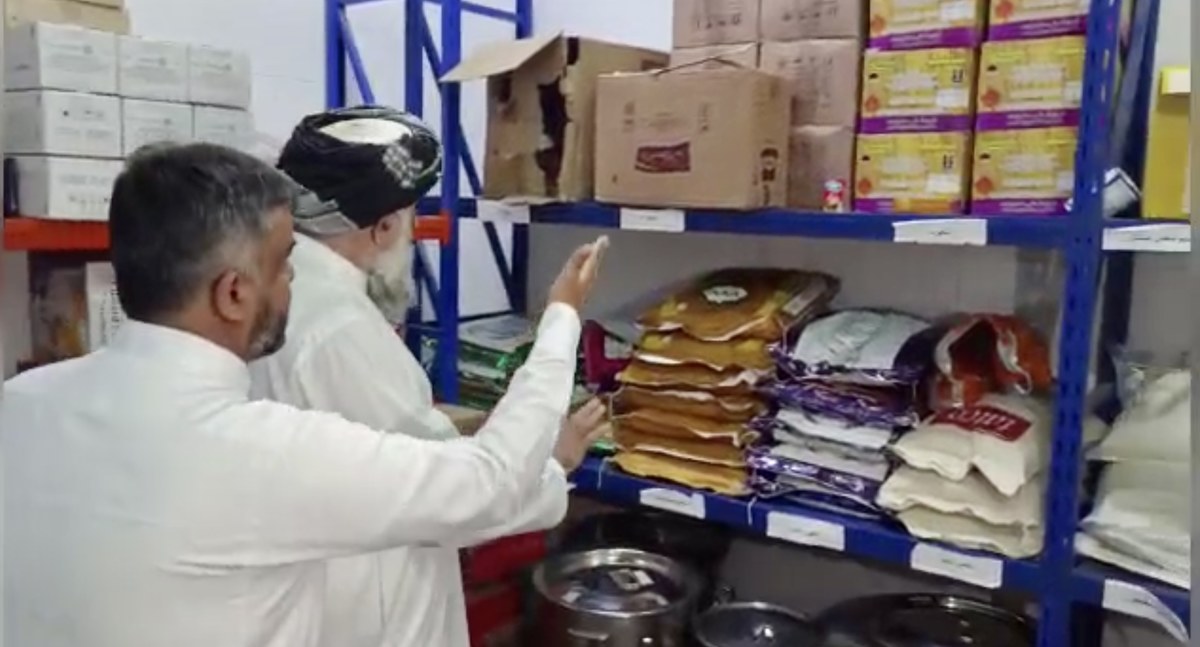
Pakistan’s religious affairs minister Mufti Abdul Shakoor is inspecting food preparations for pilgrims in Makkah, Saudi Arabia, on July 1, 2022. (Courtesy: Ministry of Religious Affairs)
“To help pilgrims perform Hajj without any trouble, the Saudi government has improved the services at Mina, Arafat and Muzdalifah,” he said, adding the authorities had also established a toll-free helpline and there were guides in both Makkah and Madinah to help pilgrims and resolve their problems.
Shakoor said the Saudi authorities had also provided home check-in facility on return flights that would make them collect luggage from the residential facilities of pilgrims for flights from Makkah and Madinah.
Asked about Hajj expenses, he said the government had managed to significantly bring them down despite the depreciation of the Pakistani currency and other financial challenges.
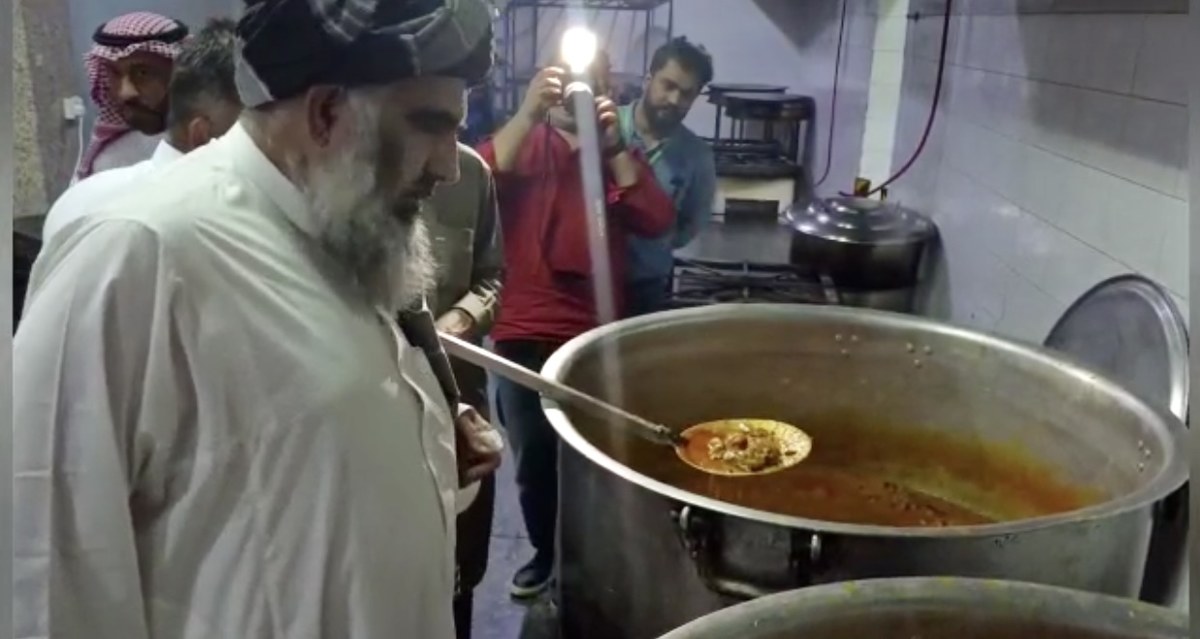
Pakistan’s religious affairs minister Mufti Abdul Shakoor is inspecting food preparations for pilgrims in Makkah, Saudi Arabia, on July 1, 2022. (Courtesy: Ministry of Religious Affairs)
“We have brought down Hajj expenses by eliminating the role of the middle man and got residences directly from Saudi companies at much lower rates,” he said.
The minister added the government had tried to further cut down the expenses by providing one way trip to pilgrims in such a way that those who landed in Madinah would return to Pakistan after performing the pilgrimage from Makkah and those who arrived in Jeddah would return from Madinah.


