

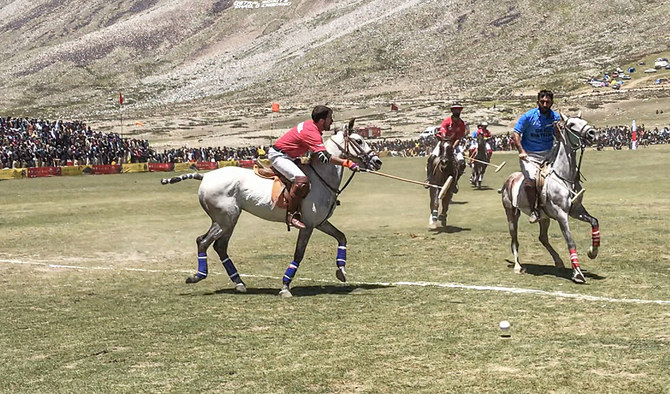

SHANDUR: Thousands of visitors have arrived to the world’s highest polo ground in northern Pakistan to participate in the annual Shandur Polo Festival which kicked off on Friday, after a two-year COVID gap.
Organized by the local governments of Chitral district, Khyber Pakhtunkhwa, and Gilgit-Baltistan, the three-day polo tournament is held at the Shandur Top ground, which located at an altitude of 3,700 meters is also known as the “Roof of the World.”
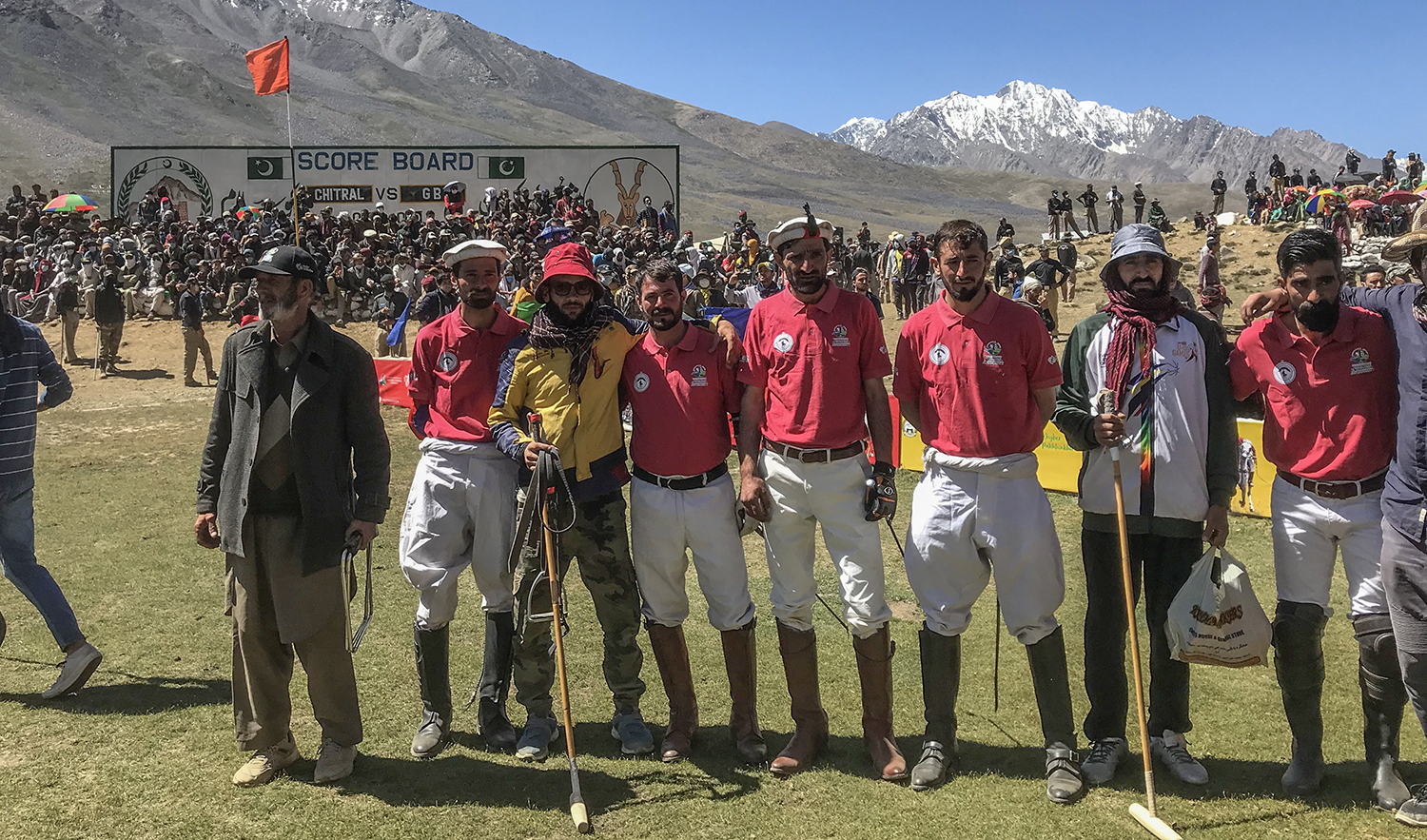
Players pose for a group photo during Shandur Polo Festival in Shandur, northern Pakistan, on July 2, 2022. (AN photo)
The polo tournament is played between teams of Gilgit-Baltistan and Chitral, under freestyle rules.
“Thirteen polo teams from Chitral and GB are participating in this event,” Salman Paras, an assistant director at Gilgit-Baltistan Tourism Department told Arab News on Saturday.
Ziaullah, the captain of the Chitral team said players were glad to be back on the ground after two years when the tournament was suspended over coronavirus fears.
“Due to the COVID-19, we are playing polo after two years of a break at Shandur. Though we suffered a lot, we are enjoying now.”
The world’s highest polo ground was constructed in 1936, and the first game was played four years later.
“The first match was played between the teams of Gilgit and Chitral in 1940, while the second match was played in 1965,” Nazir Ahmad Advocate, deputy speaker of Gilgit-Baltistan Assembly, told Arab News. “Since 1982, this has been a calendar event.”
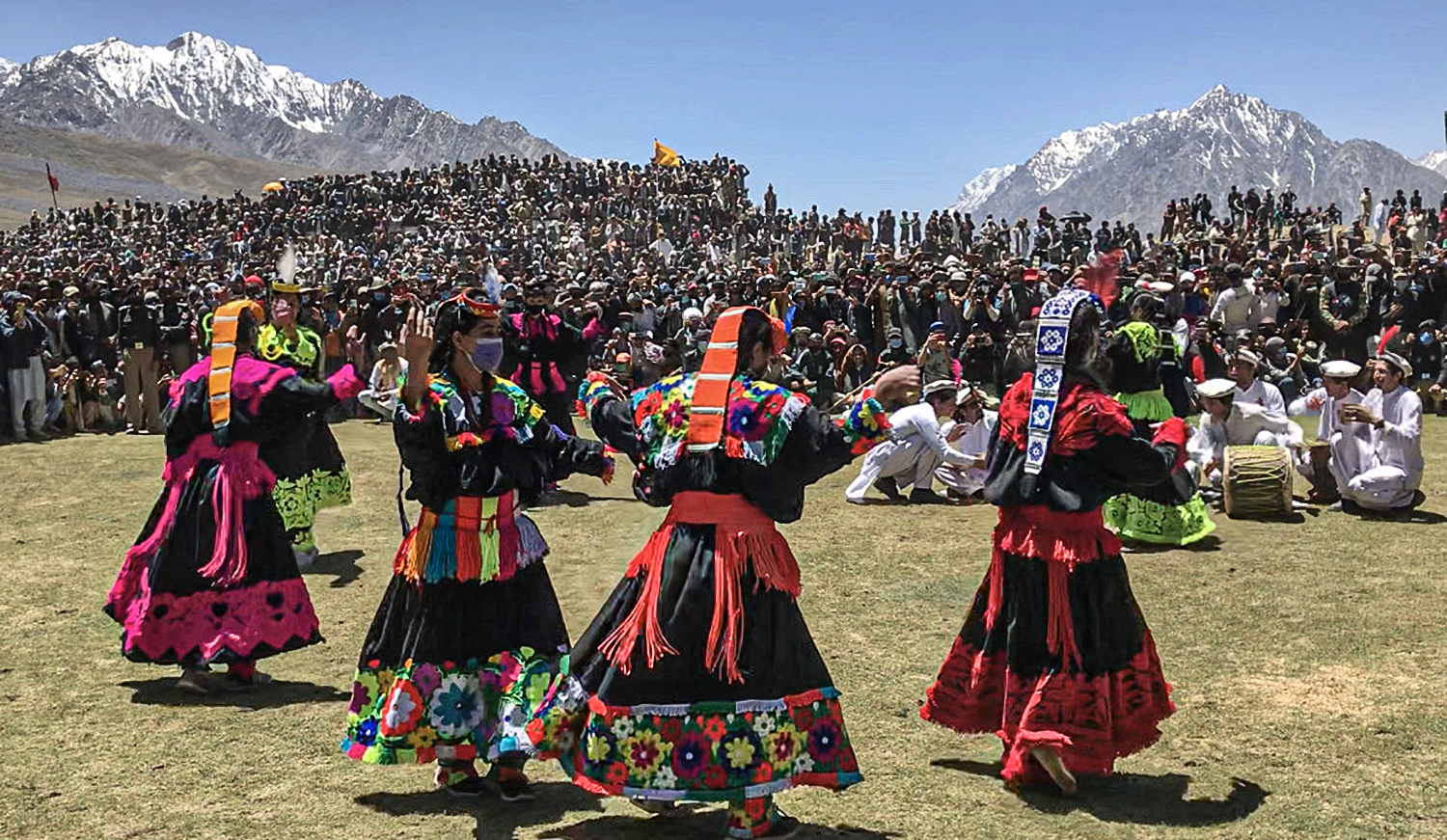
Kalash women dance to traditional music during Shandur Polo Festival in Shandur, northern Pakistan, on July 2, 2022. (AN photo)
The festival also features traditional performances.
“Polo, paragliding, cultural dances of Kalash, Chitral and GB (Gilgit-Baltistan) are part of this three-day festival. District administrations of Upper Chitral and Ghizer are looking after the whole arrangements,” Muhammad Ali, assistant commissioner of Upper Chitral, told Arab News, adding that more than 2,000 security personnel have been deployed to guard the event.

Musicians play traditional drums during Shandur Polo Festival in Shandur, northern Pakistan, on July 2, 2022. (AN photo)
For Kinza, a tourist from Islamabad, it was the first time to visit Shandur.
“I had been trying to come here for a very long time. It is more exciting and way more enthusiastic than I imagined it before coming here,” she said. “The environment is really exciting; it’s really nice and the people here are very nice as well even the whole management.”
Another visitor, Maryam Shahid from Multan, said the tournament was a great reason to come.
“I am here with my family and I would like to come here, again and again, every year,” she said.
Some of the festival participants, like Xavier Mozejewski from California, were visiting Pakistan for the first time.
“I went about it on social media. I saw one video on Instagram and it looked so amazing then I said I have to go, I have to go. So I planned maybe four months ago to come here,” he said.
“This is my first visit to Pakistan. I think it’s one of the most beautiful countries I have ever been to. The people are unbelievably kind, it’s so welcoming; they help with everything. Nature is perfect. The sky is perfect and everything is amazing.”


