

Senior UK politicians warn new Iran nuclear deal would ‘destabilize Middle East’

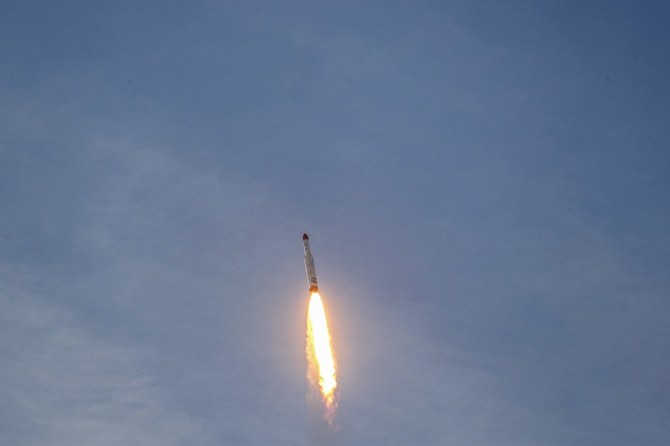
The changes include introduction of a stricter monitoring regime of Iranian nuclear activity. (File/AFP)
Short Url
Updated 30 June 2022
Follow

Senior UK politicians warn new Iran nuclear deal would ‘destabilize Middle East’

  • Labour and Liberal Democrat MPs support former Conservative cabinet ministers urging changes to the new draft agreement

LONDON: Three former British cabinet ministers are set to warn that a renegotiated Iran nuclear deal would destabilize the Middle East, in a warning shot to government support for the agreement.

Former Defence Secretary Liam Fox, former Communities Secretary Robert Jenrick, and former Welsh Secretary Stephen Crabb are all backing a motion to be debated in Parliament that lists a string of proposed changes to the draft they say will impede Tehran’s drive towards nuclear weapons.

The changes include introduction of a stricter monitoring regime of Iranian nuclear activity and taking a tougher approach to policing Iran’s “destabilizing” activities.

The motion to be debated today states: “This House expresses grave concern at the imminent prospect of a nuclear armed Iran; calls on the Government in its ongoing negotiations in respect of the Joint Comprehensive Plan of Action agreement to seek to extend the sunset clauses, enact a stricter monitoring regime, retain terrorist proscriptions, and expand its scope to include Iran’s other destabilising activities in the region.”

The Tory MPs and supporters from opposition parties Labour and the Liberal Democrats are understood to be concerned by the current reworked agreement, which remains subject to negotiations, and is looking to replace the 2015 deal that the US withdrew from under former President Donald Trump.

That original Iran nuclear deal, termed the Joint Comprehensive Plan of Action (JCPOA), was signed with the UK, the US, China, France, Germany, Russia and the EU, and saw Tehran agree to curb its nuclear development in return for the lifting of economic sanctions.

Speaking to The Telegraph, Jenrick said: “The JCPOA was an inadequate response to Iran’s nuclear programme back in 2015. Why would we return to the deal when it has singularly failed to curtail Iran’s uranium enrichment?

“At this critical juncture, the West urgently needs to change tack in its strategy. Weakly tolerating Iran’s aggression and flagrant breaches out of fear of talks collapsing has led us down a dangerous path. It is time for a more robust approach, reimposing snapback sanctions on Iran and tightening the economic screw until Iran is willing to countenance serious proposals.”

He added: “The UK should follow in the footsteps of the US and proscribe the Iranian revolutionary guards corps a terrorist organisation.”


Iran, US to hold third round of nuclear talks on Thursday

Iranians walk past the Emamzadeh Saleh mosque in northern Tehran on February 23, 2026. (AFP)
Updated 4 sec ago
Follow

Iran, US to hold third round of nuclear talks on Thursday

  • Diplomatic solution with Washington is still within ‌reach, Foreign Minister Abbas Araqchi says

TEHRAN: Iran and the US will hold a third round of nuclear talks on Thursday in Geneva, Oman’s Foreign Minister Badr Albusaidi said on Sunday, amid growing concerns about the risk of military conflict between the ​longtime adversaries.

The US has built up its military presence in the Middle East, with President Donald Trump warning on Thursday that “really bad things will happen” if no deal is reached to solve a longstanding dispute over Tehran’s nuclear program.
“Pleased to confirm US-Iran negotiations are now set for Geneva this Thursday, with a positive push to go the extra mile toward finalizing the deal,” said Oman’s foreign minister, who acts as a mediator in indirect talks between Washington and Tehran.

FASTFACT

Iran’s President Masoud Pezeshkian voiced cautious optimism in a post on ‌X, saying recent negotiations had ‘yielded encouraging signals’ while pointing to Tehran’s readiness for ‘any ​potential ‌scenario.’

Reuters reported on Sunday that Iran was offering fresh concessions on its nuclear program in order to reach a deal, as long as it includes the lifting of economic sanctions and recognizes Tehran’s right to “peaceful nuclear enrichment.”
Iran’s President Masoud Pezeshkian voiced cautious optimism on Sunday ‌in a post on ‌X, saying recent negotiations had “yielded encouraging signals” while pointing to Tehran’s readiness for “any ​potential ‌scenario.”
Trump’s special envoy Steve Witkoff, who leads nuclear negotiations on the US side, said on Saturday that the US president was curious as to why Iran has not yet “capitulated” and agreed to curb its 
nuclear program.
“I don’t want to use the word ‘frustrated,’ because he understands he has plenty of alternatives, but he’s curious as to why they have not ... I don’t want to use the word ‘capitulated,’ but why haven’t they capitulated?” Witkoff said during an interview with Fox News’ “My View with Lara Trump,” hosted by the president’s daughter-in-law.
“Why, under this pressure, with the amount of seapower and naval power over there, why haven’t they come to us and said, ‘We profess we don’t want a weapon, so here’s what we’re prepared ‌to do’? And yet it’s sort of hard to get them ‌to that place.”
Iran’s Foreign Minister Abbas Araqchi reacted in a post on X, saying: “Curious ​to know why we do not capitulate? Because we are ‌Iranian.”
He also said in an interview with CBS that a diplomatic solution with the US was still within ‌reach.
Indirect talks last year did not bring any agreement, primarily due to friction over a US demand that Iran forgo uranium enrichment on its soil, which Washington views as a pathway to a nuclear bomb. Iran has denied seeking such weapons.
The US joined Israel in hitting Iranian nuclear sites in June, effectively curtailing Iran’s uranium enrichment, with Trump saying its key nuclear sites were “obliterated.”
But Iran is still believed to possess stockpiles enriched previously, which Washington wants it to relinquish.
“They’ve been enriching well beyond the number that you need for civil nuclear. It’s up to 60 percent (fissile purity),” Witkoff said. 
“They’re probably a week away from having industrial, industrial-grade bomb-making material, and that’s really dangerous.”
Fresh concessions being considered by Iran include sending half of its highly enriched uranium abroad while diluting the rest.
Washington has also sought to expand the talks beyond the nuclear issue to cover Iran’s missile program and its support for regional armed groups. Iran has publicly rejected this, although sources have said that, unlike the missiles, support for armed groups may not be a red line for Tehran.
Another topic of friction is the scope and mechanism of lifting sanctions on Iran.
A senior Iranian official told Reuters on Sunday that Iran and the US still have differing views.
Witkoff also said he has met at Trump’s direction with Iranian opposition figure Reza Pahlavi, son of the shah ousted in Iran’s 1979 revolution.