

Saudi Arabia fuels 34% of OPEC exports increase in 2021

OPEC and its allies struggled to meet the level of demand therefore driving oil prices higher (Shutterstock)
Short Url
Updated 29 June 2022
Follow

Saudi Arabia fuels 34% of OPEC exports increase in 2021

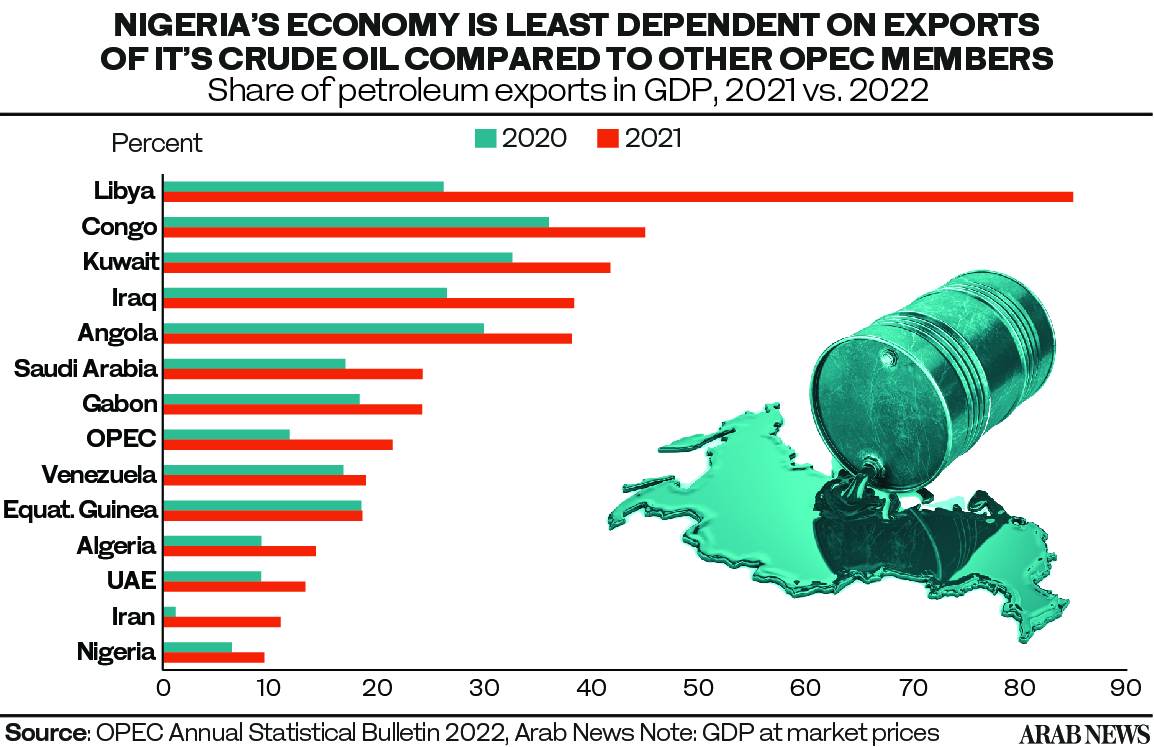
CAIRO: Saudi Arabia was responsible for a third of the 77 percent increase in exports from the Organization of the Petroleum Exporting Countries in 2021, according to the latest figures. 

OPEC’s annual statistical bulletin showed the Kingdom contributed to 34 percent of the total rise in petroleum exports, followed by Iraq, Kuwait and the UAE — with 15, 9 and 10 percent of the total share respectively in 2021.

Production

While the overall 2021 world crude oil production rose by 0.52 million barrels per day, OPEC countries alone produced 0.7 million more barrels per day compared to the previous year.

That is a 0.8 percent rise in total world production of crude oil and a 2.7 percent rise in OPEC production, meaning non-OPEC countries saw a fall in crude oil by 0.4 percent.

Demand

World demand for oil saw an upward turn,  growing by 6.3 percent, with the primary contributors being the Americas, Europe and China.

Of that world demand, distillates and gasoline accounted for around 55.2 percent whereas Residual fuel oil requirements totaled around 6.6 percent in 2021.

OPEC and its allies struggled to meet the level of demand therefore driving oil prices higher. 

Exports

The aggregate level of crude oil exported by OPEC countries saw a decline of 0.54 bpd.

Some 9 out of the 13 OPEC members saw a drop in the level of crude oil exports in 2021. 

Of the remaining four  — Algeria, Iran, Iraq, and Libya — the latter saw the largest spike in crude oil exports compared to 2020.
Rigs and Wells

The oil exporting members saw a decline in the number of completed wells by 280, the lowest recorded number since 2017.

While OPEC countries produce around 40 percent of the world’s crude oil, the 47 active rigs added in 2021 only amount to 10 percent of the total increase in rigs compared to 2020.

The US alone built 239 of the 460 new active rigs manufactured in 2021.

World proven oil reserves reported 1.55 billion barrels indicating almost no change over the 2020-21 time period.

As for gas reserves, total world gas fell by 0.5 billion cubic meters of natural gas whereas OPEC members recorded an increase of 0.8 bcm compared to last year.


Emerging markets driving global growth despite rising risks: Saudi finance minister 

Updated 47 min 50 sec ago
Follow

Emerging markets driving global growth despite rising risks: Saudi finance minister 

RIYADH: Emerging markets now account for a growing share of global output and are driving the bulk of world economic expansion, Saudi Arabia’s finance minister said, even as those economies grapple with rising debt and mounting geopolitical risks. 

Speaking at the opening of the annual AlUla Conference for Emerging Market Economies on Feb. 8, Mohammed Al-Jadaan said the role of emerging and developing nations in the global economy has more than doubled since 2000, underscoring a structural shift in growth away from advanced economies. 

The meeting comes as policymakers in developing markets try to keep growth on track while controlling inflation, managing capital flows and repairing public finances after years of heavy borrowing. Saudi Arabia has positioned the forum as a platform to coordinate policy responses and strengthen the voice of emerging economies in global financial discussions. 

“This conference takes place at a moment of profound transition in the global economy. Emerging markets and developing economies now account for nearly 60 percent of the global gross domestic product in purchasing power terms and 70 percent of global growth,” Al-Jadaan said. 

He added: “Today, the 10 emerging economies and the G20 alone account for more than half of the world’s growth. Yet, emerging markets face a more complex and fragmented environment, elevated debt levels, slower trade growth and increasing exposure to geopolitical shocks.” 

Launched in 2025, the conference this year brings together economic decision-makers, finance ministers, central bank governors, leaders of international financial institutions, and a select group of experts and specialists from around the world.