

Islamabad seeks ‘institutional linkages’ between US CDC, Pakistan health ministry — Washington envoy 

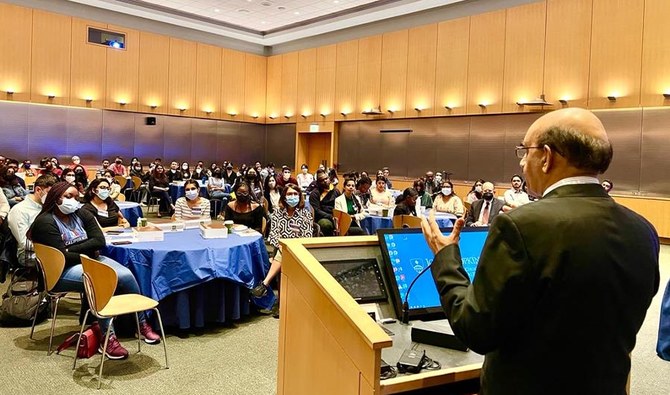
Pakistan's ambassador to US, Masood Khan speaks to international students at Johns Hopkins University on June 27, 2022. (@PakinUSA/Twitter)
Short Url
Updated 28 June 2022
Follow

Islamabad seeks ‘institutional linkages’ between US CDC, Pakistan health ministry — Washington envoy 

  • Says Pakistan looking for US cooperation to manufacture vaccines for various variants of COVID, future pandemics
  • US is the single largest donor of COVID-19 vaccines to Pakistan, having donated over 61.5 million doses as of April 2022

ISLAMABAD: Islamabad’s top diplomat in the United States has said Pakistan was planning to strengthen the health sector by seeking assistance from leading US public agencies and pharmaceutical companies and wanted to promote linkages between the US Center for Disease Control and the Pakistani health ministry.

The US is the single largest donor of COVID-19 vaccines to Pakistan, having donated over 61.5 million doses as of April this year. It has also provided large quantities of N95 masks, protective goggles, ventilators and pulse oximeters to Pakistan.

According to a statement released by Pakistan’s diplomatic mission in Washington, Ambassador Masood Khan told international students at Johns Hopkins University Pakistan wanted to “promote institutional linkages between CDC (Center for Disease Control) and Ministry of National Services & Regulations and National Institute of Health.”
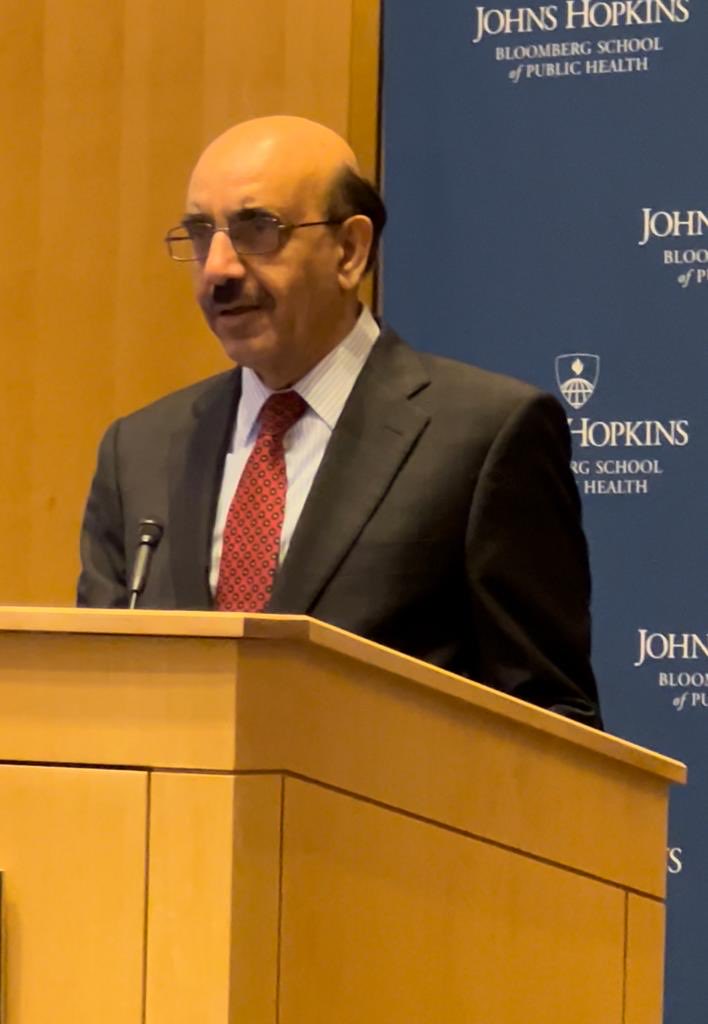


Pakistan's ambassador to US, Masood Khan speaks to international students at Johns Hopkins University on June 27, 2022. (@PakinUSA/Twitter)

“Pakistan would also invite and involve US pharma to develop pharmaceutical and bio-technology sectors,” he said. “We are also seeking US cooperation for manufacturing vaccine for various variants of COVID and future pandemics.”

Khan said Pakistan was currently investing its energies in preparedness and response for possible future pandemics.

“The pandemic was a reminder that it is not about the safety of one but the safety of all that matters,” he said.

The ambassador also held a session with Pakistani students and health professionals at the university later.


Pakistan, seven Muslim nations back Palestinian technocratic body, stress Gaza-West Bank unity

Updated 15 January 2026
Follow

Pakistan, seven Muslim nations back Palestinian technocratic body, stress Gaza-West Bank unity

  • The National Committee for the Administration of the Gaza Strip was announced on January 14
  • Muslim nations call for consolidation of the ceasefire and unimpeded humanitarian aid into Gaza

ISLAMABAD: Pakistan and seven other Muslim-majority countries on Thursday welcomed the formation of a temporary Palestinian technocratic body to administer Gaza, stressing that it must manage daily civilian affairs while preserving the institutional and territorial link between the Gaza Strip and the West Bank amid the ongoing peace efforts.

In a joint statement, the foreign ministers of Pakistan, Egypt, Jordan, Saudi Arabia, Qatar, Türkiye, Indonesia and the United Arab Emirates said the newly announced National Committee for the Administration of the Gaza Strip would play a central role during the second phase of a broader peace plan aimed at ending the war and paving the way for Palestinian self-governance.

“The Ministers emphasize the importance of the National Committee commencing its duties in managing the day-to-day affairs of the people of Gaza, while preserving the institutional and territorial link between the West Bank and the Gaza Strip, ensuring the unity of Gaza, and rejecting any attempts to divide it,” the statement said.

The committee, announced on Jan. 14, is a temporary transitional body established under United Nations Security Council Resolution 2803 and is to operate in coordination with the Palestinian Authority, the ministers said.

The statement said the move forms part of the second phase of US President Donald Trump’s Comprehensive Peace Plan for Gaza, which the ministers said they supported, praising Trump’s efforts to end the war, ensure the withdrawal of Israeli forces and prevent the annexation of the occupied West Bank.

The top leaders of all eight Muslim countries attended a meeting with Trump in New York last September, shortly before he unveiled the Gaza peace plan.

The ministers also called for the consolidation of the ceasefire, unimpeded humanitarian aid into Gaza, early recovery and reconstruction and the eventual return of the Palestinian Authority to administer the territory, leading to a just and sustainable peace based on UN resolutions and a two-state solution on pre-1967 lines with East Jerusalem as the Palestinian capital.