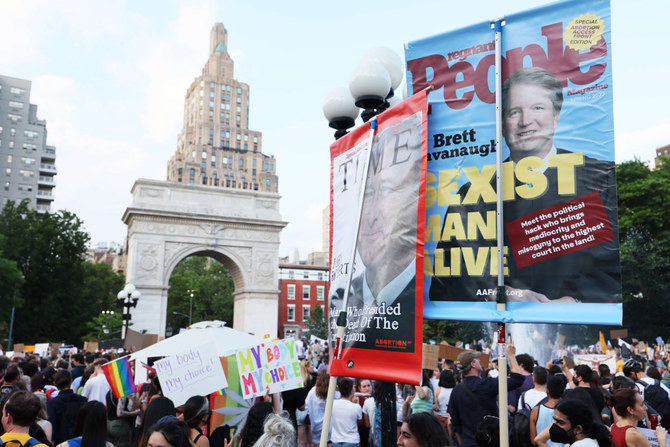
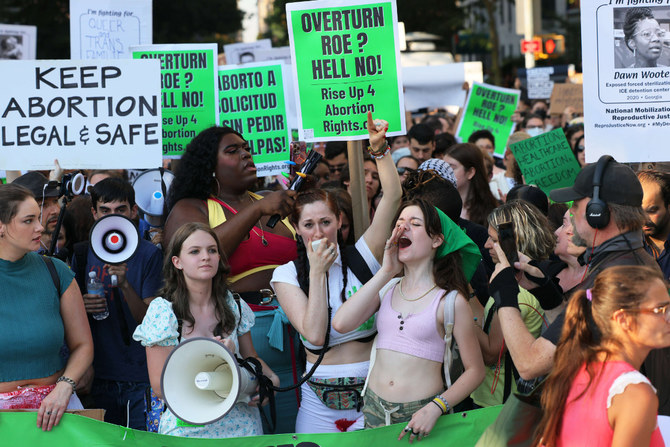

NAIROBI, Kenya: The end of constitutional protections for abortions in the United States on Friday emboldened abortion opponents around the world, while advocates for abortion rights worried it could threaten recent moves toward legalization in their countries.
The US Supreme Court’s overturning of the landmark Roe v. Wade decision “shows that these types of rights are always at risk of being steamrolled,” said Ruth Zurbriggen, an Argentinian activist and member of the Companion Network of Latin America and the Caribbean, a group favoring abortion rights.
But in El Salvador, anti-abortion campaigner Sara Larín expressed hope the ruling will bolster campaigns against the procedure around the globe.
“I trust that with this ruling it will be possible to abolish abortion in the United States and throughout the world,” said Larín, president of Fundación Vida SV.
In Kenya, Phonsina Archane watched news of Friday’s ruling and said she froze for a while in a state of panic.
“This is being done in America, which should be an example when it comes to the women’s rights movement,” said Archane, an activist for abortion rights. “If this is happening in America, what about me here in Africa? It’s a very, very sad day.”
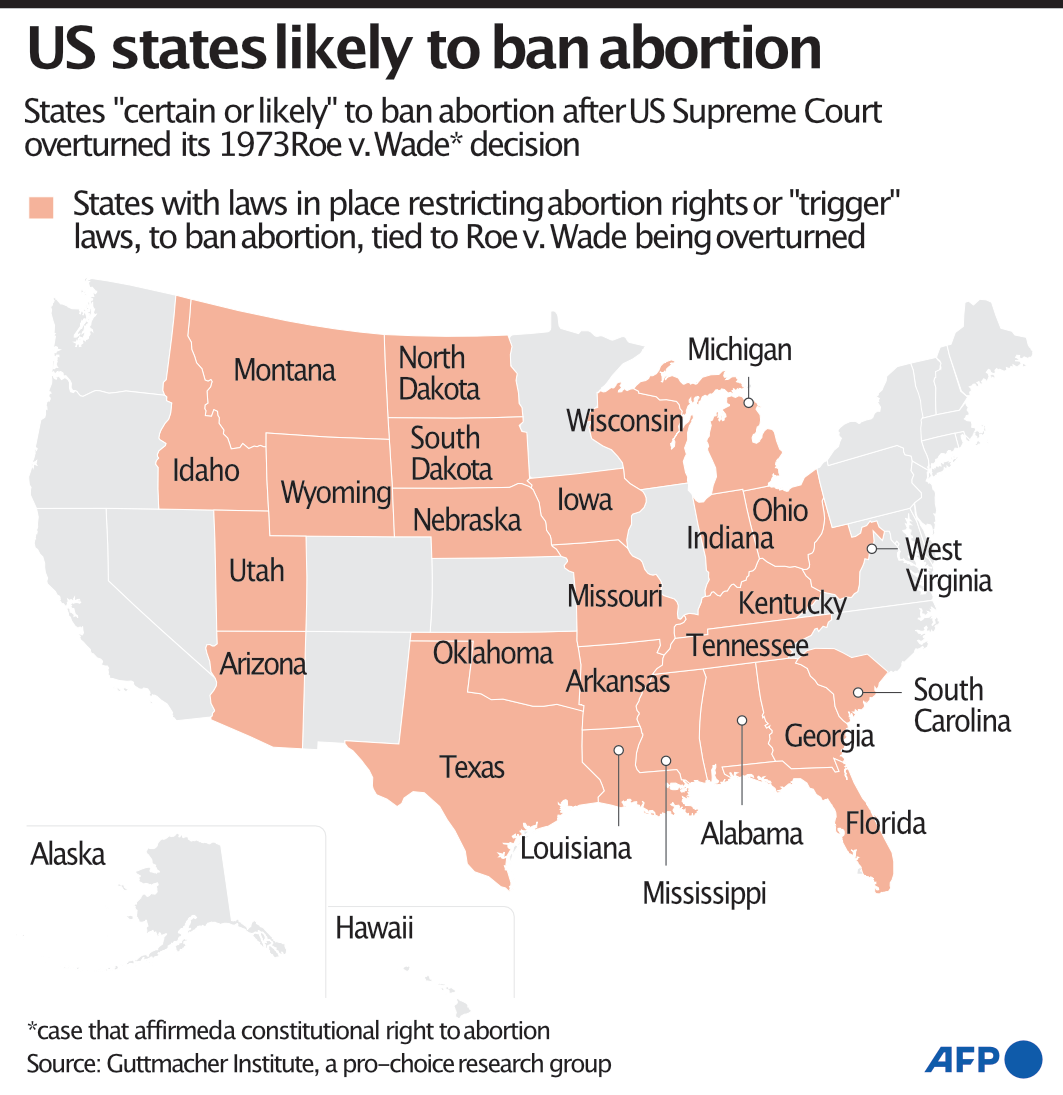
She worried the ruling will embolden abortion opponents across Africa who have charged into reproductive health clinics or threatened attacks. “There is no safe place on the continent,” she said.
Abortion in sub-Saharan Africa is already more unsafe than in any other region of the world, and the overwhelming majority of women of child-bearing age live in countries where abortion laws are highly or moderately restricted, according to the Guttmacher Institute, a New York-based research organization that supports abortion rights.
Archane said civil society groups in Africa will have to come together to work out strategies on how to keep themselves and women safe. Just months ago, many saw hope when the World Health Organization released guidelines on quality abortion care, she said. “We had a step ahead, and now we have to go five steps back again.”
The decision, which leaves it up to lawmakers in individual US state to decide whether to allow or ban abortions, lit up social media across Argentina, where a law that legalized elective abortion up to the 14th week of gestation took effect in January 2021 after years of debate.
Anti-abortion activists cheered the ruling, with legislator Amalia Granata tweeting: “There is justice again in the world. We are going to achieve this in Argentina too!!”
In more conservative countries like El Salvador, where abortions are illegal no matter the circumstance and where some 180 women with obstetric emergencies have been criminally prosecuted in the last two decades, Larín warned that the ruling could inspire yet more efforts to loosen abortion restrictions outside the US
“Campaigns promoting abortion may intensify in our countries because funding and abortion clinics in the United States are going to close as they have been doing in recent years,” she said.
At the Vatican, the head of the Pontifical Academy for Life, Archbishop Vincenzo Paglia, joined US bishops in saying it is a time for reflection, healing wounds and civil dialogue.
“The fact that a large country with a long democratic tradition has changed its position on this issue also challenges the whole world.” the academy said.
In Mexico, lawyer and activist Verónica Cruz said the ruling could give a boost to anti-abortion groups, but added it likely won’t have any impact in Mexico where 10 of the country’s 32 states have legalized abortion up to 12 weeks gestation in recent years.
She noted the ruling could lead to an increase in calls for help from US women seeking to have abortions in Mexico or to buy pills to interrupt pregnancies at Mexican pharmacies.
So far this year, local activists have accompanied some 1,500 US women who traveled to Mexico for those purposes, Cruz said.
Ricardo Cano, with the anti-abortion group National Front for Life, also doubts the ruling would have any impact in Mexico or elsewhere in Latin America, given the advance of leftist ideologies in the region.
Colombia, which became in February the latest Latin American country to expand access to abortion, also will not be affected by the ruling, said Catalina Martínez Coral, director for Latin America and the Caribbean for the Center for Reproductive Rights.
Ahead of US President Joe Biden’s trip overseas, the heads of at least two Group of Seven members called the decision “horrific.”
“No government, politician or man should tell a woman what she can and cannot do with her body,” said Canadian Prime Minister Justin Trudeau, adding that he “can’t imagine the fear and anger” women in the US must be experiencing in the wake of the ruling.
The French Foreign Ministry urged US federal authorities “to do everything possible” to ensure American women have continued access to abortions, calling it a “health and survival issue.” France’s president, Emmanuel Macron, added in a tweet that “abortion is a fundamental right of all women.”
Tedros Adhanom Ghebreyesus, head of the World Health Organiztion, said on Twitter that he was “concerned and disappointed” by the ruling. saying it reduces both ”women’s rights and access to health care.”
The UN agency dealing with sexual and reproductive health said that whether or not abortion is legal “it happens all too often” and global data shows that restricting access makes abortion more deadly.
The United Nations Population Fund issued a statement following the Supreme Court’s decision noting that its 2022 report said that nearly half of all pregnancies worldwide are unintended and over 60 percent of those pregnancies may end in abortion.
“A staggering 45 percent of all abortions around the world are unsafe, making this a leading cause of maternal death,” the agency said.
It said almost all unsafe abortions occur in developing countries, and it fears that “more unsafe abortions will occur around the world if access to abortion becomes more restricted.”
In the only part of Latin America directly affected by the ruling, Puerto Rico, the island’s Senate approved a bill Tuesday that would prohibit abortions after 22 weeks or when a doctor determines a fetus is viable, with the sole exception being if a woman’s life is in danger. The bill is now before the island’s House of Representatives.
Dr. Migna Rivera García, president of Puerto Rico’s Association of Psychologists, said the US Supreme Court’s ruling has prompted abortion rights activists to reformulate their strategy.
“It causes a lot of uncertainty given the environment right now in Puerto Rico,” she said. “This bill harms poor women and black women the most. ... They don’t have access to services like other social groups.”