KARACHI: The director of Joyland, Pakistan’s first entry to the Cannes Film Festival, has said he was “most excited” that his movie was being watched by people in his own country and that his work had given Pakistanis a chance to be “represented authentically.”
Joyland, which celebrates ‘transgender culture’ in Pakistan and tells the story of a family torn between modernity and tradition in contemporary Lahore, won the Cannes “Queer Palm” prize for best feminist-themed movie as well as the Jury Prize in the “Un Certain Regard” competition, a segment focusing on young, innovative cinema talent.
The first-ever Pakistani competitive entry left Cannes audiences slack-jawed and admiring, and got a nearly 10-minute-long standing ovation from the opening night’s crowd.
Part of the surprise came from the discovery by many that Pakistan is one the first nations to have given legal protection against discrimination of transgender people.
“I think that sometimes it feels good to be represented authentically, that this is who we are, this is how we look like and this is how we behave,” director Saim Sadiq told Arab News in an interview on Monday. “I am most excited about people watching it [Joyland] here [in Pakistan] than anywhere else.”
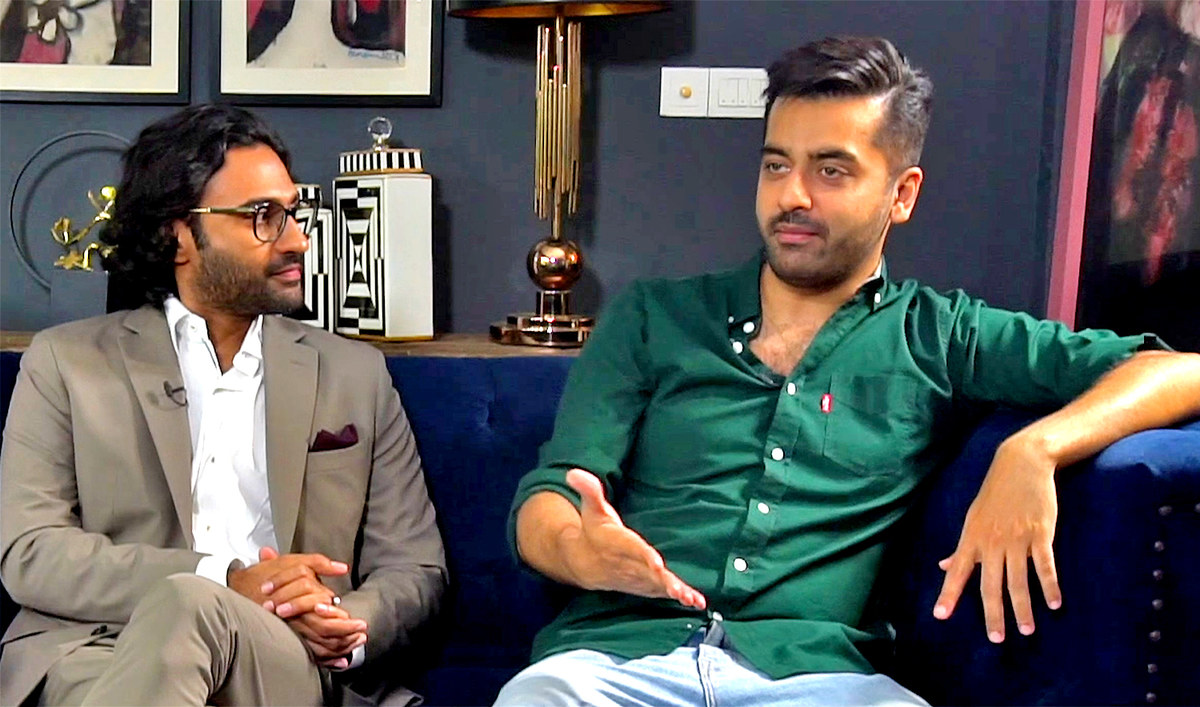
Speaking about his creative process, Sadiq said he did not focus on a particular audience while making a film but hoped it would be good enough to have mass appeal.
“You’re making a film with your honesty and you’re telling a story,” he said. “If it’s a good story and you’ve told it well, hopefully people here and people everywhere will respond to it ... Eventually the person who watches it is brown or black or white or Pakistani or Indian, it doesn’t matter.”
After its Cannes glory, Catherine Corsini, French director and the “Queer Palm” jury head, had described Joyland as a “very powerful film” with “strong characters who are both complex and real.”
Sadiq too described the film as “really character driven.”
“There is too much relatability in this film for Pakistanis more than anywhere else in the world,” he said. “If an audience from France, sitting at Cannes, can respond like that, I think people here hopefully should respond better because there is far more they can recognize in there.”
One of the characters in the film, Nucchi, who gives birth to three daughters, belongs to a household that has long hoped for the birth of a son to continue the family line. And her brother-in-law Haider secretly falls in love with a transgender woman Biba, who fights for her right to work as a performer.
“Joyland” also explores the frustration of women seeking to pursue careers, with Haider’s wife Mumtaz falling into a depression over being forced to stay at home and stop working as a make-up artist.
Sarwat Gilani, a film and TV star who plays Nucchi, said the film was a “very honest representation of a Pakistani family.”
“There’s nothing sugar coated in this film. It’s a very realistic film. It’s a story about a family and what goes around in a family in a society like Pakistan,” she told Arab News. “It has got relationships, it has got values, it has got societal pressures that we come under.”
Ali Junejo, who plays Haider, said he had wanted to be a part of the film from the moment he read the script.
“It is a very human story,” he said. “I was obsessing over that idea … [to] make it as truthful as I possibly could. The people who watched it there, they felt something.”
Sadiq agreed, saying the response to the film was “more than we expected.”
“Now that it’s been a few days [since Cannes],” he said chuckling, “I can say normal things without being tacky and crying.”
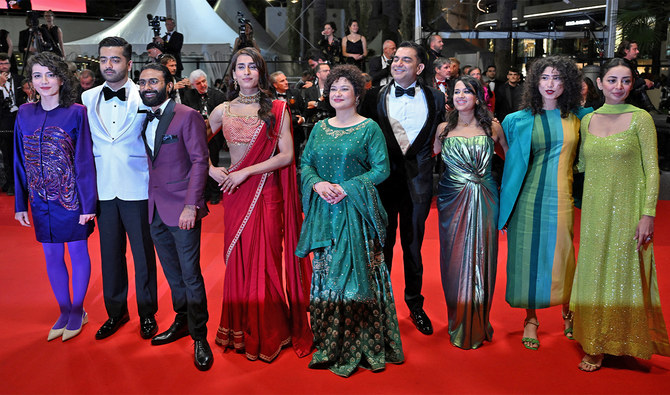
“It was an unreal, almost magical kind of an experience,” Gilani said about the experience of Cannes. “It didn’t hit me till I reached there, maybe until the red carpet.
I think it hits you once you are done with it.”