

‘Good to be represented authentically,’ says director of Pakistani film Joyland after Cannes glory

Movie director of the film "Joyland," Saim Sadiq (right), actor Ali Junejo (center) and actor and model Sarwat Gilani talk to Arab News in Karachi, Pakistan, on June 20, 2022. (AN Photo)
Short Url
Updated 22 June 2022
Follow

‘Good to be represented authentically,’ says director of Pakistani film Joyland after Cannes glory

  • Joyland won Cannes “Queer Palm” prize for best feminist-themed movie, Jury Prize in the “Un Certain Regard” competition
  • Joyland left Cannes audiences slack-jawed and admiring, film got nearly 10-minute-long standing ovation on opening night

KARACHI: The director of Joyland, Pakistan’s first entry to the Cannes Film Festival, has said he was “most excited” that his movie was being watched by people in his own country and that his work had given Pakistanis a chance to be “represented authentically.”

Joyland, which celebrates ‘transgender culture’ in Pakistan and tells the story of a family torn between modernity and tradition in contemporary Lahore, won the Cannes “Queer Palm” prize for best feminist-themed movie as well as the Jury Prize in the “Un Certain Regard” competition, a segment focusing on young, innovative cinema talent.

The first-ever Pakistani competitive entry left Cannes audiences slack-jawed and admiring, and got a nearly 10-minute-long standing ovation from the opening night’s crowd.

Part of the surprise came from the discovery by many that Pakistan is one the first nations to have given legal protection against discrimination of transgender people.

“I think that sometimes it feels good to be represented authentically, that this is who we are, this is how we look like and this is how we behave,” director Saim Sadiq told Arab News in an interview on Monday. “I am most excited about people watching it [Joyland] here [in Pakistan] than anywhere else.”
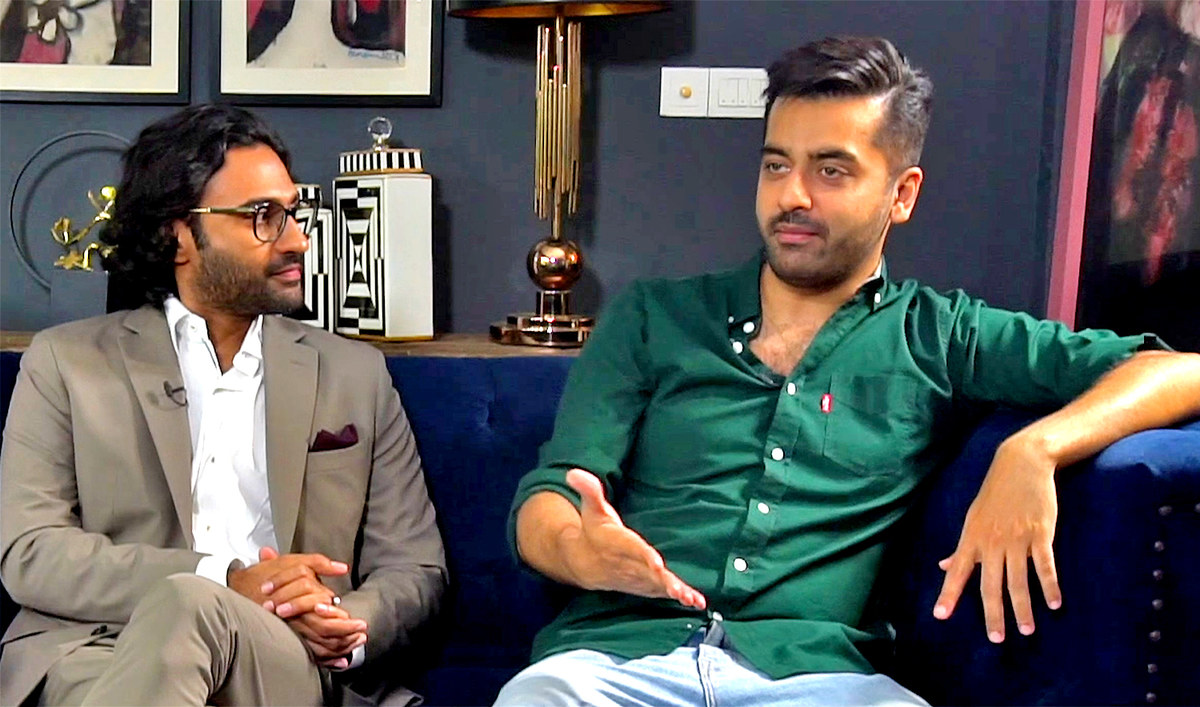

Movie director of the film "Joyland," Saim Sadiq (right) talks to Arab News in Karachi, Pakistan, on June 20, 2022. (AN Photo)

Speaking about his creative process, Sadiq said he did not focus on a particular audience while making a film but hoped it would be good enough to have mass appeal.

“You’re making a film with your honesty and you’re telling a story,” he said. “If it’s a good story and you’ve told it well, hopefully people here and people everywhere will respond to it ... Eventually the person who watches it is brown or black or white or Pakistani or Indian, it doesn’t matter.” 

After its Cannes glory, Catherine Corsini, French director and the “Queer Palm” jury head, had described Joyland as a “very powerful film” with “strong characters who are both complex and real.”
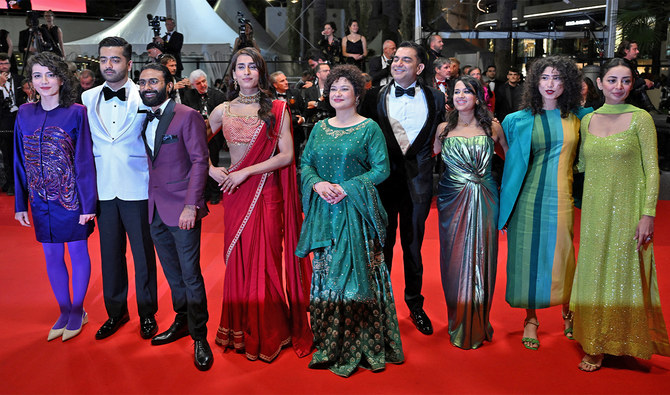

Pakistani movie Joyland crew arrives for the screening of the film "Joyland" at the 75th edition of the Cannes Film Festival in Cannes, France, on May 22, 2022. (AFP)

Sadiq too described the film as “really character driven.”

“There is too much relatability in this film for Pakistanis more than anywhere else in the world,” he said. “If an audience from France, sitting at Cannes, can respond like that, I think people here hopefully should respond better because there is far more they can recognize in there.”

One of the characters in the film, Nucchi, who gives birth to three daughters, belongs to a household that has long hoped for the birth of a son to continue the family line. And her brother-in-law Haider secretly falls in love with a transgender woman Biba, who fights for her right to work as a performer.

“Joyland” also explores the frustration of women seeking to pursue careers, with Haider’s wife Mumtaz falling into a depression over being forced to stay at home and stop working as a make-up artist.

Sarwat Gilani, a film and TV star who plays Nucchi, said the film was a “very honest representation of a Pakistani family.”

“There’s nothing sugar coated in this film. It’s a very realistic film. It’s a story about a family and what goes around in a family in a society like Pakistan,” she told Arab News. “It has got relationships, it has got values, it has got societal pressures that we come under.” 

Ali Junejo, who plays Haider, said he had wanted to be a part of the film from the moment he read the script.

“It is a very human story,” he said. “I was obsessing over that idea … [to] make it as truthful as I possibly could. The people who watched it there, they felt something.”

Sadiq agreed, saying the response to the film was “more than we expected.”

“Now that it’s been a few days [since Cannes],” he said chuckling, “I can say normal things without being tacky and crying.”

“It was an unreal, almost magical kind of an experience,” Gilani said about the experience of Cannes. “It didn’t hit me till I reached there, maybe until the red carpet. 

I think it hits you once you are done with it.”


Pakistan to launch AI screening in January to target fake visas, agent networks

Updated 5 sec ago
Follow

Pakistan to launch AI screening in January to target fake visas, agent networks

  • New system to flag forged-document travelers before boarding and pre-verify eligibility
  • Move comes amid increasing concern over fake visas, fraudulent agents, forged papers

ISLAMABAD: Pakistan will roll out an AI-based immigration screening system in Islamabad from January to detect forged documents and prevent illegal overseas travel, the government said on Thursday. 

The move comes amid increasing concern over fake visas, fraudulent agents and forged papers, with officials warning that such activity has contributed to deportations, human smuggling and reputational damage abroad. Pakistan has also faced scrutiny over irregular migration flows and labor-market vulnerability, particularly in the Gulf region, prompting calls for more reliable pre-departure checks and digital verification.

The reforms include plans to make the protector-stamp system — the clearance required for Pakistani citizens seeking overseas employment — “foolproof”, tighten labor-visa documentation, and cancel the passports of deportees to prevent them from securing visas again. The government has sought final recommendations within seven days, signalling a rapid enforcement timeline.

“To stop illegal immigration, an AI-based app pilot project is being launched in Islamabad from January,” Interior Minister Mohsin Naqvi said following a high-level meeting chaired by him and Minister for Overseas Pakistanis Chaudhry Salik Hussain.

Naqvi said the new screening technology is intended to determine travelers’ eligibility in advance, reducing airport off-loads and closing loopholes exploited by traffickers and unregistered agents.

The interior minister added that Pakistan remains in contact with foreign governments to improve the global perception and ranking of the green passport, while a uniform international driving license will be issued through the National Police Bureau.

The meeting also approved zero-tolerance measures against fraudulent visa brokers, while the Overseas Pakistanis Ministry pledged full cooperation to streamline the emigration workflow. Minister Hussain said transparency in the protector process has become a “basic requirement,” particularly for labor-migration cases.

Pakistan’s current immigration system has long struggled with document fraud, with repeated cases of passengers grounded at airports due to forged papers or agent-facilitated travel. The launch of an AI screening layer, if implemented effectively, could shift the burden from manual counters to pre-flight verification, allowing authorities to identify risk profiles before departure rather than after arrival abroad.

The reforms also come at a moment when labor mobility is tightening globally. Gulf states have begun demanding greater documentation assurance for imported labor, while European and Asian destinations have increased scrutiny following trafficking arrests and irregular-entry routes from South Asia. For Pakistan, preventing fraudulent departures is increasingly linked to protecting genuine workers, reducing deportation cycles and stabilizing the country’s overseas employment footprint.