

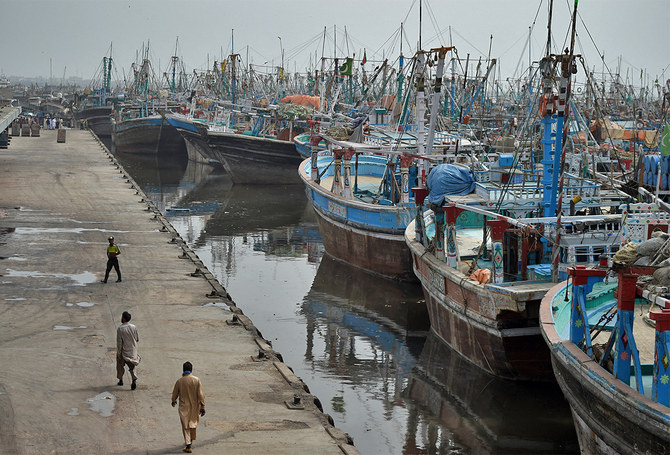

KARACHI: Fishermen along the coastal belt of Pakistan’s southern Sindh province have been forced to dock their boats due to a massive surge in the prices of diesel, they said on Monday, fearing the unbearable fuel costs might render around 2 million people out of work.
The coalition government of Prime Minister Shehbaz Sharif, which blames the former Imran Khan administration for providing unusual subsidy on fuel despite a tough deal with the International Monetary Fund (IMF), has thrice jacked up the prices of petroleum products in two months to revive a $6 billion loan program Pakistan secured in 2019.
The price of Light Diesel Oil (LDO) has surged from Rs118.31 to Rs207.47 ($1) per liter, recording almost a 75.36 percent hike, while High Speed diesel (HSD) has gone up from Rs144.15 to Rs263.31 ($1.25) per liter with an 82.66 percent increase.
Abdul Majeed Motani, 70, a representative of the Pakistan Fisherfolk Forum (PFF), said the extraordinary hike in prices of diesel – the fuel used for running fishing boat engines – has forced thousands to anchor their boats at dockyards, despite the Sindh government allowing them to fish in June, which along with July is a proscribed month for the catch due to the breeding season.
“He [fisheries secretary] said we are giving you relief, you may run your boats in the month of June, but as June started, the prices of diesel went up and even the big fishing boats that had gone into the sea for two to four days couldn’t meet the expenses [from the catch],” Motani told Arab News.
“In this age of inflation and with this expensive diesel, you cannot run boats.”
Siddique Chaudhry, an official of the Fishermen’s Co-operative Society, said the income of fishermen had substantially gone down during the last couple of years, making it difficult for them to make ends meet.
“It’s hard for the fisherfolk to make their ends meet, which is why the fishermen cooperative society on their request allowed them last year as well as this year to fish in the month of June,” Chaudhry told Arab News.
Some 10,000 big and more than 15,000 small and around 4,000 unregistered fishing boats operate from the 270-kilometer-long Sindh coast, part of Pakistan’s 990km coastline, offering millions a source of livelihood.
In Pakistan, 4 million people are associated with the fishing industry and half of them are linked with fishing in the sea, according to Motani. These, he said, include boat owners, fishermen, workers in fish processing factories, and those trading the catch in markets.
“There is a threat that these 2 million people will lose their jobs because I don’t think that fishing boats will run with such huge expenses,” Motani said.
He said fuel contributes to a large part of fishing expenses as 75 percent income of a big fishing boat is spent on the purchase of diesel, while there remain other expenses to meet from the rest of the 25 percent earnings.
“Fish is both exported and consumed at home, so there are factories too and if we assess, many people are associated with it,” Motani said.
“If the government doesn’t give subsidy, which it should give, then the whole [fishing] industry will come to a halt and all these people will become a burden on the government.”
The fuel price hike is the latest of the anguishes of the fishermen in Sindh, who say they have already lost a major share of the catch to deep-sea trawlers, sea pollution and other climate issues.


