

Saudi Arabia lifts COVID-19 travel restrictions to Turkey, India, Ethiopia and Vietnam

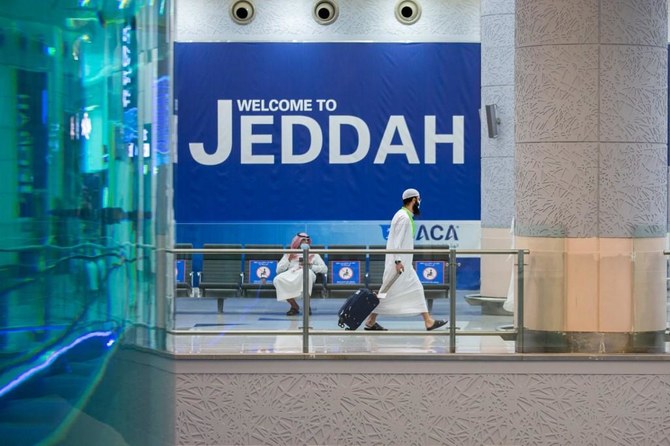
Saudi Arabia earlier lifted measures that had been taken to prevent the spread of COVID-19. (AFP file photo)
Short Url
Updated 21 June 2022
Follow

Saudi Arabia lifts COVID-19 travel restrictions to Turkey, India, Ethiopia and Vietnam

  • Earlier this month, the kingdom lifted measures imposed to prevent the spread of the virus

RIYADH: Saudi Arabia on Monday lifted coronavirus travel restrictions on citizens going to Turkey, India, Ethiopia, and Vietnam.
The Ministry of Interior tweeted it was “lifting citizens’ direct and indirect travel suspension to the Republic of Ethiopia, the Republic of Turkey, the Republic of Vietnam, and the Republic of India.”

It said the decision was based on the epidemiological situation in those countries and submissions from health authorities on the global epidemiological situation.
The Kingdom lifted the ban on Saudi citizens traveling directly or indirectly to Indonesia on June 7. It banned them from traveling to Indonesia last July due to the pandemic and the spread of a new COVID-19 variant.

The ministry’s General Directorate of Passports previously said Saudis were banned from traveling to 15 countries due to the spread of COVID-19 cases: Lebanon, Syria, Turkey, Iran, Afghanistan, India, Yemen, Somalia, Ethiopia, the Democratic Republic of the Congo, Libya, Vietnam, Armenia, Belarus, and Venezuela.
Last week the country announced the lifting of COVID-19 measures, including the requirement to wear face masks in enclosed spaces.

People are no longer required to wear a face mask indoors, except for the Grand Mosque in Makkah and the Prophet's Mosque in Madinah. Health facilities, public events, planes, and public transport wishing to uphold preventative measures can also keep the requirement to wear masks.

Proof of vaccination on the Tawakkalna application is also no longer required to enter establishments, events, activities, planes, and public transport.
People wishing to travel will be required to take a third booster dose after eight months instead of three months. However, the new regulation does not apply to people under a specific age or those exempted from vaccinations by the Ministry of Health.


Saudi Cabinet condemns ‘blatant’ Iranian aggression; affirms Kingdom’s right to respond to threats

Updated 04 March 2026
Follow

Saudi Cabinet condemns ‘blatant’ Iranian aggression; affirms Kingdom’s right to respond to threats

RIYADH: Saudi Arabia has warned it reserves the “full right” to respond to Iranian aggression following a series of “blatant and cowardly” strikes targeting the capital and the Eastern Province.

The warning came during a late-night Cabinet session on Tuesday, chaired by Crown Prince and Prime Minister Mohammed bin Salman via videoconference, according to the Saudi Press Agency (SPA).

During the session, the Cabinet “reaffirmed Saudi Arabia’s full solidarity with the brotherly countries whose territories were subjected to blatant Iranian aggression”, signaling a united front against regional threats.

The session followed a dramatic escalation of hostilities, including a direct drone attack on the US Embassy in Riyadh. 

Major General Turki al-Malki, spokesperson for the Ministry of Defense, confirmed that while air defenses intercepted multiple threats, the embassy compound sustained a “limited fire and minor material damage.”

General Al-Malki further announced that Saudi forces successfully intercepted and destroyed eight additional drones targeting the cities of Riyadh and Al-Kharj early Tuesday morning.

In a sharp rebuke of the embassy strike, the Saudi Ministry of Foreign Affairs (MOFA) cited a flagrant violation of the 1949 Geneva Convention and the 1961 Vienna Convention on Diplomatic Relations.

“The repetition of this flagrant Iranian behavior... will push the region toward further escalation,” the Ministry stated, underscoring that these provocations occurred despite Riyadh’s explicit policy of not allowing its airspace or territory to be used as a launchpad for strikes against Iran.

Global condemnation and solidarity

The Cabinet expressed deep appreciation for the wave of international support as world leaders condemned Tehran’s “indiscriminate” behavior.

In a joint show of force, the US and GCC member states (Bahrain, Kuwait, Qatar, Saudi Arabia and the UAE) along with Jordan stood united, labeling the strikes a “dangerous escalation” and reaffirming a collective right to self-defense.

Leaders from the United Kingdom, France, and India. — including Prime Minister Narendra Modi — voiced strong solidarity with the Kingdom. The UK government confirmed its forces are engaged in “defensive actions” to maintain regional stability.

Amid the heightened military tension, the Cabinet reviewed the Kingdom’s hospitality efforts for GCC citizens currently stranded at Saudi airports due to regional airspace closures. The crown prince reaffirmed that the state would mobilize all capabilities to support brotherly nations in any measures they take to restore regional peace and stability.