

Pakistani megapolis appoints women as duty officers in male-dominated police force

This photo shared by Special Services Unit Sindh on March 9, 2020 shows women cops in Pakistan's Sindh province. (Facebook/SSU Sindh Police)
Short Url
Updated 12 June 2022
Follow

Pakistani megapolis appoints women as duty officers in male-dominated police force

  • Police hope the presence of female officers will encourage more people to seek help
  • Sindh police chief says women duty officers will also be appointed at other police stations across the province 


KARACHI: Police authorities in Pakistan’s southern megapolis of Karachi have started appointing women as duty officers to improve the culture of the male-dominated force, a top official said on Saturday.
While women police stations were introduced in Karachi, the capital of Sindh province, two decades ago, and female personnel have been appointed as station house officers, it is the first time for them to serve as duty officers and moharars — police clerks who record complaints.
“We are trying to improve the culture of police stations and for this purpose have started to appointing women as duty officers and head and assistant moharars in police stations in Karachi,” Sindh Police Inspector General Ghulam Nabi Memon told Arab News, adding that in such appointments will also be made at other police stations across the province.
Police hope the presence of female duty officers will encourage more women to seek help when needed.

“Duty officers and clerks are the first points of contact for complainants at police stations. Appointment of women at these basic posts of direct public dealing will push complainants, especially women, to go to police stations and lodge FIRs,” Memon said.
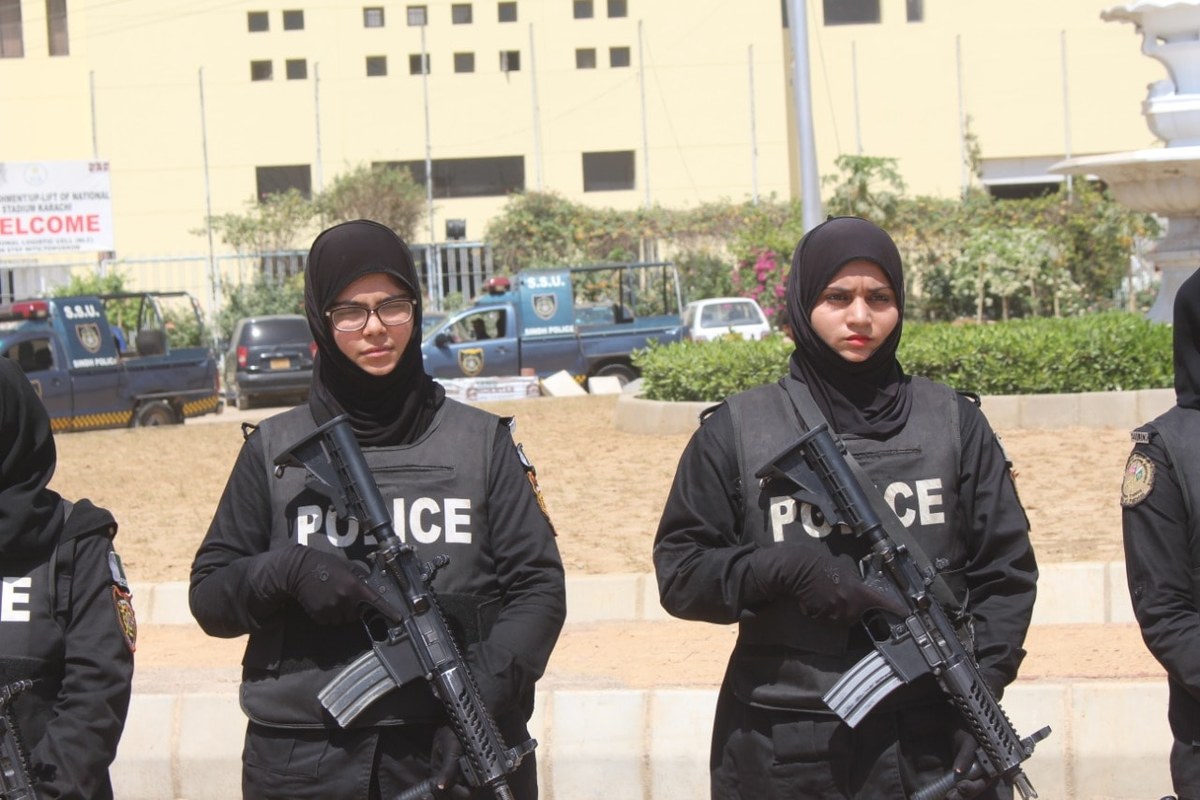


This photo shared by Special Services Unit Sindh on March 9, 2020 shows women cops in Pakistan's Sindh province. (Facebook/SSU Sindh Police)

Zoha Waseem, assistant professor at University of Warwick who researches policing in South Asia, said the appointment of women was a “positive move.”

“It’s believed that the appointment of women on such positions can encourage female victims to file complaints because the stations are otherwise male dominated,” she told Arab News.

For the initiative to be sustainable, she added, the police force would however need to adjust the working hours of female staff, giving women officers the chance to attend to their family duties as well.

“The sustainability can be possible only if female officers at junior levels are given proper promotions, their duty hours are made better and if they have kids they should also be taken care of,” Waseem said. “If you don’t take their time and family considerations into account, they may not stay.”

For Muhammad Ramzan Channa, a retired inspector general who has been a member of police reform committees, the Sindh police initiative was a “huge way forward toward a better police system.”

“The conduct of women is relatively good compared to male officers at police stations,” he said. “It will benefit society, help empower women, but most importantly, this initiative will result in better policing and improve police’s image.”


Pakistan, Libya discuss defense and counterterrorism cooperation during army chief’s visit

Updated 4 sec ago
Follow

Pakistan, Libya discuss defense and counterterrorism cooperation during army chief’s visit

  • Military says Field Marshal Asim Munir met Libyan Commander-in-Chief Khalifa Belqasim Haftar during the visit
  • Unlike several other states in the region, bilateral defense collaboration remains limited between the two countries

ISLAMABAD: Pakistan and Libya discussed enhancing defense cooperation, with a focus on training and counterterrorism partnership, during a visit by Pakistan’s Chief of Army Staff Field Marshal Asim Munir to the North African country, the military said in a statement on Thursday.

Pakistan and Libya established diplomatic relations in 1951, with ties particularly close during the era of former Libyan leader Muammar Qaddafi, when Tripoli positioned itself as a supporter of Muslim causes and developing countries, including

Pakistan. Relations have been more restrained since Libya’s political upheaval in 2011.

According to the military’s media wing, Inter-Services Public Relations (ISPR), Munir met Field Marshal Khalifa Belqasim Haftar, commander-in-chief of the Libyan Arab Armed Forces, and Lt. Gen. Saddam Khalifa Haftar, deputy commander-in-chief, during the visit.

“Both sides underscored the importance of collaboration in training, capacity building and counterterrorism domains,” ISPR said in a statement.

“Field Marshal Syed Asim Munir reaffirmed Pakistan’s commitment to strengthening defense ties with Libya, based on shared interests,” it added.

ISPR said Munir was accorded a guard of honor by a contingent of the Libyan Armed Forces on arrival and that the talks also covered matters of mutual interest, regional security dynamics and avenues for expanding military-to-military cooperation.

The Libyan military leadership appreciated the professionalism of the Pakistan armed forces and expressed a desire to expand defense cooperation between the two countries, the statement said.

Unlike Pakistan’s relations with some Gulf and Middle Eastern states, there is currently no significant defense or military cooperation between Islamabad and Tripoli, with engagement remaining limited amid Libya’s prolonged political instability.