

India In-Focus — RBI raises key interest rates by 50 base points; Sberbank says India, Belarus still discuss potash deal

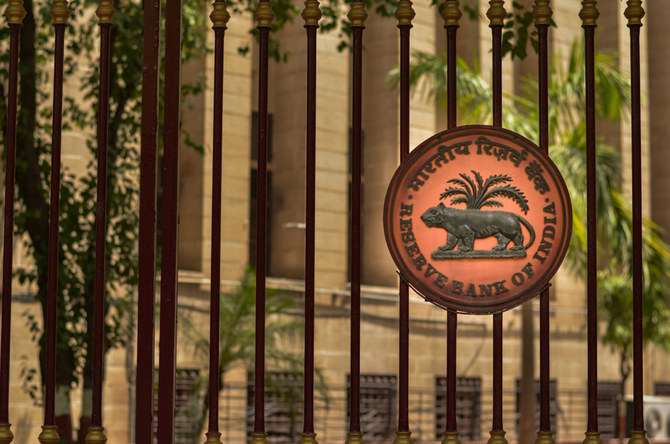
The monetary policy committee raised the key lending rate, or the repo rate, by 50 basis points to 4.90 percent. (Shutterstock)
Short Url
Updated 08 June 2022
Follow

India In-Focus — RBI raises key interest rates by 50 base points; Sberbank says India, Belarus still discuss potash deal

MUMBAI: The Reserve Bank of India’s key interest rate was raised by 50 basis points on Wednesday — the second hike in as many months in a bid to cool persistently high inflation.

The monetary policy committee raised the key lending rate, or the repo rate, by 50 basis points to 4.90 percent.

The Standing Deposit Facility rate and the Marginal Standing Facility Rate were adjusted higher by the same quantum to 4.65 percent and 5.15 percent, respectively.

RBI Governor Shaktikanta Das had said a June 8 move was a “no brainer.” But analysts polled by Reuters had been divided over how much it would hike, with forecasts ranging between 25 and 75 bps.

Wednesday’s increase follows a 40-bps rise in early May at an unscheduled meeting that kicked off the central bank’s tightening cycle, which economists expect to be relatively short.

Russia’s Sberbank says India, Belarus still discuss potash deal

Russia’s Sberbank said on Tuesday that Indian Potash Ltd., also known as IPL, and the Belarusian Potash Company have been in discussions about a sale deal and denied it was responsible for holding up the payments.

IPL set up a rupee account with Sberbank’s New Delhi branch in early February at the request of the Belarusian company, given steadily toughening US sanctions against Minsk since a 2020 election and a crackdown on pro-democracy protests.

According to two people familiar with the issue and a letter seen by Reuters, the Indian company complained to Sberbank that only a “negligible” part of its payment in rupees got converted into roubles. The two companies agreed that IPL would pay for Belarussian potash in rupees rather than dollars.

One of the sources told Reuters on Monday that Sberbank had not responded yet to the letter dated May 23.


Kuwait forecasts 54.7% rise in fiscal deficit as oil revenues weaken 

Updated 11 sec ago
Follow

Kuwait forecasts 54.7% rise in fiscal deficit as oil revenues weaken 

JEDDAH: Kuwait expects its fiscal deficit to widen sharply in the 2026–2027 budget year as lower oil income weighs on public finances, with the shortfall projected to rise 54.7 percent to 9.8 billion dinars ($31.9 billion). 

Announcing the draft budget, Finance Minister Yaqoub Al-Refaei estimated total expected revenues at 16.3 billion dinars, marking a 10.5 percent decline compared with the previous fiscal year. 

Kuwait is pushing Vision 2035 reforms to diversify its economy and boost non-oil growth but remains exposed to oil price volatility despite moderate inflation and strong non-oil expansion. 

“The minister disclosed that oil revenues were budgeted at 12.8 billion dinars, a 16.3 percent contraction compared to the current budget ending March 31, 2026,” the Kuwait News Agency, known as KUNA, reported. 

Highlighting a positive trend for fiscal diversification, non-oil revenues are projected to rise 19.6 percent to 3.5 billion dinars. 

He noted that total expenditure is expected to reach 26.1 billion dinars, with salaries and subsidies accounting for 76 percent, capital spending 11.8 percent, and other expenditures 12.2 percent. The FY 2026–2027 budget is based on a conservative oil price estimate of $57 per barrel. 

The minister, however, stressed that Kuwait’s fiscal break-even price — the price needed to balance the budget — is significantly higher, at $90.5 per barrel. 

The draft budget, covering April 1, 2026, to March 31, 2027, includes capital spending of 3.1 billion dinars, with significant allocations for infrastructure and strategic projects, according to a release by the Ministry of Finance. 

Of this, 318 million dinars will fund the Ministry of Public Works for developments such as Mubarak Al-Kabeer Port, the Umm Al-Hayman plant expansion, the North Kabd station, and the expansion of Kuwait International Airport’s Terminal 2. 

Additional allocations support the health ministry’s cancer control center, as well as the Defense and Interior ministries for military equipment. 

Higher spending is also driven by a 741.2 million-dinar increase in the public treasury’s contribution to social insurance to cover pension fund deficits. 

Conversely, support for fuel used in power generation and refined products declined by 449.2 million dinars due to falling global oil prices. 

The ministry highlighted that the budget would create 14,518 new positions, reflecting efforts to boost employment while continuing to diversify revenue sources.