



ISLAMABAD: Pakistan’s Minister for Religious Affairs Mufti Abdul Shakoor on Tuesday said the government had approved a Rs150,000 ($750) subsidy for Hajj pilgrims traveling to Saudi Arabia under the government scheme.
Pakistan has been allotted a quota of 81,132 pilgrims for this year’s Hajj, where over 32,000 would go under the government scheme and above 48,000 would go through private operators.
After a two-year hiatus due to the COVID-19 pandemic, Saudi Arabia this year allowed the Hajj pilgrimage for all Muslims across the globe, but restricted the maximum age of pilgrims to 65 years.
“Today, the federal cabinet has approved a subsidy of Rs150,000 per person for the government Hajj scheme,” Shakoor told reporters in Islamabad.
“This subsidy will reduce Hajj expenses from Rs860,000 to around Rs710,000.”
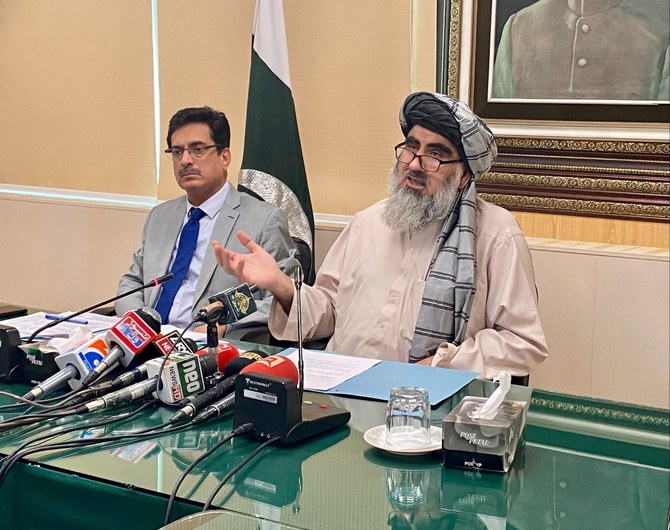
Pakistan’s Minister for Religious Affairs Mufti Abdul Shakoor (right) addresses a press conference in Islamabad, Pakistan, on May 31, 2022. (AN Photo)
Hajj expenses would have gone over a million rupees per person due to depreciation in the value of Pakistani currency, Shakoor said, adding his ministry succeeded in reducing them through better negotiations for residential buildings and catering services in Saudi Arabia.
“We have brought rates of per bed accommodation in Makkah from SR2,400 to SR2,100 and in Medina, from SR1,100 to SR720,” the minister said.
He said the government had convinced private Hajj operators to reduce their basic package from Rs1.2 million ($5,997) to Rs950,000 ($4747).
“We cannot force private Hajj operators about the [choice of] currency for airfare, but it has been fixed at Rs181,000 [return ticket] in the government scheme,” he said, when told some private operators were asking pilgrims to pay their airfares in dollars.
The religious minister thanked the Saudi government for starting Hajj operations despite the fact that coronavirus was not completely eliminated from the world.
“I am grateful to the Custodian of the Two Holy Mosques for allowing and managing Hajj this year even though the whole world is still fighting COVID-19,” he said.
“The Saudi government has digitalized Hajj services, providing better transportation and air-conditioned tent residences at the Mina valley this year.”
Shakoor also expressed his gratitude to Saudi Arabia’s ambassador to Pakistan Nawaf bin Said Al-Malki for facilitating the visa service on a short notice.
The minister said his government had received over 63,000 applications for the government scheme for around 32,000 pilgrims.
“We have completed all Hajj arrangements within one month which normally requires six months,” he said, adding the first Hajj flight will depart on June 6.


