ANKARA/HELSINKI: Finland and Sweden should change their laws if needed to meet Turkey’s demands and win its backing for their bid to join NATO, the Turkish foreign minister said on Tuesday, doubling down on a threat to veto a historic enlargement of the alliance.
In a move that shocked its allies, Turkey on May 13 objected to Finland and Sweden joining NATO on the grounds that they harbor people linked to groups it deems terrorists, including the Kurdistan Workers Party (PKK), and because they halted arm exports to Turkey in 2019. The Nordic states applied to join NATO after Russia’s invasion of Ukraine.
All 30 NATO members must approve any enlargement plans.
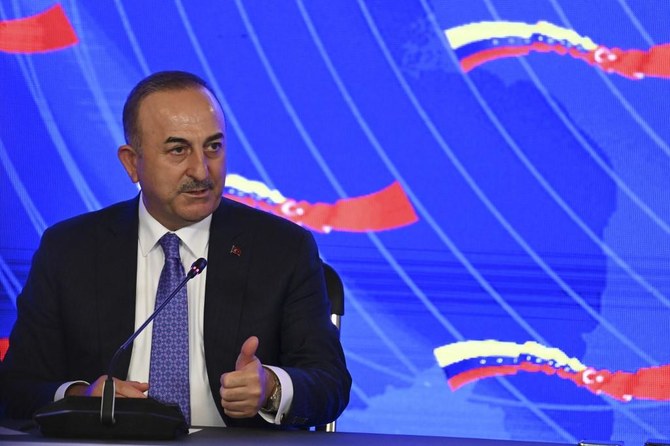
Mevlut Cavusoglu said Turkey, a NATO member for seven decades, would not lift its veto unless its demands were met, echoing recent comments by President Tayyip Erdogan.
Ankara has said Sweden and Finland must halt their support for the PKK and other groups, bar them from organizing any events on their territory, extradite those sought by Turkey on terrorism charges, support Ankara’s military and counter-terrorism operations, and lift all arms exports restrictions.
Finland and Sweden have sought to negotiate a solution and other NATO capitals have said they remain confident that the objections raised by Turkey — which has NATO’s second biggest military — can be overcome.
Cavusoglu said Turkey had given visiting Finnish and Swedish delegations documents outlining the demands during talks in Ankara last week and that it was awaiting their response, adding he expected allies to work to address the security concerns.
“Are our demands impossible? No. We want them to halt their support for terror,” Cavusoglu told the state-run Anadolu news agency, adding Ankara was aware that some of its demands would require laws to be amended.
“They put it this way: ‘since we are far away from terror regions, our laws are designed that way’. Well, then you need to change them,” he said. “They say it is allowed for the terrorist organization to organize events and wave their rags around. Then you have to change your law.”
The Nordic states have said they condemn terrorism and are open to dialogue.
Cavusoglu said NATO Secretary-General Jens Stoltenberg was working on the issue and had proposed holding talks in Brussels with all three countries, but said Ankara saw no point before Stockholm and Helsinki had responded to its written demands.
“There need to be concrete things for us to discuss,” he said.
Earlier, Erdogan’s Communications Director Fahrettin Altun told Finland’s largest daily Helsingin Sanomat that Finland must take Turkey’s concerns seriously.
“Eventually Finland’s government must decide which is more important — to join NATO or protect these kinds of organizations,” he said, referring to the PKK and the other groups Ankara deems terrorists.


![]()

Turkey says Nordics must change laws if needed to meet its NATO demands
Short Url
https://arab.news/gdc5h
Turkey says Nordics must change laws if needed to meet its NATO demands
- Mevlut Cavusoglu said Turkey, a NATO member for seven decades, would not lift its veto unless its demands were met


Latest updates


© 2026 SAUDI RESEARCH & PUBLISHING COMPANY, All Rights Reserved And subject to Terms of Use Agreement.