

Big projects need to open doors for SMEs to drive tourism, says official

Short Url
Updated 05 June 2022
Follow

Big projects need to open doors for SMEs to drive tourism, says official

  • Saudi Arabia’s Tourism Development Fund offers ‘financial and non-financial support to startups’

RIYADH: Prominent Saudi projects aimed at elevating tourism in the country will need to integrate with small and medium enterprises, said a senior official of Saudi Arabia’s Tourism Development Fund.

“We believe that even our big projects will need a lot of integration with SMEs to activate the entertainment, food and beverages sector,” Wahdan Al-Kadi, the chief business officer at TDF, told Arab News on the sidelines of the Future Hospitality Summit in Riyadh.

The two-day event held under the theme “Reimagined Horizons” discussed the future of hotel development, destination impact, aviation, sustainability, restaurant investment and human capital.

It featured a series of sessions covering topics such as the future of hotel asset management, the future of loyalty schemes, transparency and brand loyalty.

Encouraging SMEs

During the interview, Al-Kadi said that the TDF provides financial and non-financial support to startups and SMEs in the nation.

“We have financial support and non-financial support. We have a business app that offers to coach SMEs to run their businesses,” said Al-Kadi. 
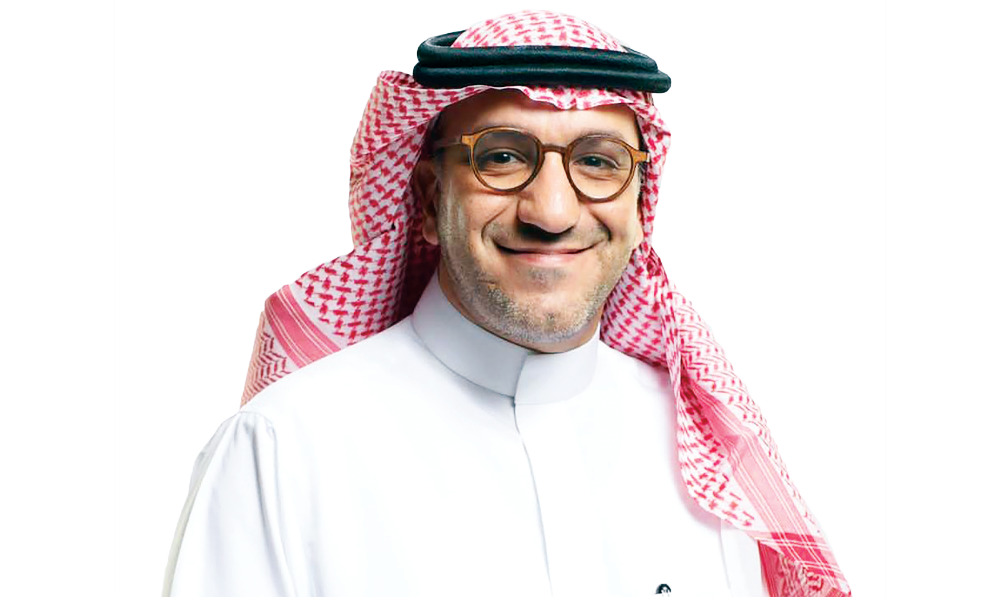


Wahdan Al-Kadi

He further added: “There is financial support as well. We have 10 different products for SMEs that offer startup loans, working capital, asset financing, and many other products to support them.”

Tourism’s impact on GDP

Al-Kadi noted that the revenue from non-oil sectors is crucial for Saudi Arabia’s economy.

“There is a lot of focus on diversifying the economy through industries such as tourism, which can contribute to the gross domestic product and generate jobs. The idea is to raise the contribution of tourism to GDP from 3 percent to 10 percent and add another 1 million jobs directly and indirectly to the industry by 2030,” he added.

Al-Kadi added that the TDF is also doing its part to attract investors to the country.

“We have a one-stop-shop that helps local and international investors get the right data on the destinations we are promoting, besides supporting them with project-related licenses and permits and assisting them in getting lands.

We also do review feasibility studies,” he said.

Saudi Arabia has become a tourist destination for regional and international visitors and the Kingdom’s tourism sector is accelerating the pace for the future by announcing several programs and initiatives.

Saudi tourism offers geographical and historical diversity, highlighting natural resources, archaeological treasures and historical places that meet the aspirations of tourists.

Prior to the COVID-19 pandemic, 450,000 tourist visas were issued, since the Kingdom’s Tourism Authority launched the tourist visa program in 2019, by targeting 49 countries in the initial stage, and facilitated access to tourist visas electronically or through entry points to the Kingdom within specific regulatory controls.

The authority has prepared programs to attract tourism, and has been activating tourism investment and the role of the private sector. The authority has also participated in local and international tourism exhibitions and has managed marketing destinations, sites, itineraries, products and tourist packages internally and externally.


Saudi Maaden reports 156% profit surge to $2bn on strong commodity prices, record production

Updated 05 March 2026
Follow

Saudi Maaden reports 156% profit surge to $2bn on strong commodity prices, record production

RIYADH: Saudi mining and metals company Maaden has reported a 156 percent jump in its net profit attributable to shareholders for 2025, driven by higher commodity prices, record production volumes, and a one-off bargain purchase gain.

The state-backed giant posted a net profit of SR7.35 billion ($1.95 billion) for the full year 2025, an increase from SR2.87 billion in the previous year. The firm’s revenue surged by 19 percent to SR38.58 billion, up from SR32.55 billion in 2024.

This comes as Saudi Arabia steps up efforts to expand its mining sector as a pillar of economic diversification, encouraging international participation and private investment to unlock the Kingdom’s estimated $2.5 trillion in untapped mineral resources under Vision 2030.    

In a statement on Tadawul, the company said: “Performance was led by record phosphate production, near record aluminum production, an increase in all three of Maaden’s main output commodity prices.”

The performance was also fueled by a 60 percent increase in gross profit, which reached SR14.79 billion. In its annual results announcement, Maaden attributed the top-line growth to “higher commodity market prices for phosphate, aluminum and gold business units,” as well as increased sales volumes in its phosphate and aluminum segments. This was partially offset by slightly lower sales volume in the gold unit.

Maaden’s CEO, Bob Wilt, hailed 2025 as a transformative year for the company, marked by strategic growth and operational excellence. “This was a great year for Maaden’s strategic growth. We delivered strong financial results and sustained operational excellence across the business,” he said in a statement.

“This was driven by growth in production across all businesses, including record-breaking DAP (di-ammonium phosphatevolumes), disciplined cost control across and a clear commitment to our role as a cornerstone of the Saudi economy,” Wilt added.

Profitability was further bolstered by an increased share of net profit from joint ventures and an associate. This included a one-off bargain purchase gain of SR768 million related to Maaden’s investment in Aluminium Bahrain B.S.C. The company also benefited from lower finance costs.

The fourth quarter of 2025 was strong, with Maaden swinging to a net profit of SR1.67 billion, compared to a loss of SR106 million in the same period of the prior year. Quarterly revenue rose 7 percent to SR10.64 billion.

The firm achieved record production of di-ammonium phosphate, reaching 6.72 million tonnes for the year, a 9 percent increase. Aluminum production remained near-record levels, while the company added a net 7.8 million ounces to its reportable gold mineral resources through discovery and resource development.

The phosphate division saw sales jump 17 percent to SR20.77 billion, with the earnings before interest, taxes, depreciation, and amortization margin expanding to 47 percent. The aluminum business reported a 9 percent increase in sales to SR10.99 billion, with EBITDA more than doubling in the fourth quarter.

Looking ahead, Wilt emphasized that the pace of growth will accelerate as the company advances key initiatives, including the Phosphate 3 Phase 1 and Ar Rjum projects, which remain on budget and schedule. Maaden has also secured a gas supply for its future Phosphate 4 project.

“This pace of growth will only accelerate. Not only as we advance projects and increase the scale of our exploration program, but as we continue to grow production and implement technology that will further modernize, streamline and unlock value,” Wilt added.

Earnings per share for the year rose sharply to SR1.91, up from SR0.78 in 2024. Total shareholders’ equity increased by 18.7 percent to SR61.59 billion.