

70% of UAE, Saudi professionals consider job change due to lack of flexibility: LinkedIn

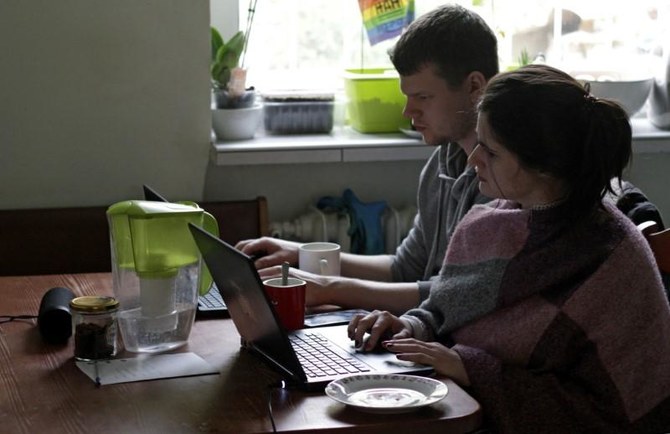
LinkedIn research showed that a lack of workplace flexibility significantly impacts women’s careers, with 20 percent of women who had to leave a job due to lack of flexibility saying their career progression was affected. Reuters/File
Short Url
Updated 24 May 2022
Follow

70% of UAE, Saudi professionals consider job change due to lack of flexibility: LinkedIn

RIYADH: New research from professional networking site LinkedIn has shed light on employee sentiment in Saudi Arabia and the UAE, with 70 percent of those surveyed saying they have considered leaving — or have left — a job due to lack of flexibility.

The COVID-19 pandemic has accelerated the rise in demand for flexible work. “The impact of the pandemic on how we work has been transformative, and research globally is pointing to an increased urgency for greater flexibility and empowerment in the workplace,” said Ali Matar, head of LinkedIn MENA and EMEA Venture Markets.

The research follows the launch of LinkedIn’s “career break” feature, which aims to destigmatize career gaps and support flexible careers. Last year, LinkedIn added stay-at-home parent job titles on the website in an effort to break biases around career gaps.

These initiatives align with what employees want, as 56 percent of those surveyed by LinkedIn said they plan on taking a career break in the near future.

LinkedIn refers to this shift toward flexible work as a “flexidus.” However, research showed there is still a disconnect between what companies offer in terms of flexibility and what employees want. 

While 74 percent of professionals in the UAE and Saudi Arabia said they thought the pandemic exposed a need for flexible work arrangements, more than 50 percent said that no new policies had been introduced by their firms to promote flexible work.

Additionally, LinkedIn research showed that a lack of workplace flexibility significantly impacts women’s careers, with 20 percent of women who had to leave a job due to lack of flexibility saying their career progression was affected.

“We have been given an incredible opportunity to reshape the world of work, and it’s critical we remember to keep people at the heart of it to truly build ‘work that works’ for everyone,” said Matar.


Saudi business optimism holds firm above 60 on non-oil strength 

Updated 9 sec ago
Follow

Saudi business optimism holds firm above 60 on non-oil strength 

RIYADH: Saudi Arabia’s Business Confidence Index held at 61.6 points in January, reflecting sustained optimism across the Kingdom’s non-oil sectors, official data showed. 

The index slipped 0.6 percent from 62 points in December, the General Authority for Statistics said, but remained well above the neutral 50 threshold, indicating continued expansion in business sentiment. 

The sustained momentum in the BCI underscores the progress made under Saudi Arabia’s Vision 2030 agenda, which seeks to diversify the economy by reducing reliance on crude revenues. 

“The index continues to reflect prevailing optimism in the business sector, supported by establishments’ confidence in the stability of economic activity and the continued growth across various sectors,” said GASTAT.  

According to the report, the BCI for the industrial sector recorded 61.7 points in January, maintaining an optimistic level despite a slight decline of 0.8 percent compared to the previous month. 

The slight decline in the industrial sector was driven by weaker confidence around current input costs and expectations for the coming month. 

In January, the BCI for the services sector recorded 61.3 points, marginally down 1.2 percent from December, due to a limited decline in confidence related to input costs for the current month and expected inputs for the coming month. 

The construction sector’s BCI stood at 61.6 points in January, marking a slight fall of 0.3 percent compared to the previous month. 

“The marginal decrease (in the construction sector) is attributed to a limited decline in confidence among construction sector establishments, particularly with regard to input costs for the current month and expected inputs for the coming month,” added GASTAT.  

Earlier this month, the Riyad Bank Purchasing Managers’ Index compiled by S&P Global showed Saudi Arabia’s PMI at 56.3 in January, driven by output growth, improving market conditions and stronger demand among non-oil businesses. 

A separate January report by Standard Chartered forecasts Saudi Arabia’s economy will expand 4.5 percent in 2026, supported by sustained momentum in both hydrocarbon and non-oil sectors. The bank expects non-oil growth at a similar pace, driven by investment and consumption.