

70% of UAE, Saudi professionals consider job change due to lack of flexibility: LinkedIn

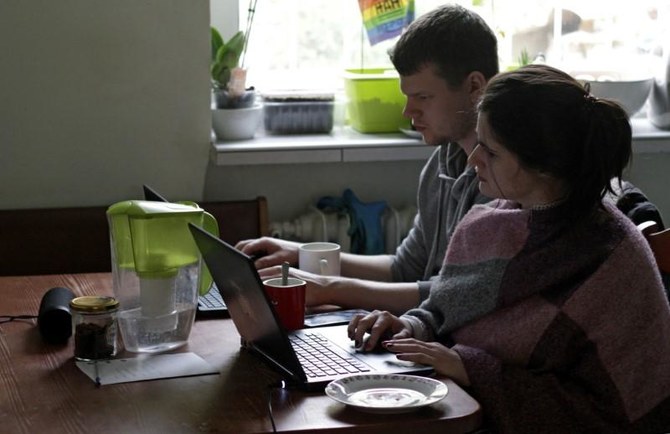
LinkedIn research showed that a lack of workplace flexibility significantly impacts women’s careers, with 20 percent of women who had to leave a job due to lack of flexibility saying their career progression was affected. Reuters/File
Short Url
Updated 24 May 2022
Follow

70% of UAE, Saudi professionals consider job change due to lack of flexibility: LinkedIn

RIYADH: New research from professional networking site LinkedIn has shed light on employee sentiment in Saudi Arabia and the UAE, with 70 percent of those surveyed saying they have considered leaving — or have left — a job due to lack of flexibility.

The COVID-19 pandemic has accelerated the rise in demand for flexible work. “The impact of the pandemic on how we work has been transformative, and research globally is pointing to an increased urgency for greater flexibility and empowerment in the workplace,” said Ali Matar, head of LinkedIn MENA and EMEA Venture Markets.

The research follows the launch of LinkedIn’s “career break” feature, which aims to destigmatize career gaps and support flexible careers. Last year, LinkedIn added stay-at-home parent job titles on the website in an effort to break biases around career gaps.

These initiatives align with what employees want, as 56 percent of those surveyed by LinkedIn said they plan on taking a career break in the near future.

LinkedIn refers to this shift toward flexible work as a “flexidus.” However, research showed there is still a disconnect between what companies offer in terms of flexibility and what employees want. 

While 74 percent of professionals in the UAE and Saudi Arabia said they thought the pandemic exposed a need for flexible work arrangements, more than 50 percent said that no new policies had been introduced by their firms to promote flexible work.

Additionally, LinkedIn research showed that a lack of workplace flexibility significantly impacts women’s careers, with 20 percent of women who had to leave a job due to lack of flexibility saying their career progression was affected.

“We have been given an incredible opportunity to reshape the world of work, and it’s critical we remember to keep people at the heart of it to truly build ‘work that works’ for everyone,” said Matar.


Saudi POS spending jumps 28% in final week of Jan: SAMA

Updated 06 February 2026
Follow

Saudi POS spending jumps 28% in final week of Jan: SAMA

RIYADH: Saudi Arabia’s point-of-sale spending climbed sharply in the final week of January, rising nearly 28 percent from the previous week as consumer outlays increased across almost all sectors. 

POS transactions reached SR16 billion ($4.27 billion) in the week ending Jan. 31, up 27.8 percent week on week, according to the Saudi Central Bank. Transaction volumes rose 16.5 percent to 248.8 million, reflecting stronger retail and service activity. 

Spending on jewelry saw the biggest uptick at 55.5 percent to SR613.69 million, followed by laundry services which saw a 44.4 percent increase to SR62.83 million. 

Expenditure on personal care rose 29.1 percent, while outlays on books and stationery increased 5.1 percent. Hotel spending climbed 7.4 percent to SR377.1 million. 

Further gains were recorded across other categories. Spending in pharmacies and medical supplies rose 33.4 percent to SR259.19 million, while medical services increased 13.7 percent to SR515.44 million. 

Food and beverage spending surged 38.6 percent to SR2.6 billion, accounting for the largest share of total POS value. Restaurants and cafes followed with a 20.4 percent increase to SR1.81 billion. Apparel and clothing spending rose 35.4 percent to SR1.33 billion, representing the third-largest share during the week. 

The Kingdom’s key urban centers mirrored the national surge. Riyadh, which accounted for the largest share of total POS spending, saw a 22 percent rise to SR5.44 billion from SR4.46 billion the previous week. The number of transactions in the capital reached 78.6 million, up 13.8 percent week on week. 

In Jeddah, transaction values increased 23.7 percent to SR2.16 billion, while Dammam reported a 22.2 percent rise to SR783.06 million. 

POS data, tracked weekly by SAMA, provides an indicator of consumer spending trends and the ongoing growth of digital payments in Saudi Arabia.  

The data also highlights the expanding reach of POS infrastructure, extending beyond major retail hubs to smaller cities and service sectors, supporting broader digital inclusion initiatives.  

The growth of digital payment technologies aligns with Saudi Arabia’s Vision 2030 objectives, promoting electronic transactions and contributing to the Kingdom’s broader digital economy.