

Saudi artists shed light on the resurgence of analog photography

Analog photography is becoming more and more popular amongst Saudi and regional photographers. (Supplied)
Short Url
Updated 20 May 2022
Follow

Saudi artists shed light on the resurgence of analog photography

  • While analog photography is becoming more and more popular amongst Saudi and regional photographers, there is still a shortage of labs and studios accessible to the public

RIYADH: At a time when one might view analog photography as an outdated craft, it is, in fact, becoming increasingly popular across the world, including in Saudi Arabia.

“Photos are the closest humanity has gotten to time travel,” said photographer Abdullah Al-Azzaz, whose has followed in the footsteps of his father, Saleh, who was also a photographer.
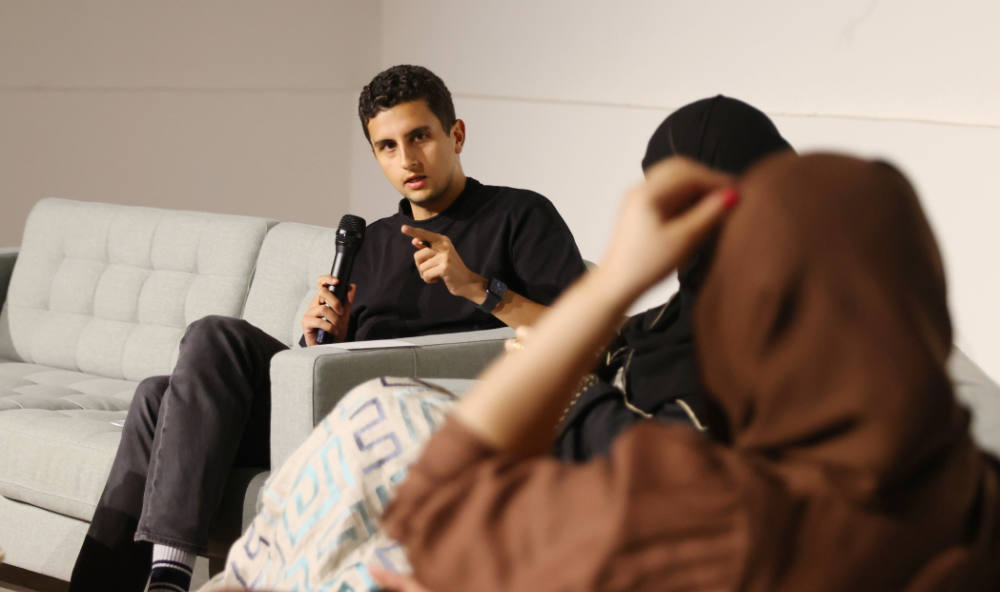
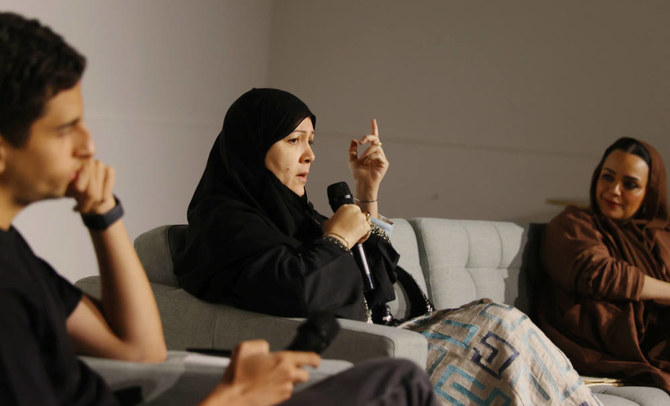
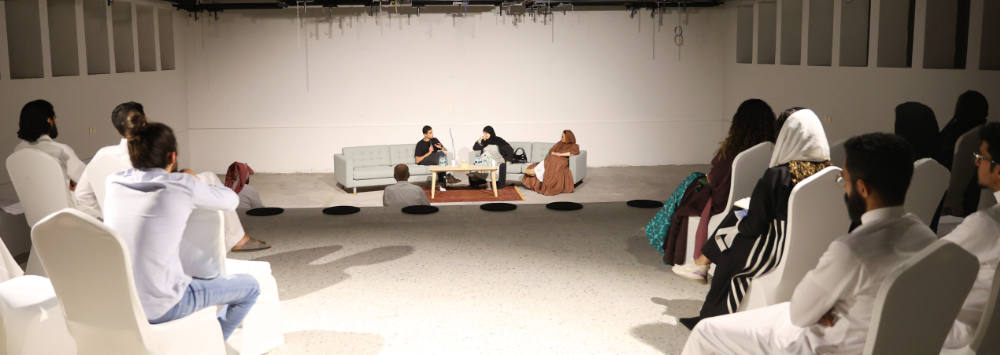
The newly established Bayt Al-Malaz — a creative space in the heart of Riyadh’s Malaz District — recently hosted an intriguing conversation about the significance and popularity of analog photography between Al-Azzaz and Princess Reem Al-Faisal, moderated by Sarah Assiri. The event was part of Bayt Al-Malaz’s “Moflmeen” discussion series.

HIGHLIGHT

While analog photography is becoming more and more popular amongst Saudi and regional photographers, there is still a shortage of labs and studios accessible to the public. In Riyadh, the number of studios where film can be developed has fallen from four to just a single space — Haitham Studios. This is largely due to the financial cost of establishing such a studio and the turnaround time for film development.

The two photographers addressed the issue of why — when digital cameras are so ubiquitous and easy to use — analog is making a comeback.

“My photography revolves around permanence, praise, eternality, and the spiritual side of us. The individual is a soul and not a body,” said Al-Faisal. “For us, film represents the soul. We are all born with natural instincts, and film, in its natural form, is untouched. It represents the soul that transforms after birth in dealing with life, accumulations, and memories — bad and good. It’s a way of expressing humanity.”
Al-Azzaz said that, for him, it was more about the technique than the philosophy of it all. “The experience of developing in a darkroom is so enriching. It separates you from the world, totally quiet and dark. It’s just you and the photo. It allows you to reflect on the photo more and gives you more freedom in reimagining it,” he said.

Photo manipulation, he explained, is not exclusive to digital photography. Before the existence of Photoshop, images could be manipulated in the darkroom using retouching techniques and tools, including cropping, brushing, dodging, burning and masking.

To really understand the true art of photography, some would argue, it is important to learn its history. Digital photography is not a replacement for film, but another medium entirely. “In any art, not just photography, we have to have a cultural, historical, and technical awareness… we are all an accumulation,” said Al-Faisal. “We are a product of our society and a product of our time. We cannot claim we aren’t affected [by these things]. Whoever claims otherwise is delusional.”

While analog photography is becoming more and more popular amongst Saudi and regional photographers, there is still a shortage of labs and studios accessible to the public. In Riyadh, the number of studios where film can be developed has fallen from four to just a single space — Haitham Studios. This is largely due to the financial cost of establishing such a studio and the turnaround time for film development.

The founder of the studio, Haitham Al-Sharif, explained the immersive nature of analog photography. “I chose film photography because I hated having no connection with my photos. With film photography, I take a max of 40 photos in a session. I can’t see them; I have to live in the moment, I have to listen and smell the streets, I have to talk to my subject if I’m taking their portraits, I have to listen to the music if I’m at a concert,” he told Arab News. “To me, that is art. That is the beauty of film.”

The lengthy process involved in analog photography can be intimidating and off-putting to amateur photographers. That’s why the development of the first digital camera in 1975 was so groundbreaking. Now, in an economy driven by content creation and visual media, content production is easier — and quicker — than ever before. But to some, the key difference lies in the creative experience itself. Some analog photographers suggest it is a way to truly connect with the moment, even if the results are not always what society deems ‘Insta-worthy.’

“When you can’t see the photo you aren’t forced to change it to make it the same as what the media thinks is good or what a magazine thinks is good. Film forces you to be patient and slow. It forces you to live in the (moment),” said Al-Sharif. “As a film photographer, you live in front of the lens as much as at the back of the lens. You become more connected to what you are photographing.”


Saudi House kicks off Davos with push on Vision 2030, AI platform and ‘humanizing’ tourism

At Saudi House, ministers and executives set out how the Kingdom sees the next phase of its transformation. (Supplied)
Updated 20 January 2026
Follow

Saudi House kicks off Davos with push on Vision 2030, AI platform and ‘humanizing’ tourism

  • Saudi ministers dominate pre-summit spotlight at Saudi pavilion, touting Vision 2030’s next phase and human capital as key to global edge
  • Ministry of Economy and Planning announced the SUSTAIN Platform which aims to accelerate AI-enabled, cross-sector collaboration for sustainable development

DAVOS: For regulars at the World Economic Forum, Monday in Davos is usually a chance to ease into the week, a time to reconnect, plan meetings and prepare for the intense schedule ahead.

This year, Saudi Arabia moved quickly to fill that lull, taking center stage with a packed program of panels ahead of Tuesday’s official opening.

At the Saudi House — the Kingdom’s official pavilion on the Promenade, returning after its debut as a standalone venue at the 2025 WEF Annual Meeting — Saudi ministers and global executives set out how the Kingdom sees the next phase of its transformation.

Monday’s speakers at the Saudi House included Minister of Finance Mohammed Al-Jadaan, Minister of Investment Khalid Al-Falih, Minister of Tourism Ahmed Al-Khateeb, and President and Vice Chairman of Meta Dina Powell McCormick. (Supplied)

Established by the Ministry of Economy and Planning, the venue is pitched as a platform for international thought leaders to tackle the challenges, opportunities and solutions shaping the global economy.

Opening a session on the Kingdom’s role at this year’s Forum and the next phase of Vision 2030 — now in its 10th year and roughly two-thirds complete — Princess Reema bint Bandar, Saudi Arabia’s ambassador to the US, said human capital “is the actual driver if you want a competitive, modern economy.”

She described one of the biggest achievements of the past decade as the emergence of a highly qualified cohort of young Saudis who could work anywhere in the world but “choose to come home, choose to build at home and choose to deliver at home,” calling this “the biggest symbol of the success of Vision 2030.”

Who can give you optimum access to opportunities while addressing risks? I contend that Saudi Arabia has been able to provide that formula.

Khalid Al-Falih, Saudi minister of investment

On the same panel, Minister of Finance Mohammed Aljadaan said this success is rooted in a “behavioral change” that has strengthened the Kingdom’s credibility with both international partners and its own citizens.

“Credibility comes from being very pragmatic, making sure that you maintain your fiscal policy discipline, but at the same time refocus your resources where it matters,” he said, warning that “markets will call your bluff if you’re not serious.”

The Saudi House, a cross-ministerial initiative led by the Ministry of Economy and Planning, is intended to underscore the Kingdom’s “commitment to global cooperation” by offering “a platform where visionary ideas are shared and shaped,” while showcasing opportunities and lessons from its “unprecedented national transformation.”

Lubna Olayan, Chair of the Corporate Board, Olayan Group

Echoing earlier comments to Arab News, Economy and Planning Minister Faisal Alibrahim said the Kingdom’s role as an anchor of stability has helped unlock its potential, stressing that while the objective is to decouple from reliance on a single commodity, “2030 is not the finishing line.”

Khalid Al-Falih, Saudi minister of investment, said Saudi Arabia has been able to enable access to opportunities while addressing major risks, arguing that few countries can match the Kingdom’s overall mix.

“No country has all of those to 100 percent,” he said. “But who can give you the mix that gives you optimum access to opportunities while addressing all of those risks?

Dr. Bedour Alrayes, Deputy CEO, Human Capability Development Program, Saudi Arabia

“I contend that Saudi Arabia has been able to provide that formula and the proof is in the pudding,” noting that local investment has doubled in recent years to reach levels comparable with India and China.

While societal transformation dominated the morning discussions, the afternoon turned to technology, tourism, sport and culture, four strategic sectors expected to spearhead Vision 2030’s next phase.

The Ministry of Economy and Planning used the day to announce the SUSTAIN Platform, due to launch in 2026, which aims to accelerate AI-enabled, cross-sector collaboration for sustainable development.

The ministry said SUSTAIN will translate the Kingdom’s public and private-sector coordination mandate into a practical national tool to help government entities, businesses, investors, academia and civil society identify credible partners, form trusted coalitions and move initiatives “from planning to implementation more efficiently,” addressing a global challenge where fragmented partnerships often slow delivery and blunt impact.

“We are in a moment in time where technology may well impact the face of humanity,” said Dina Powell McCormick, recently appointed president and vice chairman of Meta, welcoming the Kingdom’s “desire” to partner with technology companies and its embrace of innovation.

Minister of Tourism Ahmed Alkhateeb, discussing how technology is being deployed in his sector, underlined that “in travel and tourism, people are very important. We learn about other people’s culture through interacting with people. We digitalize the unnecessary and humanize the necessary.”

He added that while technological transformation is a priority, “we don’t want to replace this big workforce with technology. I think we need to protect them in Saudi Arabia, where we’re being a model. I’m an advocate of keeping the people.”

Throughout the week, Saudi House will host more than 20 sessions, including over 10 accredited by the WEF, across six themes: Bold Vision, Insights for Impact, People and Human Capability, Quality of Life, Investment and Collaboration, and Welcoming the World.

The pavilion will also launch “NextOn,” a new series of influential and educational talks featuring leading global voices.