



ISLAMABAD: Business owners in the Pakistani capital on Friday bemoaned a ban on the import of non-essential luxury items imposed by the government of Prime Minister Shehbaz Sharif this week, saying they did not have a “backup plan” and were not informed about the decision prior to its announcement.
The ban, announced on Thursday, comes as Pakistan’s current account deficit has spiralled out of control and its foreign exchange reserves have tumbled while the Pakistani rupee has plummeted to historic lows against the US dollar.
The “complete ban” includes imported, non-essential items such as cars, home appliances, cellular phones, home appliances, shoes, cosmetics, chocolates, among others.
On Friday, customers as well as import business owners at major market places in Islamabad told Arab News they were taken by surprise by the “sudden” ban.
Sharif has said the decision will “save the country precious foreign exchange.”
Rizwan, who owns a cell phone shop in the Blue Area business zone and only identified himself with his first name, said the government’s decision would inflict a “heavy loss” on Pakistan’s economy, pointing out that a majority of cellular phone brands such as Apple, Infinix and others that were being sold in Pakistan were not manufactured here.
“Seventy percent of these [brand products] are imported from different countries,” he said. “So, if this entire system of [importing] spare parts, cellular phones, is shut down, I don’t know what we will do. It is like axing your own foot.”
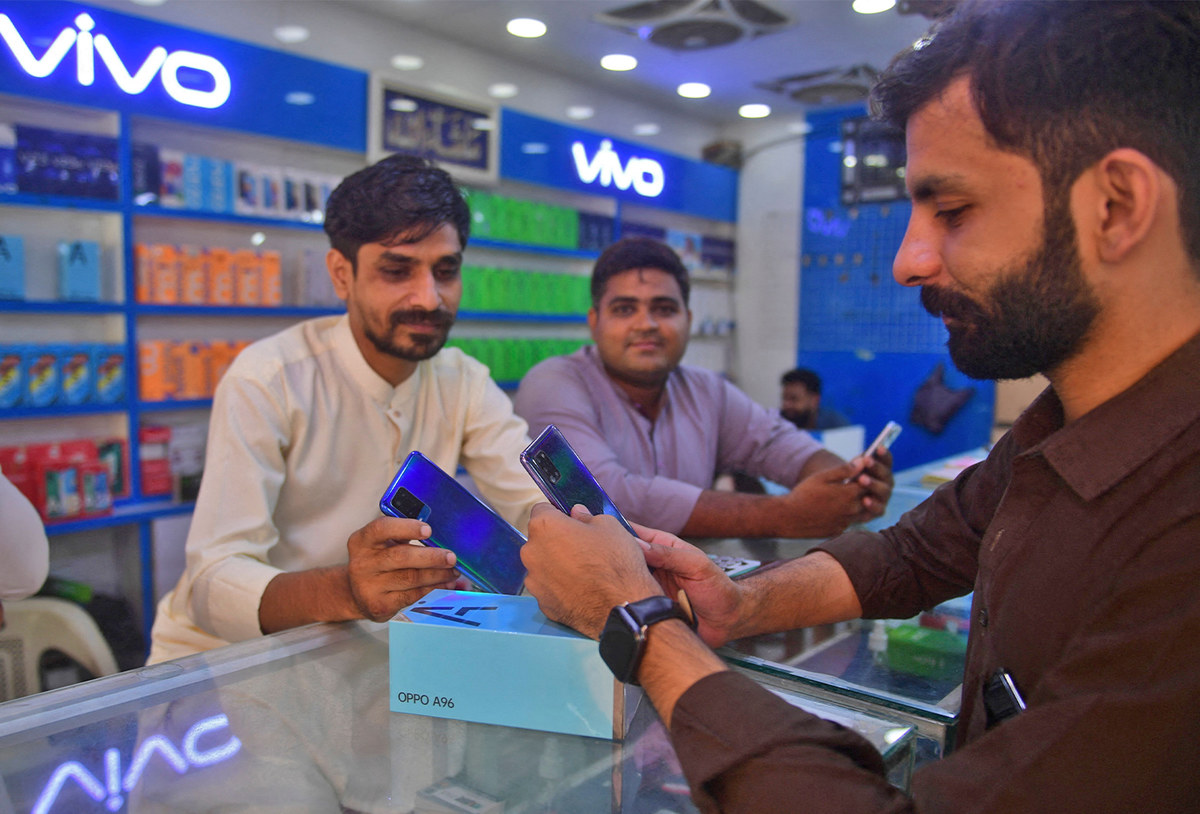
A shopkeeper shows a mobile phone to a customer at a mobile phone store in Karachi on May 20, 2022. (AFP)
Rizwan said the government had made the announcement suddenly and businesses did not have a “backup plan.”
“What can I do then?” he asked. “I can’t set up an Apple factory in Pakistan, can I?”
Mohammad Tayyab, another business owner in Blue Area who sells imported laptops, said he did not know how traders like him as well as customers would “manage.”
“Every office and institution needs these [laptops], this is a part of our everyday lives,” he told Arab News. “If this stuff is not brought here [imported], it would cause a lot of people a lot of difficulties.”
Tayyab said he was taken aback by the “sudden” news of the ban.
“We didn’t even get to know from the market how we will manage this situation,” he said. “That is the problem itself, we never received any information.”
Dr. Tariq, a retired doctor who was shopping at one of Islamabad’s most upscale shopping markets, Kohsar Market, said many imported items the government had deemed “non-essential” were in fact important for some customers.
“I drive an imported car and recently bought some imported chickpeas because of a medical condition,” he said. “There are some things you do need.”
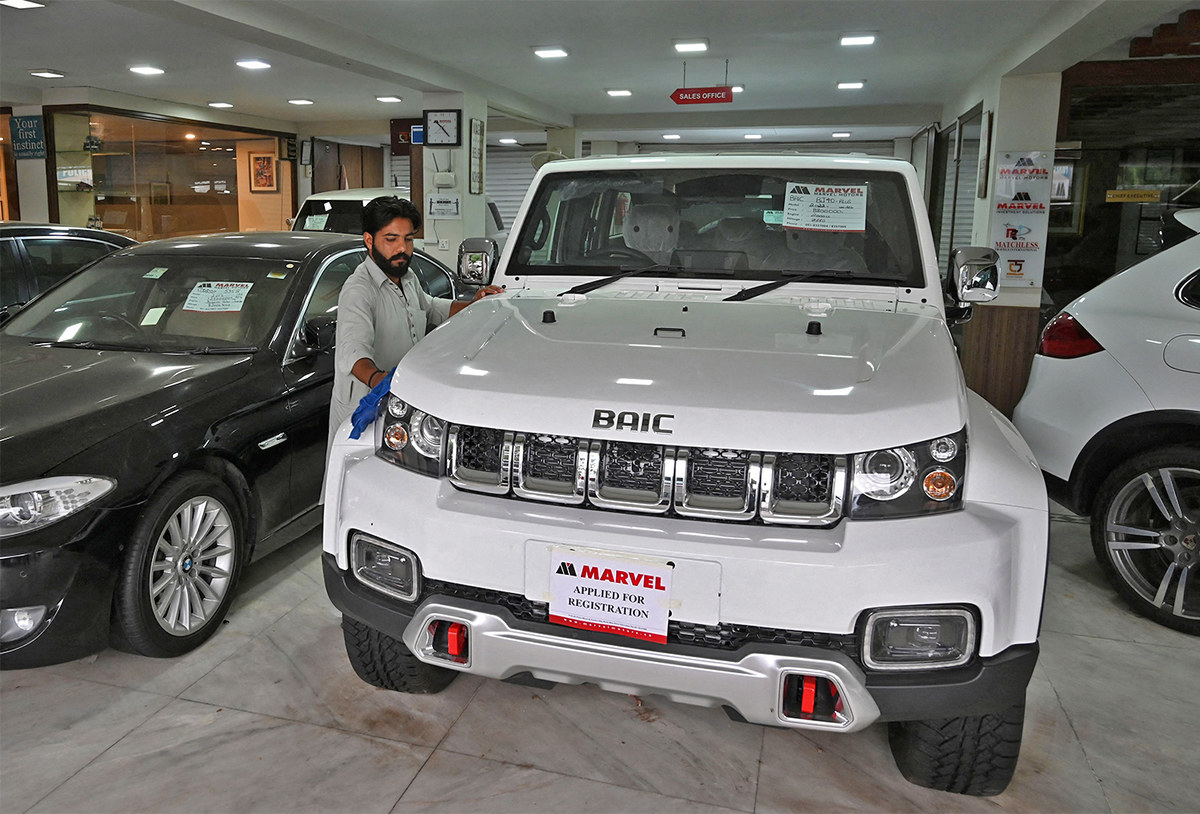
An employee cleans an imported vehicle at a car showroom in Islamabad on May 20, 2022. (AFP)
The doctor said he did not understand the government’s “thinking” behind the ban.
“I don’t know how much of a difference would it make. I’m not an economist or anything, so I can’t say anything. However, some necessary items can definitely be taxed heavily and allowed to be imported so that those who need to buy them can do so.”
However, another customer at Kohsar Market, Abdullah Usman Tariq, said he supported the government’s ban.
“We need to promote and support local items,” the customer, a business manager, said. “It is also a great responsibility on the part of the producers to complete and meet the standards of the goods and products that are being advertised and sold in the international market.”
A consumer of imported cheese and chocolates himself, Abdullah said though most businesses would not be happy with the ban, they needed to support it for the country’s “betterment.”
Pakistanis, for the sake of the country, “need to do that.”


