

Pakistan seeks larger job quota in Saudi Arabia's NEOM business zone

The image shows a proposed construction called Oxagon, a port which will anchor an industrial city, set to be placed on the edge of Saudi Arabia's newest region in the northwest - Neom. (Photo courtesy: NEOM website)
Short Url
Updated 19 May 2022
Follow

Pakistan seeks larger job quota in Saudi Arabia's NEOM business zone

  • Pakistan hopes to benefit from Saudi Arabia’s Vision 2030 initiative
  • The kingdom is home to over two million Pakistani expatriates

ISLAMABAD: Minister for Overseas Pakistanis and Human Resources Sajid Hussain Turi met the Saudi envoy in Islamabad on Wednesday and discussed job opportunities for Pakistanis in the kingdom's NEOM City Project, a $500 billion flagship business zone aimed at diversifying the economy of the world’s largest oil exporter.

NEOM is part of Saudi Arabia's Vision 2030 and aims to transform more than 26,500 sq. km in the kingdom’s northwestern Tabuk region. The zero-carbon city is expected to be ready to receive tourists and investors by 2024.

Saudi Arabia is home to over two million Pakistani expatriates and is the single largest remittance source to the South Asian nation.

“Federal Minister discussed issues and opportunities for creating jobs for Overseas Pakistanis in Saudi Arabia,” the ministry of overseas Pakistanis said in a statement. “Federal Minister emphasized ensuring the Pakistani quota in the workforce for the development of the futuristic NEOM City Project in Saudi Arabia.”

“As we are a developing country so the criteria for Pakistanis should be more open towards skilled and unskilled labour to accommodate more and more Pakistanis in diverse jobs in the multi-billion project,” the statement read.
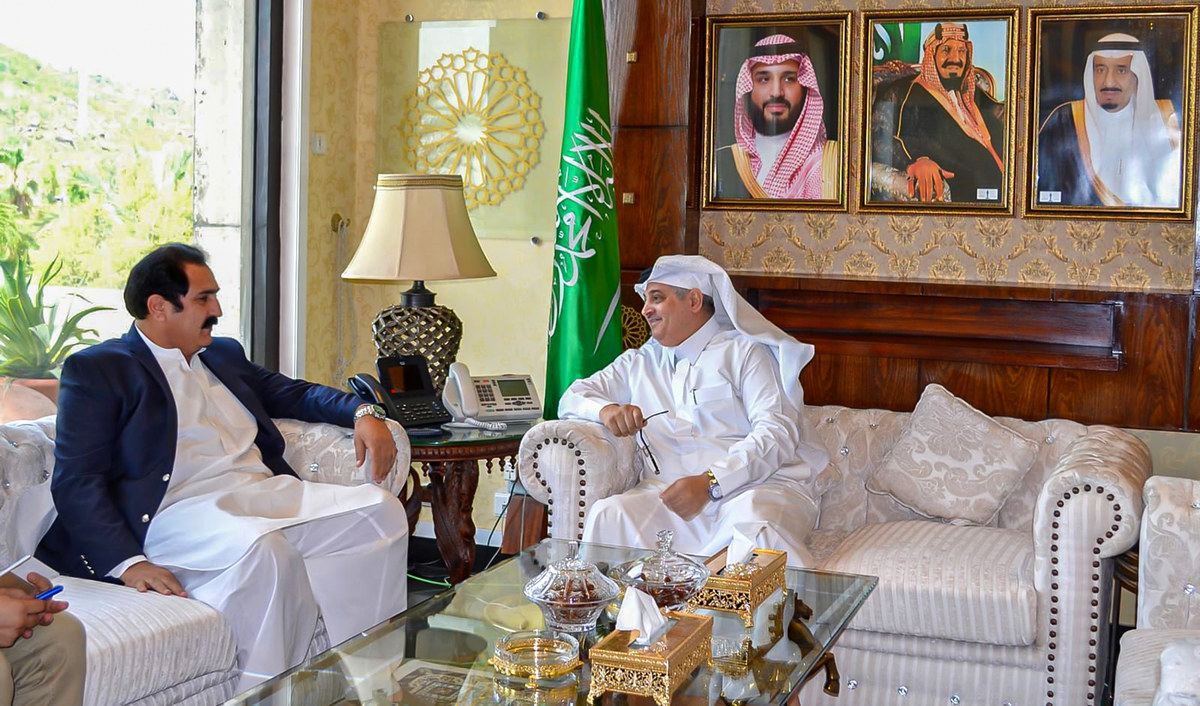


Minister for Overseas Pakistanis and Human Resources Sajid Hussain Turi, left, meets Saudi envoy in Islamabad on May 18, 2022. (Photo courtesy: @KSAembassyPK/Twitter)


Pakistan is hoping to benefit from Saudi Arabia’s Vision 2030 initiative — am ambitious economic reform program expected to create millions of jobs in the Kingdom — by building its workforce’s professional skills.

Pakistani Prime Minister Shehbaz Sharif, on his first foreign trip since assuming the top political office of his country last month, visited Saudi Arabia from April 27 to 29 and discussed enhancing the kingdom's $3 billion deposit in Pakistan’s central bank “through term extension or otherwise.”

Saudi Arabia last year deposited $3 billion in Pakistan’s central bank to help support its foreign reserves.


Pakistan seeks wider access to Canadian market as both sides want deeper agricultural cooperation

Updated 4 sec ago
Follow

Pakistan seeks wider access to Canadian market as both sides want deeper agricultural cooperation

  • Islamabad urges faster certification for canola and halal products in a bid to expand agricultural exports
  • Canada pledges collaboration on pest management, invites Pakistan to the Canada Crops Convention

ISLAMABAD: Pakistan on Wednesday pressed for improved access to Canadian agricultural markets and faster certification procedures for key exports as Islamabad looks to modernize its climate-strained farm sector and resolve long-standing barriers to trade, according to an official statement.

The push comes as Pakistan, a largely agricultural economy, faces mounting challenges from erratic weather patterns, including floods, droughts and heatwaves, which have hurt crop yields and raised food security concerns. Islamabad has increasingly sought foreign partnerships and training to upgrade farm technology, while pursuing export-oriented growth to diversify markets for mangoes, rice, kinnow, dates and halal meat.

Federal Minister for National Food Security Rana Tanveer Hussain and Canadian High Commissioner Tarik Ali Khan met to discuss “strengthening bilateral collaboration in agriculture, enhancing market access for key commodities, and advancing ongoing phytosanitary and technical cooperation,” according to the statement.

“Minister Rana Tanveer Hussain stressed the importance of resolving market access challenges to ensure uninterrupted trade in priority commodities, particularly canola, which constitutes Pakistan’s major agricultural import from Canada," it continued. "He highlighted that Pakistan seeks robust and timely certification and registration processes to facilitate predictable canola imports."

"The Minister emphasized that Pakistan is eager to strengthen its halal export footprint in Canada and sought CFIA’s [Canadian Food Inspection Agency’s] support in accelerating certification procedures for halal gelatin, casings, and value-added poultry," it added.

High Commissioner Khan  acknowledged Pakistan’s concerns, the statement said, and assured Hussain of Ottawa’s readiness to deepen technical collaboration.

He also briefed the minister on Canada’s pest management systems and grain supply chain controls, adding that his country looked forward to facilitating Pakistan’s plant protection team during an upcoming systems-verification visit.

Khan also invited Pakistani officials to the Canada Crops Convention in April 2026 and confirmed participation in the Pakistan Edible Oil Conference, reaffirming that “Canada views Pakistan as a priority partner in the region.”

Hussain proposed forming a joint working group to maintain momentum on technical discussions and regulatory issues as both officials agreed to strengthen agricultural cooperation.