



SEOUL: North Korea on Thursday reported 262,270 more suspected COVID-19 cases as its pandemic caseload neared 2 million — a week after the country acknowledged the outbreak and scrambled to slow infections in its unvaccinated population.
The country is also trying to prevent its fragile economy from deteriorating further, but the outbreak could be worse than officially reported since the country lacks virus tests and other health care resources and may be underreporting deaths to soften the political impact on authoritarian leader Kim Jong Un.
North Korea’s anti-virus headquarters reported a single additional death, raising its toll to 63, which experts have said is abnormally small compared to the suspected number of coronavirus infections.
The official Korean Central News Agency said more than 1.98 million people have become sick with fever since late April. Most are believed to have COVID-19, though only a few omicron variant infections have been confirmed. At least 740,160 people are in quarantine, the news agency reported.
North Korea’s outbreak comes amid a provocative streak of weapons demonstrations, including its first test of an intercontinental ballistic missile in nearly five years in March. Experts don’t believe the COVID-19 outbreak will slow Kim’s brinkmanship aimed at pressuring the United States to accept the idea of the North as a nuclear power and negotiating economic and security concessions from a position of strength.
After maintaining a dubious claim that it had kept the virus out of the country for two and a half years, North Korea acknowledged its first COVID-19 infections May 12 and has described a rapid spread since. Kim has called the outbreak a “great upheaval,” berated officials for letting the virus spread and restricted the movement of people and supplies between cities and regions.
Workers were mobilized to find people with suspected COVID-19 symptoms who were then sent to quarantine — the main method of curbing the outbreak since North Korea is short of medical supplies and intensive care units that lowered COVID-19 hospitalizations and deaths in other nations.
State media images showed health workers in hazmat suits guarding Pyongyang’s closed-off streets, disinfecting buildings and streets and delivering food and other supplies to apartment blocks.
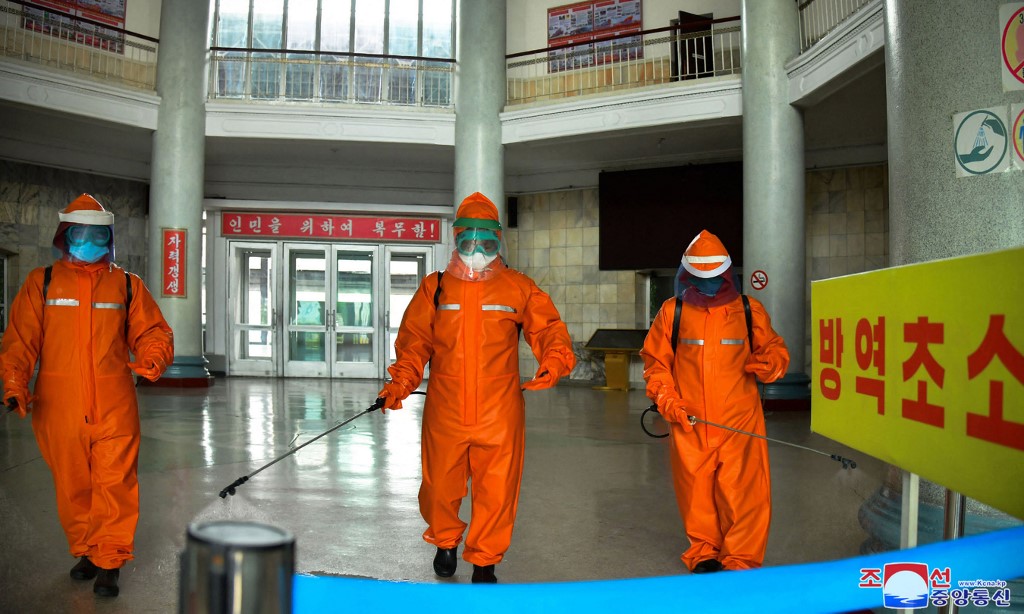
The official Korean Central News Agency said more than 1.98 million people have become sick with fever since late April. (AFP)
Despite the vast numbers of sick people and the efforts to curb the outbreak, state media describe large groups of workers continuing to gather at farms, mining facilities, power stations and construction sites. Experts say North Korea cannot afford a lockdown that would hinder production in an economy already broken by mismanagement, crippling US-led sanctions over Kim’s nuclear weapons ambitions and pandemic border closures.


