

Afghan refugee beekeepers keep Pakistan honey business buzzing

Afghan refugee beekeeper Nazak Mir checks his hives in Buner district, Khyber Pakhtunkhwa, Pakistan, May 13, 2022. (AN Photo)
Short Url
Updated 17 May 2022
Follow

Afghan refugee beekeepers keep Pakistan honey business buzzing

  • Pakistan currently produces estimated 30,000 to 35,000 tons of honey annually, is major exporter
  • Of 1.6 million people associated with Pakistan’s honey sector, more than 60% are Afghans

PESHAWAR: When war broke out in Afghanistan four decades ago, Nazak Mir fled with his family to safety in neighboring Pakistan, arriving empty-handed but armed with a skill that in exile unexpectedly gave him a chance to follow in the footsteps of his ancestors and become a beekeeper.

When the UNHCR, the UN refugee agency, began offering beekeeping training in the refugee camp where his family had taken shelter in Pakistan’s northwestern Khyber Pakhtunkhwa province, Mir saw an opportunity to hone a family skill. 

“Among other things, we left behind 54 beehive boxes that my elder uncle had kept for years. It was a family business before migration,” Mir told Arab News. 

“I was one of the first people to sign up for the beekeeping training in 1983,” he said. “Today, I am the owner of 150 boxes.”
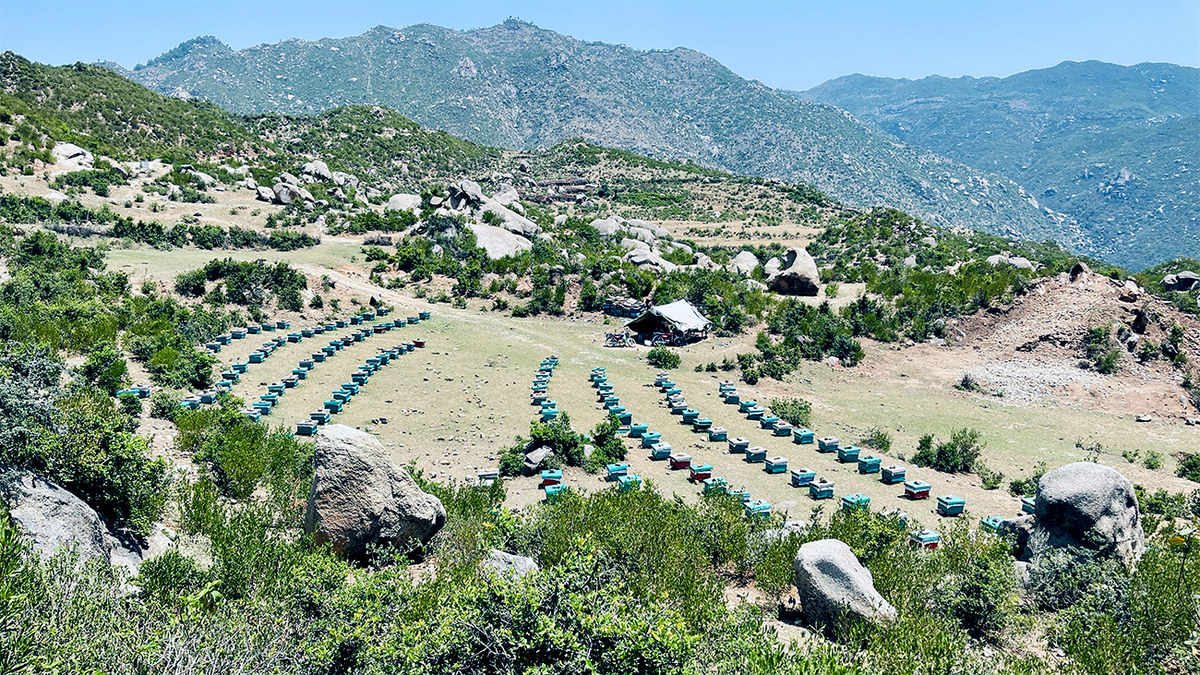


A honey bee farm in seen Buner district, Khyber Pakhtunkhwa, Pakistan, May 13, 2022. (AN Photo)

Apart from being a successful businessman himself, Mir also became a mentor to thousands of other refugees in Khyber Pakhtunkhwa.
The hilly province bordering Afghanistan is home to nearly 800,000 Afghans who fled armed conflict in their country, and are now the main force behind beekeeping in Pakistan, a major exporter of honey.

The South Asian nation currently produces an estimated 30,000 to 35,000 tons of honey annually, and exports over a fifth of it to Gulf countries, according to Sher Zaman Mohmand, the Secretary General of the All Pakistan Beekeepers, Exporters and Honey Traders Association. 

He told Arab News the number of people involved in the honey sector, including those involved in beekeeping, was about 1.6 million, with 95 percent of them living in Khyber Pakhtunkhwa, where the climate and terrain is conducive to honey production

“Of them, more than 60 percent are Afghan refugees,” he said.

Some of them, like Mir, have also introduced their children to the profession.

“Now, my son has started his own beekeeping business,” Mir said, adding that he worried whether it would remain a lucrative profession in the future. 
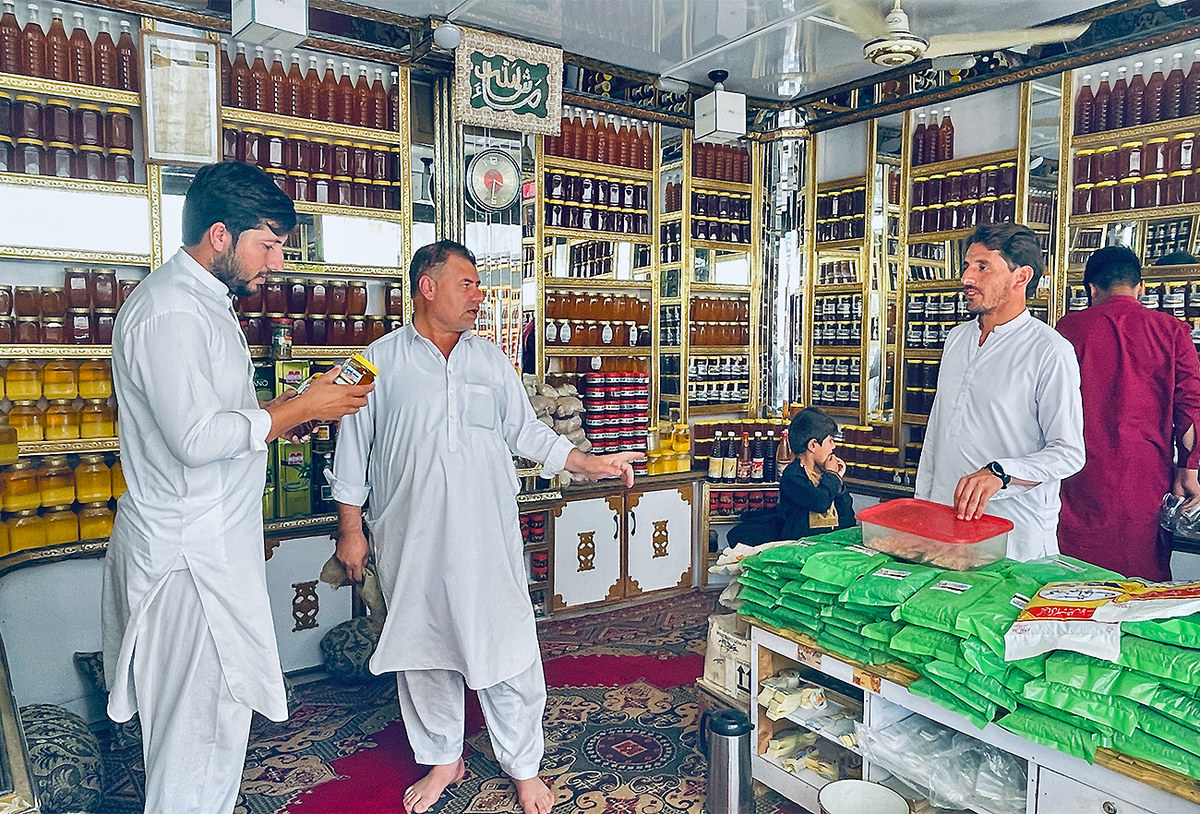


Various kinds of honey are on display at a shop in the Koga refugee camp, Buner district, Khyber Pakhtunkhwa, Pakistan, May 13, 2022. (AN Photo)

Pakistan is one the nations most affected by disasters driven by changing climate, and for the past few years has endured heatwaves that have upended its natural ecosystems. 

With challenges related to climate change and deforestation depriving bees of food, their populations have been decimated in recent years. 

“Lack of food causes the bees to fight among each other,” Mir’s son, Farhadullah, said. “Hot and cold weather also affect their health and honey production.”

Erratic swings in weather patterns have also changed harvest times.

“Honey producing seasons are defined by different flowering seasons. Timely and enough rains often result in four or five honey producing seasons while drought years reduce the honey seasons to just two,” Mohmand from the beekeepers association said. 
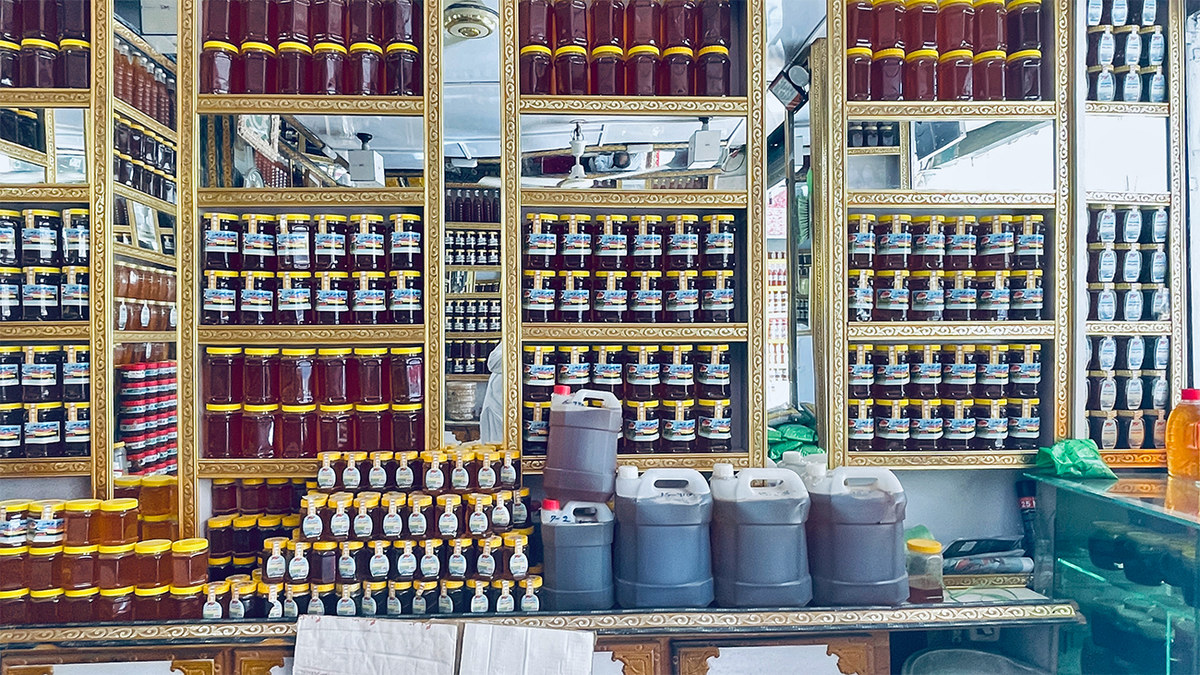


Various kinds of honey are on display at a shop in the Koga refugee camp, Buner district, Khyber Pakhtunkhwa, Pakistan, May 13, 2022. (AN Photo)

However, he said, the problems could be mitigated if the government took strict measures to curb deforestation.

Pakistan has been trying to reforest the country in recent years and launched an ambitious five-year tree-planting program, the 10 Billion Tree Tsunami, to counter rising temperatures, flooding, droughts and other extreme weather that scientists link to climate change.

While more than 330 million trees have already been planted under the initiative, mostly in Khyber Pakhtunkhwa, Mohmand said the push should extend to other provinces, especially around the sites of the $65 billion Beijing-funded China-Pakistan Economic Corridor, the largest infrastructure investment project in the country. 

“The government could promote forestry, particularly along the China-Pakistan Economic Corridor routes,” Mohmand said. “Plants like the Indian rosewood, acacia and jujube can be grown in many areas, including on barren lands across the country.”


Pakistan PM orders accelerated privatization of power sector to tackle losses

Updated 15 December 2025
Follow

Pakistan PM orders accelerated privatization of power sector to tackle losses

  • Tenders to be issued for privatization of three major electricity distribution firms, PMO says
  • Sharif says Pakistan to develop battery energy storage through public-private partnerships

ISLAMABAD: Pakistan’s prime minister on Monday directed the government to speed up privatization of state-owned power companies and improve electricity infrastructure nationwide, as authorities try to address deep-rooted losses and inefficiencies in the energy sector that have weighed on the economy and public finances.

Pakistan’s electricity system has long struggled with financial distress caused by a combination of factors including theft of power, inefficient collection of bills, high costs of generating electricity and a large burden of unpaid obligations known as “circular debt.” In the first quarter of the current financial year, government-owned distribution companies recorded losses of about Rs171 billion ($611 million) due to poor bill recovery and operational inefficiencies, official documents show. Circular debt in the broader power sector stood at around Rs1.66 trillion ($5.9 billion) in mid-2025, a sharp decline from past peaks but still a major fiscal drain. 

Efforts to contain these losses have been a focus of Pakistan’s economic reform program with the International Monetary Fund, which has urged structural changes in the energy sector as part of financing conditions. Previous government initiatives have included signing a $4.5 billion financing facility with local banks to ease power sector debt and reducing retail electricity tariffs to support economic recovery. 

“Electricity sector privatization and market-based competition is the sustainable solution to the country’s energy problems,” Prime Minister Shehbaz Sharif said at a meeting reviewing the roadmap for power sector reforms, according to a statement from the prime minister’s office.

The meeting reviewed progress on privatization and infrastructure projects. Officials said tenders for modernizing one of Pakistan’s oldest operational hubs, Rohri Railway Station, will be issued soon and that the Ghazi Barotha to Faisalabad transmission line, designed to improve long-distance transmission of electricity, is in the initial approval stages. While not all power-sector decisions were detailed publicly, the government emphasized expanding private sector participation and completing priority projects to strengthen the electricity grid.

In another key development, the prime minister endorsed plans to begin work on a battery energy storage system with participation from private investors to help manage fluctuations in supply and demand, particularly as renewable energy sources such as solar and wind take a growing role in generation. Officials said the concept clearance for the storage system has been approved and feasibility studies are underway.

Government briefing documents also outlined steps toward shifting some electricity plants from imported coal to locally mined Thar coal, where a railway line expansion is underway to support transport of fuel, potentially lowering costs and import dependence in the long term.

State authorities also pledged to address safety by converting unmanned railway crossings to staffed ones and to strengthen food safety inspections at stations, underscoring broader infrastructure and service improvements connected to energy and transport priorities.