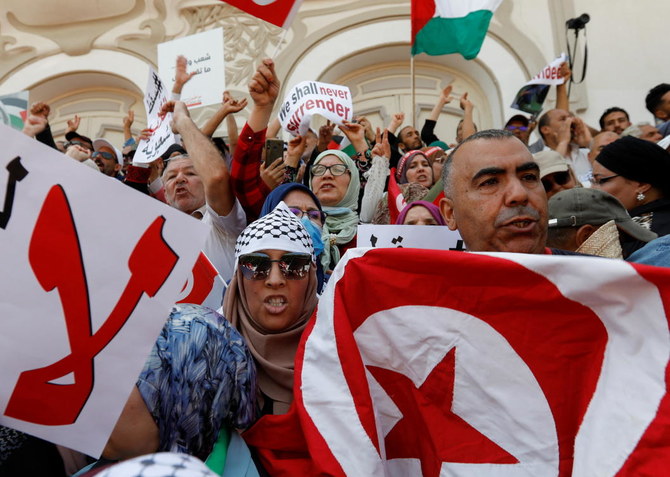
TUNIS: Thousands of Tunisians protested on Sunday against President Kais Saied, demanding a return to the normal democratic order and rejecting his replacement of the independent electoral commission with one he named himself.
“The people want democracy” and “Saied has led the country to starvation” were two slogans chanted by the protesters who gathered in central Tunis a week after a smaller demonstration in support of the president.
“It has become clear that the street supports a return to the democratic path,” said Samira Chaouachi, the deputy leader of the dissolved parliament who like Saied’s other opponents accuses him of a coup.
Saied has entrenched his one-man rule since seizing executive power last summer, dismissing parliament, moving to rule by decree and saying he will replace the democratic constitution through a referendum.
Saied denies a coup, saying his intervention was legal and necessary to save Tunisia from years of political paralysis and economic stagnation at the hands of a corrupt, self-serving elite who had taken control of government.
Meanwhile, Tunisia’s economy and public finances are in crisis and the government is in talks with the International Monetary Fund for a rescue package amid widespread poverty and hardship.
Saied’s moves have thrust Tunisia into its biggest political crisis since the 2011 revolution that introduced democracy and triggered the ‘Arab Spring’, threatening the rights and freedoms won 11 years ago.
He has replaced a judicial council that guaranteed judges’ independence as well as the independent electoral commission, casting doubt on the integrity of both the legal process and of elections.
“Our peaceful resistance will continue in the street until we restore our freedom and democracy,” said one of the protesters, Tijani Tizaoui, a private sector employee, who said he had been imprisoned before the revolution for protesting.
The 2014 constitution was the result of months of intense negotiation among a broad array of political parties and civil society bodies including the powerful UGTT labor union, which has more than a million members.
Saied has rejected calls for a similar inclusive dialogue, saying those who opposed his moves should be barred from discussion on Tunisia’s future as he prepares for a referendum on his new constitution.
“Tunisians refuse the unilateral change of the electoral system ... Tunisians are here to reject Saied’s referendum,” said Nejib Chebbi, a veteran politician at the protest.


![]()

Thousands in Tunisia protest against president, demand democratic return
Short Url
https://arab.news/yxc5t
Thousands in Tunisia protest against president, demand democratic return
- President Kais Saied has entrenched his one-man rule since seizing executive power last summer


Latest updates




© 2026 SAUDI RESEARCH & PUBLISHING COMPANY, All Rights Reserved And subject to Terms of Use Agreement.