

Water scarcity in Pakistan’s southwest causes cholera outbreak, two dead

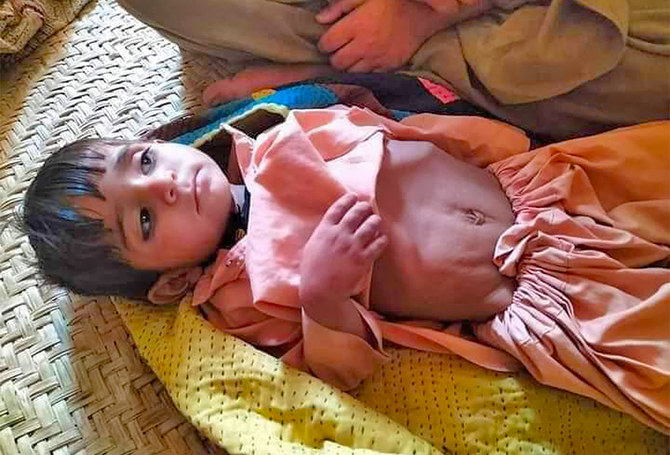
A young boy suffering from cholera is treated at a basic health unit in Pir Koh, a village near Dera Bugti in Pakistan’s Balochistan province, on May 11, 2022. (Photo courtesy: Wadera Qadir Bugti)
Short Url
Updated 11 May 2022
Follow

Water scarcity in Pakistan’s southwest causes cholera outbreak, two dead

  • The area has been hit by cholera since people used contaminated ponds for drinking purposes
  • Officials say nearly 1,500 people have been facing health issues in the remote Pir Koh settlement

QUETTA: The provincial administration of Balochistan on Wednesday took notice of water scarcity in Pir Koh, a settlement in the remote region of Dera Bugti in Pakistan’s southwest, which caused an outbreak of cholera and claimed the lives of at least two people.
With a population of about 40,000, the residents of the area were forced to rely on contaminated ponds to quench their thirst in the absence of adequate clean drinking water.
“Chief Minister Balochistan Mir Abdul Quddus Bizenjo has taken notice of water scarcity in Pir Koh area of Dera Bugti,” said an official statement circulated by his office. “A special fund of Rs10 million has been released to the PHE [Public Health Engineering] department to supply water [to the area] on an emergency basis.”
The statement noted that the provincial administration had also decided to send medical teams to Pir Koh while instructing relevant authorities to ensure continuous water supply to the area with the help of tankers until the beginning of the monsoon season.
According to local officials, about 1,500 people were facing health issues due to the cholera outbreak which also claimed the lives of a woman and a child on Wednesday morning.
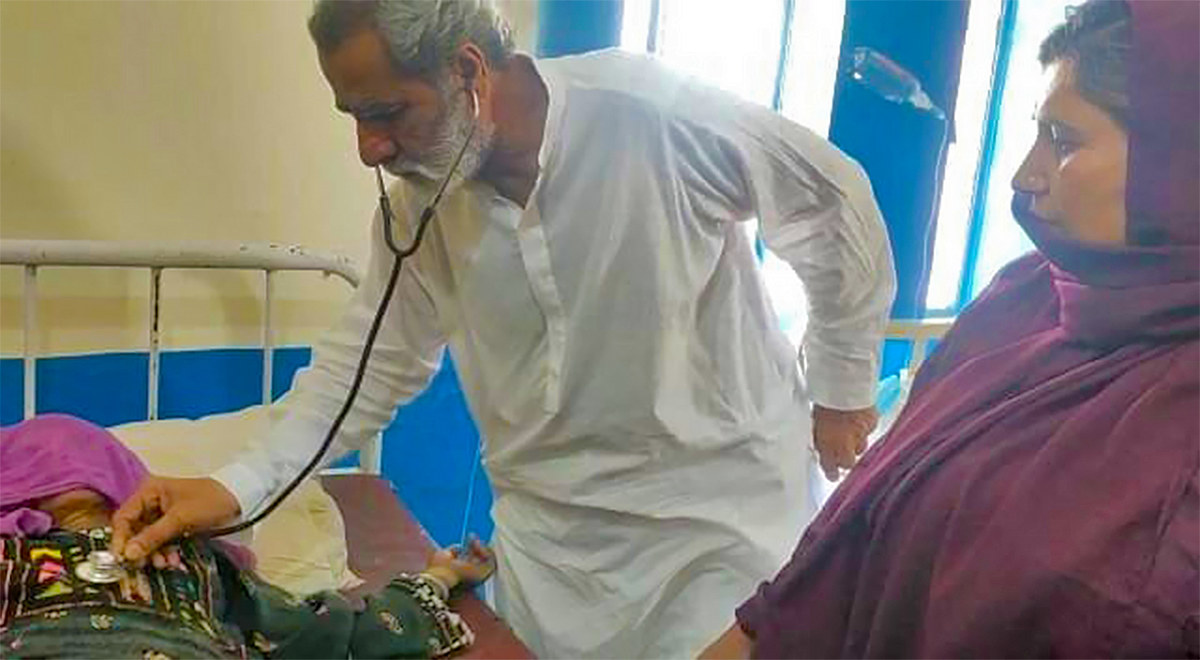


A doctor examines a woman diagnosed with cholera in Pir Koh, a settlement in the remote region of Dera Bugti in Pakistan’s Balochistan province on May 11, 2022. (Photo courtesy: Wadera Qadir Bugti)

“The basic health unit [in Pir Koh] has been treating nearly 1,500 patients, most of them women and children, with clear symptoms of diarrhea since the last week of April after the town was hit by a cholera outbreak,” Azam Bugti, district health officer in Dera Bugti, told Arab News.
“We collected water samples from ponds being used for drinking purposes which have tested positive for the bacteria causing cholera,” he added.
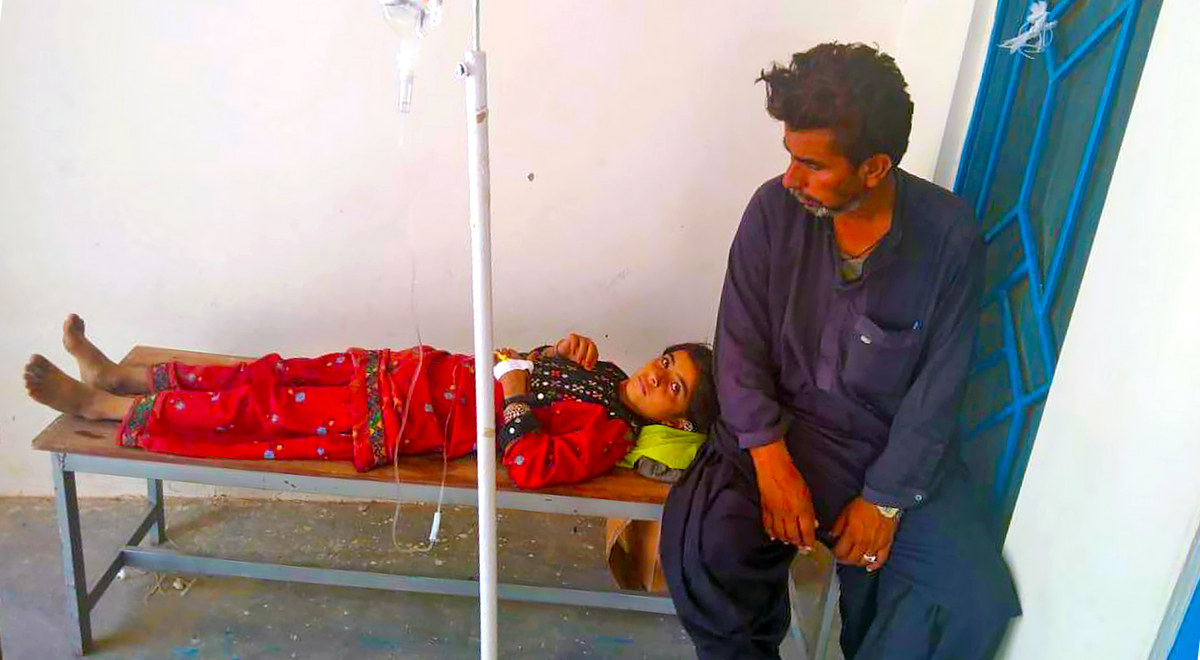


An attendant sits with a girl at a basic health unit in Pir Koh, a village near Dera Bugti in Pakistan’s Balochistan province, on May 11, 2022. (Photo courtesy: Wadera Qadir Bugti)

Pictures and video clips on social media showed the residents of Pir Koh fetching contaminated water from a pool to meet their requirements, as hundreds of others queued up to get clean drinking water from bousers sent by the provincial administration.
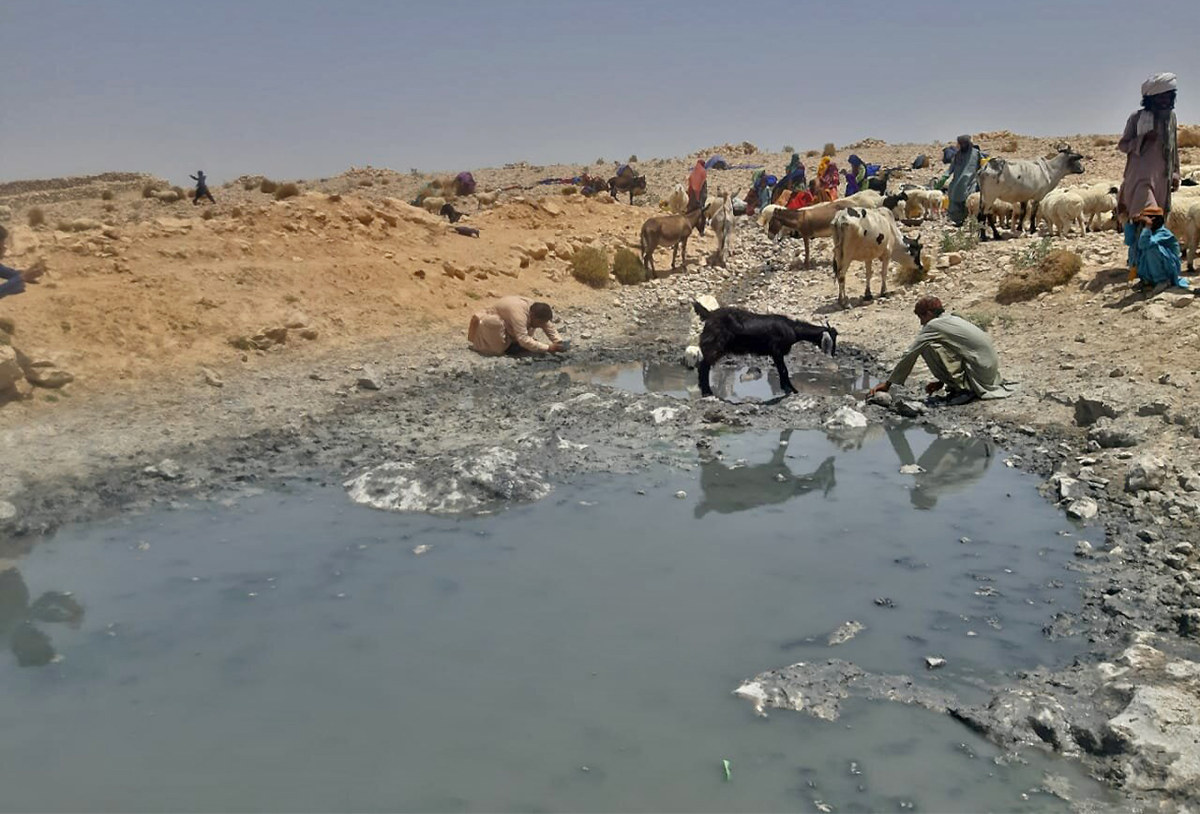


Residents fetch water from a contaminated pond in Pir Koh, a village near Dera Bugti in Pakistan’s Balochistan province, on May 11, 2022. (Photo courtesy: Bushra Qamar)

“The water needs of people in the area increased as temperature started rising in the first week of May,” said the deputy commissioner of Dera Bugti, Mumtaz Kethran. “Unfortunately, water level in most of the towns in Dera Bugti has dropped to about a thousand feet. Hence, the population is now dependent on rains.”
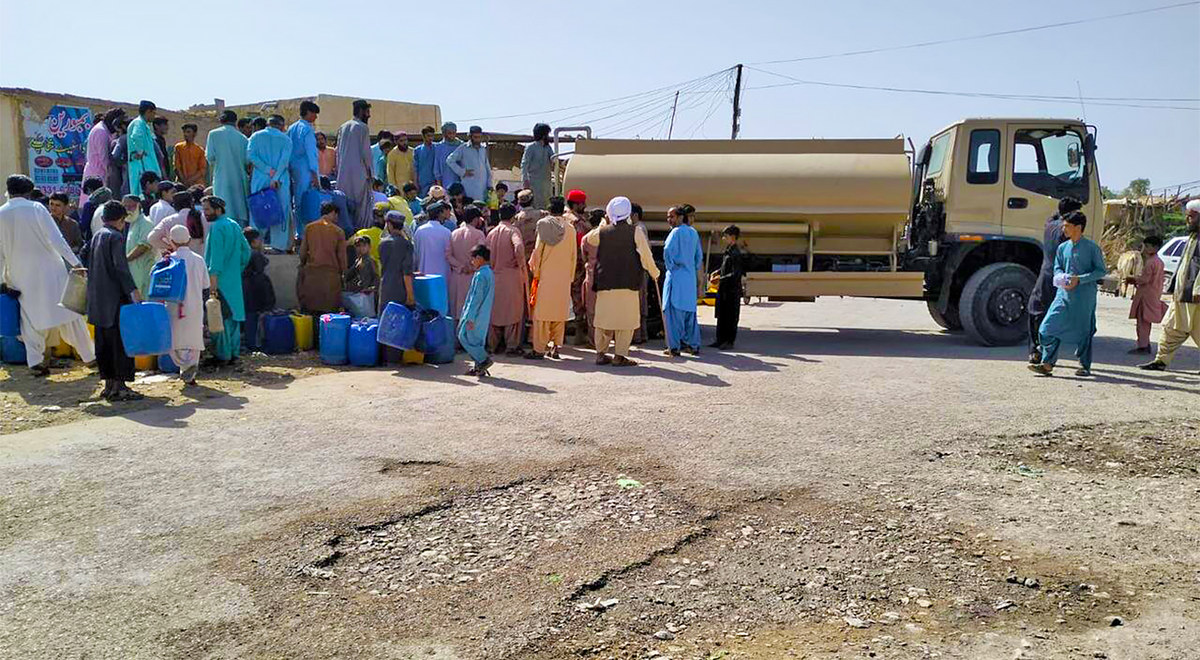


People gather around a water tanker in Pir Koh, a village near Dera Bugti in Pakistan’s Balochistan province, on May 11, 2022. (Photo courtesy: Faiq Ali Bugti)

Dera Bugti, a town rich with natural gas, has been fulfilling the country’s fuel requirements since 1951, though poverty and lawlessness have deprived its own people of basic needs during all these decades.
Pakistan’s state-owned Oil and Gas Development Company Limited (OGDCL) has been regularly providing four water bousers to fulfill the needs of people in Pir Koh, but they are no longer sufficient for the growing population of the area.
“We have been getting these water bousers for the population of 40,000 people,” Shahid Husain Bugti, a resident of the settlement, said. “However, they are not enough to meet the needs of Pir Koh.”


Pakistan, global crypto exchange discuss modernizing digital payments, creating job prospects 

Updated 05 December 2025
Follow

Pakistan, global crypto exchange discuss modernizing digital payments, creating job prospects 

  • Pakistani officials, Binance team discuss coordination between Islamabad, local banks and global exchanges
  • Pakistan has attempted to tap into growing crypto market to curb illicit transactions, improve oversight

ISLAMABAD: Pakistan’s finance officials and the team of a global cryptocurrency exchange on Friday held discussions aimed at modernizing the country’s digital payments system and building local talent pipelines to meet rising demand for blockchain and Web3 skills, the finance ministry said.

The development took place during a high-level meeting between Finance Minister Muhammad Aurangzeb, Pakistan Virtual Assets Regulatory Authority (PVARA) Chairman Bilal bin Saqib, domestic bank presidents and a Binance team led by Global CEO Richard Teng. The meeting was held to advance work on Pakistan’s National Digital Asset Framework, a regulatory setup to govern Pakistan’s digital assets.

Pakistan has been moving to regulate its fast-growing crypto and digital assets market by bringing virtual asset service providers (VASPs) under a formal licensing regime. Officials say the push is aimed at curbing illicit transactions, improving oversight, and encouraging innovation in blockchain-based financial services.

“Participants reviewed opportunities to modernize Pakistan’s digital payments landscape, noting that blockchain-based systems could significantly reduce costs from the country’s $38 billion annual remittance flows,” the finance ministry said in a statement. 

“Discussions also emphasized building local talent pipelines to meet rising global demand for blockchain and Web3 skills, creating high-value employment prospects for Pakistani youth.”

Blockchain is a type of digital database that is shared, transparent and tamper-resistant. Instead of being stored on one computer, the data is kept on a distributed network of computers, making it very hard to alter or hack.

Web3 refers to the next generation of the Internet built using blockchain, focusing on giving users more control over their data, identity and digital assets rather than big tech companies controlling it.

Participants of the meeting also discussed sovereign debt tokenization, which is the process of converting a country’s debt such as government bonds, into digital tokens on a blockchain, the ministry said. 

Aurangzeb called for close coordination between the government, domestic banks and global exchanges to modernize Pakistan’s payment landscape.

Participants of the meeting also discussed considering a “time-bound amnesty” to encourage users to move assets onto regulated platforms, stressing the need for stronger verifications and a risk-mitigation system.

Pakistan has attempted in recent months to tap into the country’s growing crypto market, crack down on money laundering and terror financing, and promote responsible innovation — a move analysts say could bring an estimated $25 billion in virtual assets into the tax net.

In September, Islamabad invited international crypto exchanges and other VASPs to apply for licenses to operate in the country, a step aimed at formalizing and regulating its fast-growing digital market.