

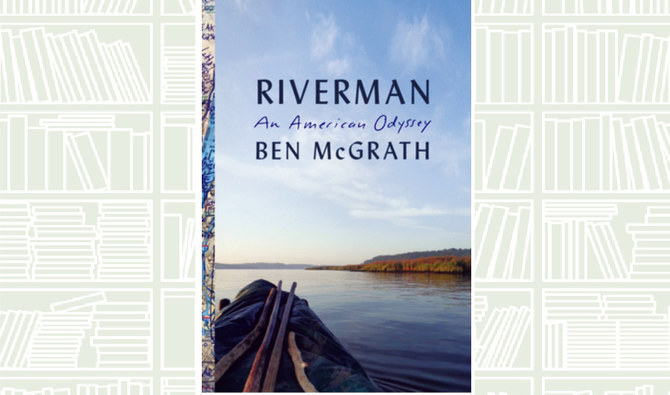
What We Are Reading Today: Riverman by Ben McGrath

Short Url
Updated 06 May 2022
Follow

What We Are Reading Today: Riverman by Ben McGrath

This book contains everything: Adventure, mystery, travelogue, and unforgettable characters.

Ben McGrath’s first book elegantly relates the true story of Dick Conant, a troubled and charismatic man who disappeared on a long-distance canoe trip from New York to Florida.

Riverman “is a portrait of an America we rarely see: a nation of unconventional characters, small river towns, and long-forgotten waterways,” said a review on Goodreads.com.

For decades, Conant paddled the rivers of America, covering the Mississippi, Yellowstone, Ohio, Hudson, as well as innumerable smaller tributaries.

These solo excursions were epic feats of planning, perseverance, and physical courage.

At the same time, Conant collected people wherever he went, creating a vast network of friends and acquaintances who would forever remember this brilliant and charming man even after a single meeting.

Conant was fortunate to experience the benefits — and the occasional hardships — of being immersed in both worlds.

“It is our great fortune that his story landed in the hands of someone who cared to tell his story well,” said the review.


What We Are Reading Today: Making Waste by Sophie Gee

Updated 02 March 2026
Follow

What We Are Reading Today: Making Waste by Sophie Gee

Why was 18th-century English culture so fascinated with the things its society discarded? Why did Restoration and Augustan writers such as Milton, Dryden, Swift, and Pope describe, catalog, and memorialize the waste matter that their social and political worlds wanted to get rid of—from the theological dregs in “Paradise Lost” to the excrements in “The Lady’s Dressing Room” and the corpses of “A Journal of the Plague Year?” In “Making Waste,” the first book about refuse and its place in Enlightenment literature and culture, Sophie Gee examines the meaning of waste at the moment when the early modern world was turning modern.

Gee explains how English writers used contemporary theological and philosophical texts about unwanted and leftover matter to explore secular, literary relationships between waste and value. She finds that, in the 18th century, waste was as culturally valuable as it was practically worthless—and that waste paradoxically revealed the things that the culture cherished most.