

Oil jumps 4 percent as EU proposes ban on Russian oil

The Commission’s measures include phasing out supplies of Russian crude within six months and refined products by end-2022. Shutterstock
Short Url
Updated 04 May 2022
Follow

Oil jumps 4 percent as EU proposes ban on Russian oil

Oil prices jumped on Wednesday as the European Union, the world’s largest trading bloc, spelled out plans to phase out imports of Russian oil, offsetting demand worries in top importer China.

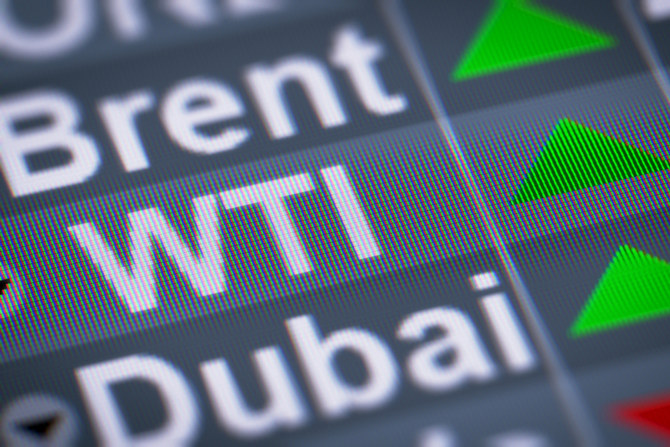
Brent crude futures rose $3.99, or 3.8 percent, to $108.96 a barrel by 1121 GMT. West Texas Intermediate crude futures rose $4.05, or 4 percent, to $106.46 a barrel.

European Commission President Ursula von der Leyen on Wednesday proposed a phased oil embargo on Russia over its war in Ukraine, as well as sanctioning Russia’s top bank, in a bid to deepen Moscow’s isolation.

The Commission’s measures include phasing out supplies of Russian crude within six months and refined products by end-2022, von der Leyen said. She also pledged to minimize the impact on European economies.

Hungary and Slovakia, however, will be able to continue buying Russian crude oil until the end of 2023 under existing contracts, an EU source told Reuters on Wednesday.

“Russian oil is now ‘bad oil’,” SEB chief commodities analyst Bjarne Schieldrop said.

“This energy war of ‘good oil’ versus ‘bad oil’ has just started,” he added.

Investors are also waiting for an announcement from the US Federal Reserve on Wednesday.

It is expected to intensify efforts to bring down high inflation by raising interest rates and reducing its balance sheet.

In the United States, crude and fuel stocks fell last week, according to market sources citing American Petroleum Institute figures. Crude stocks fell by 3.5 million barrels for the week ended April 29, they said.

This was more than an expected 800,000-barrel drop estimated in a Reuters poll.

US government data on stocks is due on Wednesday.

Oil prices fell more than 2 percent on Tuesday on demand worries stemming from China’s prolonged COVID-19 lockdowns that have curtailed travel plans during the Labour Day holiday season.

The global manufacturing purchasing managers index contracted in April for the first time since June 2020, with China’s lockdowns a key contributor, Caroline Bain, chief commodities economist at Capital Economics said in a note.

The Organization of the Petroleum Exporting Countries and their allies on Thursday are expected to stick to their policy for another monthly production increase. 


Acwa signs key terms to develop 5GW of renewable energy capacity in Turkiye

Updated 23 February 2026
Follow

Acwa signs key terms to develop 5GW of renewable energy capacity in Turkiye

JEDDAH: Saudi utility giant Acwa has signed key investment agreements with Turkiye’s Ministry of Energy and Natural Resources to develop up to 5 gigawatts of renewable energy capacity, starting with 2GW of solar power across two plants in Sivas and Taseli.

Under the investment agreement, Acwa will develop, finance, and construct, as well as commission and operate both facilities, according to a press release.

The program builds on the company’s first investment in Turkiye, the 927-megawatt Kirikkale Independent Power Plant, valued at $930 million, which offsets approximately 1.8 million tonnes of carbon dioxide annually, the statement added.

A separate power purchase agreement has been concluded with Elektrik Uretim Anonim Sirketi for the sale of electricity generated by each facility.

Turkiye aims to boost solar and wind capacity to 120GW by 2035, supported by around $80 billion in investment, while recent projects have already helped prevent 12.5 million tonnes of CO2 emissions and reduced reliance on imported natural gas.

Turkiye’s energy sector has undergone a rapid transformation in recent years, with renewable power emerging as a central pillar of its strategy.

Raad Al-Saady, vice chairman and managing director of ACWA, said: “The signing of the IA (implementation agreement) and PPA key terms marks a pivotal moment in Acwa’s partnership with Turkiye, reflecting the country’s strong potential as a clean energy leader and manufacturing powerhouse.”

He added: “Building on our long-standing presence, including the 927MW Kirikkale Power Plant commissioned in 2017, this step elevates our partnership to a new level,” Al-Saady said.

In its statement, Acwa said the 5GW renewable energy program will deliver electricity at fixed prices, enhancing predictability for grid planning and supporting long-term industrial investment.

By replacing imported fossil fuels with domestically generated clean energy, the initiative is expected to reduce Turkiye’s exposure to global energy market volatility, strengthening energy security and lowering long-term power costs.

The company added that the economic impact will extend beyond the anticipated investment of up to $5 billion in foreign direct investment, with thousands of jobs expected during the construction phase and hundreds of high-skilled roles created during operations.

The energy firm concluded that its existing progress in Turkiye reflects a strong appreciation for Turkish engineering, construction, and manufacturing capacity, adding that localization has been a strategic priority, and it has already achieved 100 percent local employment at its developments in the country.