

Deaf Pakistani outfitter tailors the way for workers with disabilities

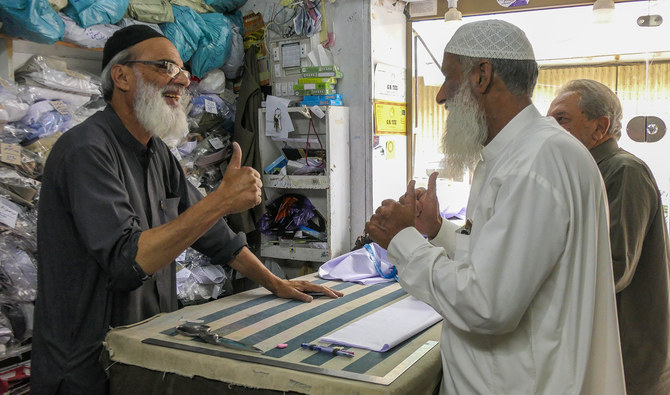
Deaf master tailor Haroon Razzaq communicates with customers at this shop in Yat Road, Quetta, Balochistan, southwestern Pakistan, on April 24, 2022. (AN photo)
Short Url
Updated 04 May 2022
Follow

Deaf Pakistani outfitter tailors the way for workers with disabilities

  • Haroon Razzaq learnt his profession at the age of 15 and has been sewing clothes for the past 50 years
  • Knowing socio-cultural and economic difficulties living with a disability poses in Pakistan, he started employing deaf workers

QUETTA: At Haroon Razzaq’s tailor shop in Quetta there is little chatter. Workers are busy completing orders and only the whirring of sewing machines fills the space. Many of them, including the master outfitter, cannot hear it.

Born deaf, Razzaq learnt his profession at the age of 15 and has been sewing clothes for the past 50 years.

Knowing different socio-cultural and economic difficulties living with a disability poses in Pakistan, when he opened his own shop in 1983, he also created a space where he could empower others.

“I have started hiring deaf and hard of hearing workers in my shop to give them jobs,” Razzaq told Arab News at his shop in Yat Road, Quetta, the capital of Pakistan’s Balochistan.

“In our society, the majority of people with physical or other impairments start begging in order to sustain themselves, or their families consider them as a burden.”
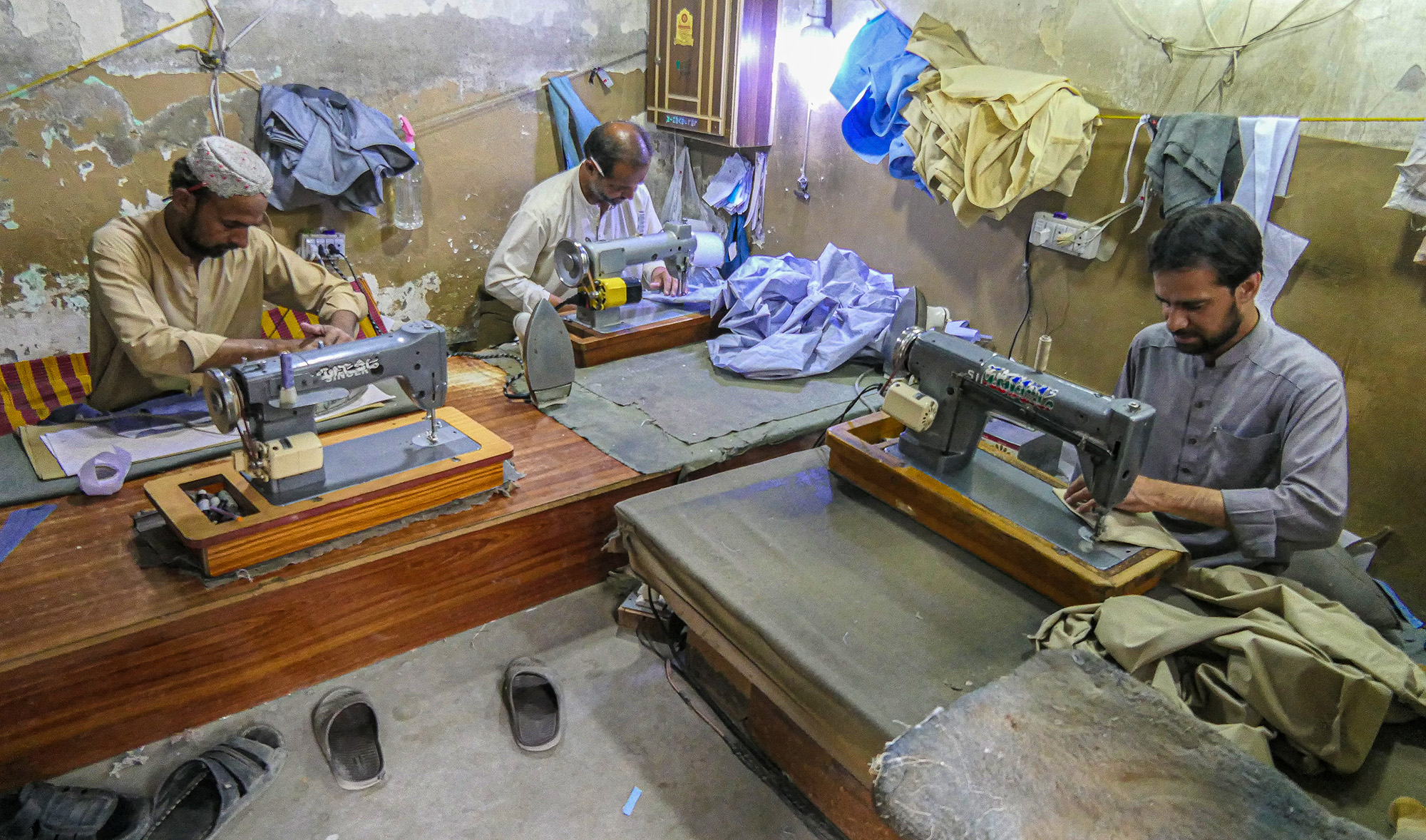


Stitchers are busy at work at Haroon Razzaq's shop in Yat Road, Quetta, Balochistan, southwestern Pakistan, on April 24, 2022. (AN photo)

Razzaq currently employs 19 people. Half of them are deaf or hard of hearing.

“They feel comfortable at my shop because I can communicate with them more quickly,” he said.

The nine disabled stitchers who work at his shop are not the only ones he has trained. There were many more over the years and most of them have started their own careers.

“Many of my apprentices with speaking and hearing impairment are now working as professional stitchers in various tailor shops in Quetta,” Razzak said.
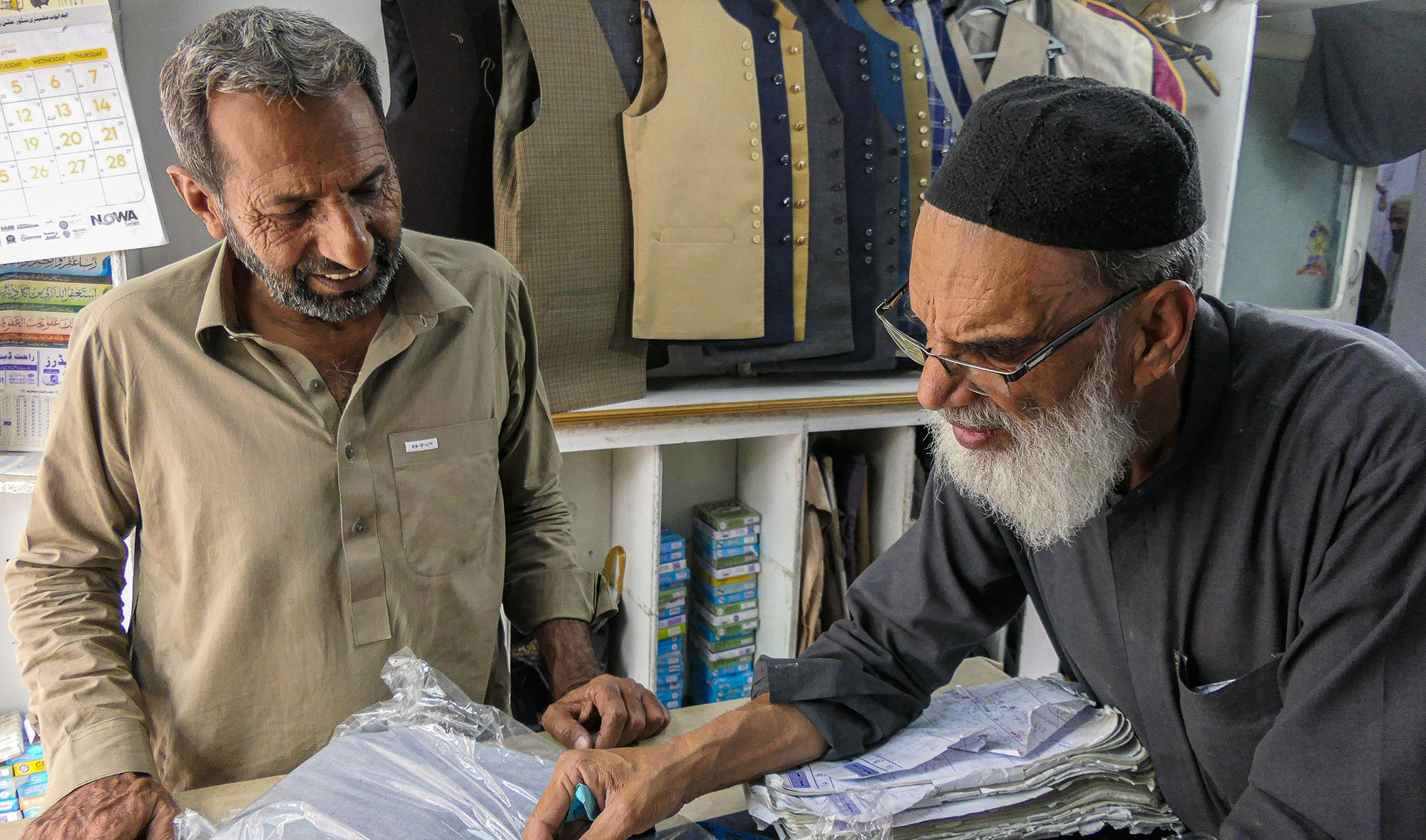


Customer Sohail Akhtar communicates in writing with deaf master tailor Haroon Razzaq at his shop in Yat Road, Balochistan, southwestern Pakistan, on April 24, 2022. (AN Photo)

Razzaq has hundreds of faithful customers in Quetta. One of them, Sohail Akhter, has been coming to his shop for the last 30 years.

He has never faced any problems in communicating with the tailor. He writes his request on paper and Razzaq answers in written too.

“For the last three decades, the master tailor Haroon and his craftsmen have never given us a reason to complain,” he said. “They have been sewing our clothes with perfection.”

Ejaz Qadri, a cutter at Razzaq’s shop who has no hearing impairments, said that in the first days it was difficult for him to communicate with him, but the barrier soon disappeared and for the past eight years he has been enjoying working at the shop where conditions and wages are better than elsewhere.

“I have worked at many tailor shops where masters mistreat their apprentices,” he said. “But Haroon helps and encourages his workers.”
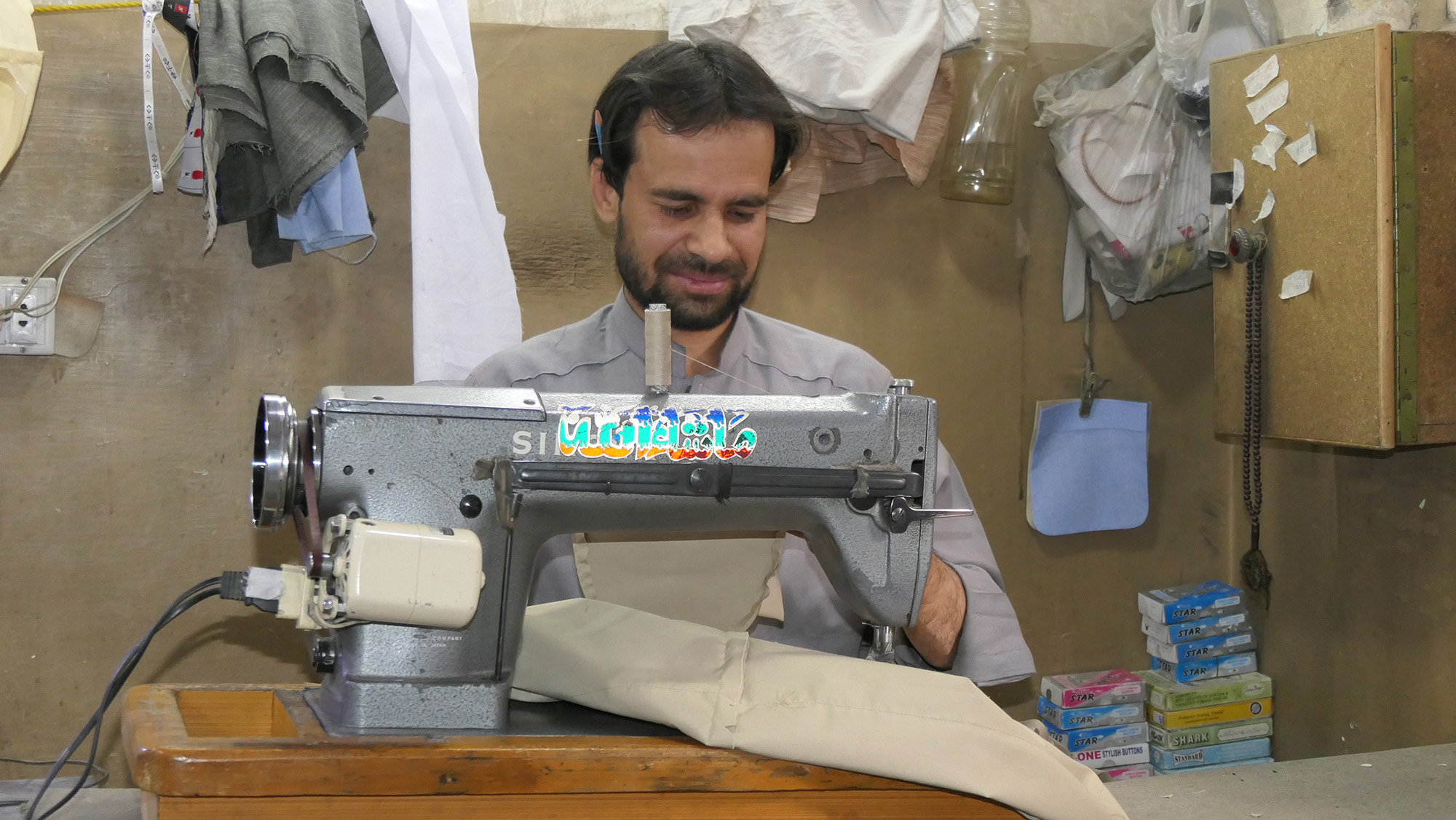


Deaf stitcher Naveed is busy sewing orders for Eid Al-Fitr at Haroon Razzaq's shop in Yat Road, Balochistan, southwestern Pakistan, on April 24, 2022. (AN photo)

Naveed, a 37-year-old who learnt the craft from Razzaq over 10 years ago, said it gave him the chance to earn with dignity.

During Ramadan, ahead of the Eid Al-Fitr holiday season, when most of Pakistanis buy new clothes for festive family celebrations, he said he earns even more than Rs45,000 ($240).

“I have found a teacher,” Naveed told Arab News. “Haroon Razzaq is the only man in Balochistan who has been encouraging people of our community by providing them good job opportunities.”


Pakistan, UK sign £35 million Green Compact to strengthen climate resilience

Updated 21 December 2025
Follow

Pakistan, UK sign £35 million Green Compact to strengthen climate resilience

  • Pakistan ranks among nations most vulnerable to climate change and has seen erratic changes in its weather patterns
  • UK will help Pakistan mobilize climate finance, strengthen regulatory frameworks and develop bankable climate projects

ISLAMABAD: Pakistan and the United Kingdom (UK) have formalized a comprehensive climate partnership with the launch of a Green Compact that aims to enhance climate resilience, accelerate clean energy transition and scale up nature-based solutions, including mangrove conservation, Pakistani state media reported on Sunday.

The agreement, signed in Islamabad by Federal Minister for Climate Change and Environmental Coordination Dr. Musadik Malik and UK Minister for International Development Jennifer Chapman, unlocks £35 million in targeted support for green development and long-term climate action, according to Radio Pakistan broadcaster.

Pakistan ranks among nations most vulnerable to climate change and has seen erratic changes in its weather patterns that have led to frequent heatwaves, untimely rains, storms, cyclones, floods and droughts in recent years. In 2022, monsoon floods killed over 1,700 people, displaced another 33 million and caused over $30 billion losses, while another 1,037 people were killed in floods this year.

Mohammad Saleem Shaikh, a spokesperson for Pakistan’s Ministry of Climate Change, described the compact as a “decisive move toward action-oriented climate cooperation,” noting that its implementation over the next decade will be critical for Pakistan which regularly faces floods, heatwaves and water stress.

“The Compact is structured around five core pillars: climate finance and investment, clean energy transition, nature-based solutions, innovation and youth empowerment, and adaptation and resilience,” the report read.

“Under the agreement, the UK will work with Pakistan to mobilize public and private climate finance, strengthen regulatory frameworks for green investment, and develop bankable climate projects.”

Clean energy forms a central component of Pakistan’s transition, with Islamabad planning to expand solar and wind generation to reduce fossil fuel dependence, improve energy security and stabilize power costs, according to Shaikh.

“Renewable energy is now economically competitive, making the transition both environmentally and financially viable,” he was quoted as saying.

“Nature-based solutions, particularly large-scale mangrove restoration, will protect coastal communities from storm surges and erosion while enhancing biodiversity and carbon sequestration.”

Under the Compact, technical support, mentoring and access to investors will be provided to climate-smart startups and young innovators, reflecting Pakistan’s recognition of youth-led initiatives as central to future climate solutions.

On the occasion, Chapman, on her first official visit to Pakistan, underscored the urgency of climate action, highlighting the UK’s support for renewable energy, mangrove and ecosystem restoration, early-warning systems, climate budgeting and international investment flows into Pakistan.

Shaikh described the Green Compact as “a strategic turning point” in Pakistan–UK relations on climate change, saying its effective implementation is essential for Pakistan to meet its national climate targets.