



DUBAI: As the Islamic call to prayer begins to echo inside the only Sikh temple in Dubai, Muslims are drawn to the building to break their fast with dates and rose-flavored Rooh Afza drink.
The Guru Nanak Darbar Gurudwara, located in Jebel Ali, has been serving the evening iftar meal to Muslims since 2012.
On one corner of the enormous hall at the heart of the building, tables are adorned with iftar dishes.
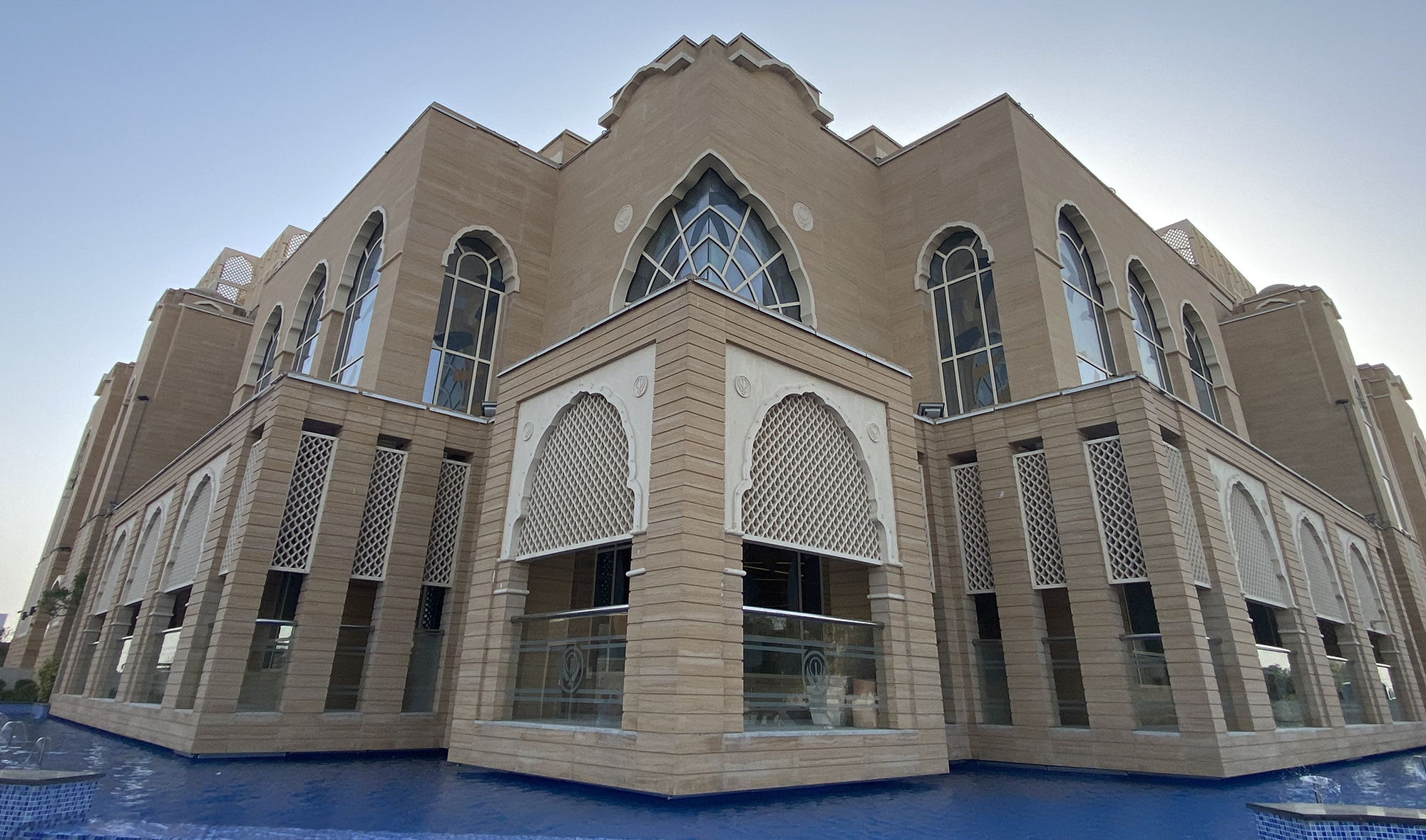
This picture shows the building of the Guru Nanak Darbar Gurudwara in Dubai, United Arab Emirates, on April 26, 2022. (AN photo by Asma Ali Zain)
Mats are also rolled out on the other end to welcome hundreds of Sikh devotees who come here to perform religious rituals before cherishing quality food.
“We started the gurdwara 10 years ago,” said Rajdeep Singh, the hospitality manager, while sharing the history of the initiative. “Since then, we started hosting iftar at least once during the holy month. However, we did it on all 30 days of Ramadan in 2018-19.”
As Sikhs gather around their holy scripture, Guru Granth Sahib, in the evening, Muslims prostrate behind their prayer leader in the designated building area during Ramadan.
Speaking to Arab News, Singh said the iftar ritual at the gurdwara had resumed after a gap of two years due to the coronavirus pandemic.
“People are not aware yet that the gurudwara has reopened, so we don’t have many people this year,” he continued.
He said all religions were welcome at Sikh temples.
“We respect all religions,” Singh said. “This place was given to us by the rulers of the UAE, and we believe that this is a milestone for other religions to follow as well. Such gatherings can only happen in Dubai.”
“Every religious place can feature harmony and peace,” he added.
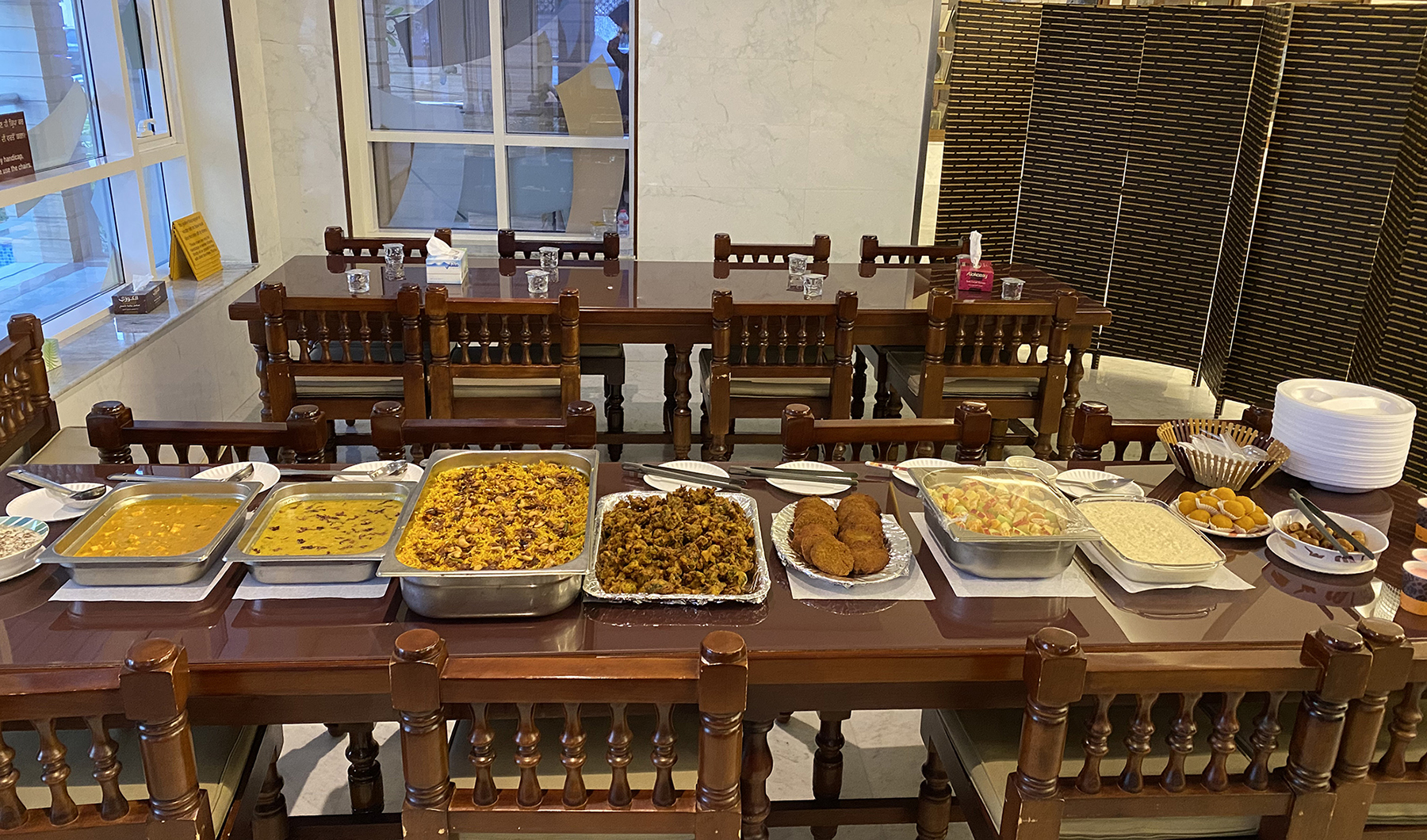
An iftar table can be seen at the Guru Nanak Darbar Gurudwara in Dubai, United Arab Emirates, on April 26, 2022. (AN photo by Asma Ali Zain)
The Iftar menu offers plenty of Middle Eastern and Punjabi dishes such as kababs, pakoras, vegetable biryani and kheer.
Shoaib Khan, a project coordinator from Pakistan’s eastern Lahore city, who has been living in Dubai for the last five years, said he was visiting the place for the first time at the insistence of a Sikh friend.
“Breaking the fast here was really an amazing experience for me,” he said. “I saw that my friends, both Sikhs and Muslims, were sitting together at one place which gave the message that the biggest religion is humanity.”
Khan said he would encourage others to visit the gurudwara as well to see the generous welcome and love on display.
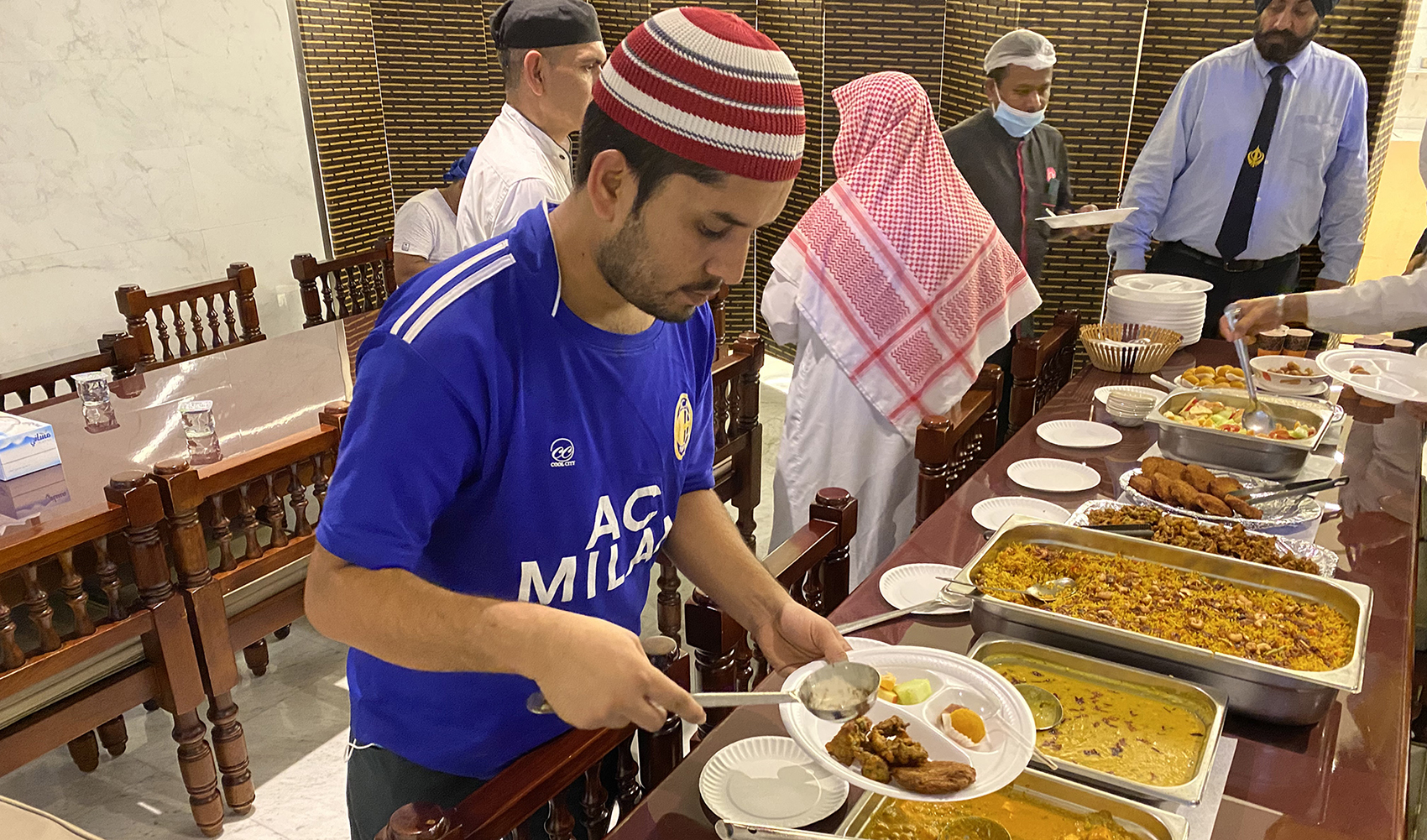
Indian Muslim Irshad Ali prepares to break his fast at the Guru Nanak Darbar Gurudwara in Dubai, United Arab Emirates, on April 26, 2022. (AN photo by Asma Ali Zain)
In 2017, the Sikh temple also set a world record by hosting the highest number of people from all nationalities for a continental breakfast. A whopping 600 people from 101 different nationalities attended the event.
Irshad Ali, an Indian loader who works at the Dubai Airport, said he had been to the place at least four times to have iftar.
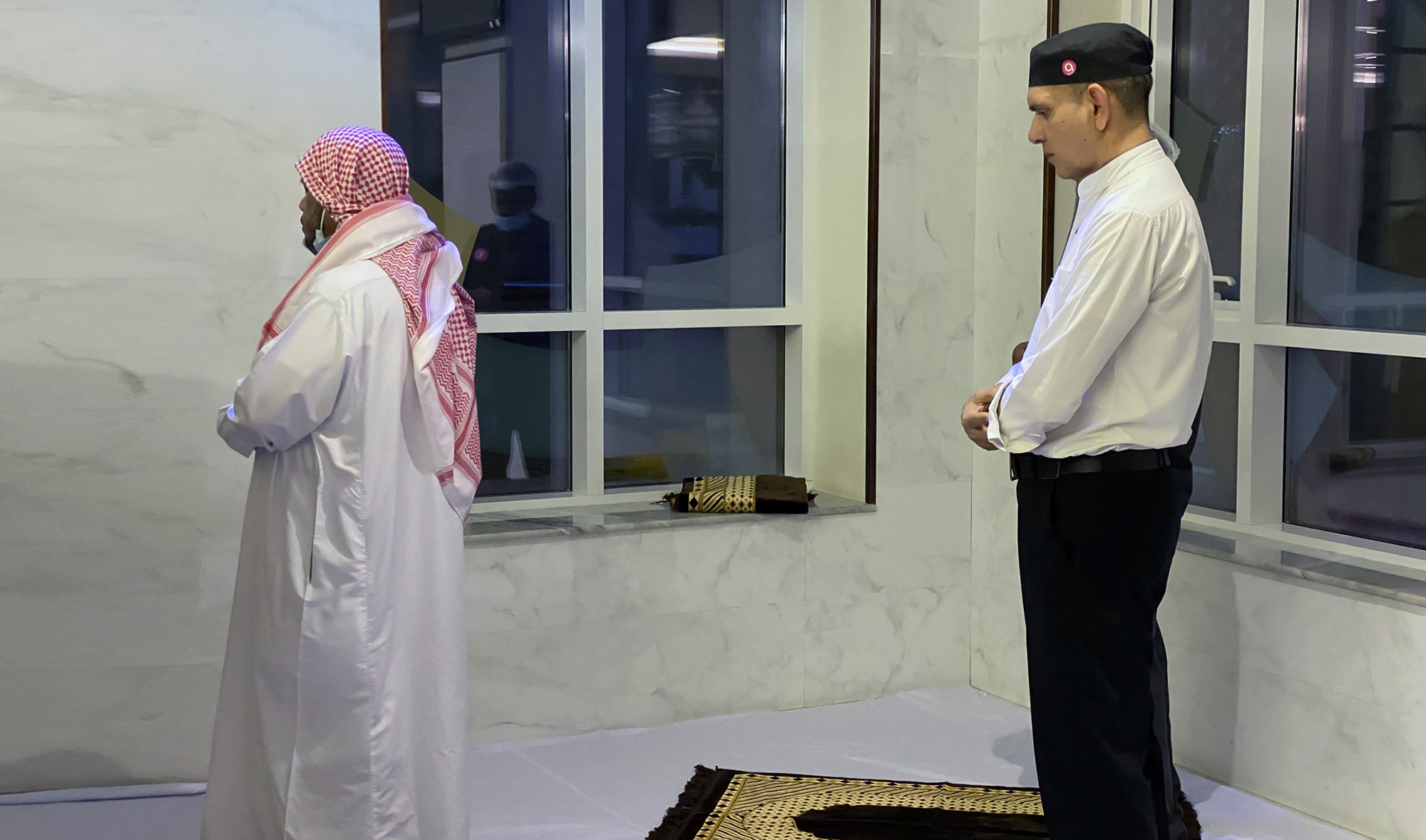
An Imam leads the evening prayer for Muslims after iftar is served at the Guru Nanak Darbar Gurudwara in Dubai, United Arab Emirates, on April 26, 2022. (AN photo by Asma Ali Zain)
“It’s a different feeling coming here,” he said. “While it’s a gurudwara, we pray here behind an imam after the prayer call. The iftar meal is also readied on time, and it’s like a feast that is enjoyed not only by Muslims but also people belonging to other religions.”


