

In Ramadan, traditional drink of wrestlers beats the heat in Pakistan’s south

Pakistani men break their fast with Maaz Thadal drink at a roadside stall in Sanghar, Sindh, on April 27, 2022. (AN photo by Zulfiqar Kunbhar)
Short Url
Updated 28 April 2022
Follow

In Ramadan, traditional drink of wrestlers beats the heat in Pakistan’s south

  • Thadal was formulated by a herbalist in Nawabshah city over five decades ago
  • Cooling and energizing, it was used by pehlwan of Sindh to regulate body temperature

NAWABSHAH, SINDH: Once a cooling and energizing drink of traditional wrestlers, the herbal beverage Thadal is nowadays a Ramadan favorite for breaking the fast and beating the scorching heat of Pakistan’s southern Sindh province.

The modern recipe of the cooler, also known in Urdu as “Mashroob-e-Mehran” (“The Drink of Sindh”), was formulated by herbalist Hakeem Muhammad Maaz in Nawabshah, a city in central Sindh, which is known for its hot destert climate.

In the 1970s, Maaz’s son Hakeem Muhammad Muneer started its mass production under the name Maaz Thadal.
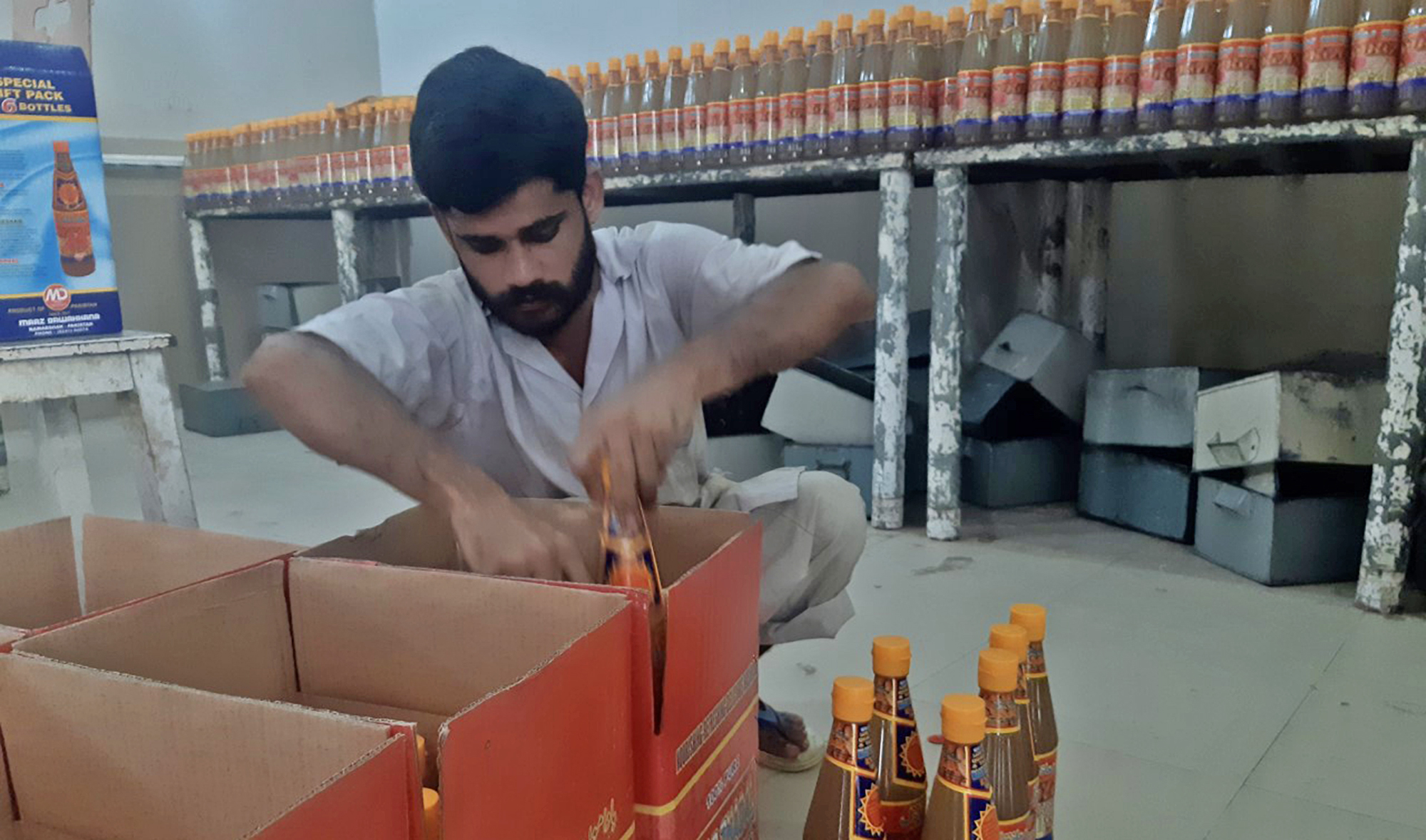


A worker at Maaz Dawakhana in Nawabshah, Sindh, Pakistan, packs Maaz Thadal bottles on April 25, 2022. (AN photo by Zulfiqar Kunbhar)

The thick white syrup is prepared from herbs, almonds, cardamom, coriander, poppy seeds, refined sugar and natural preservatives. It has no artificial colorants.
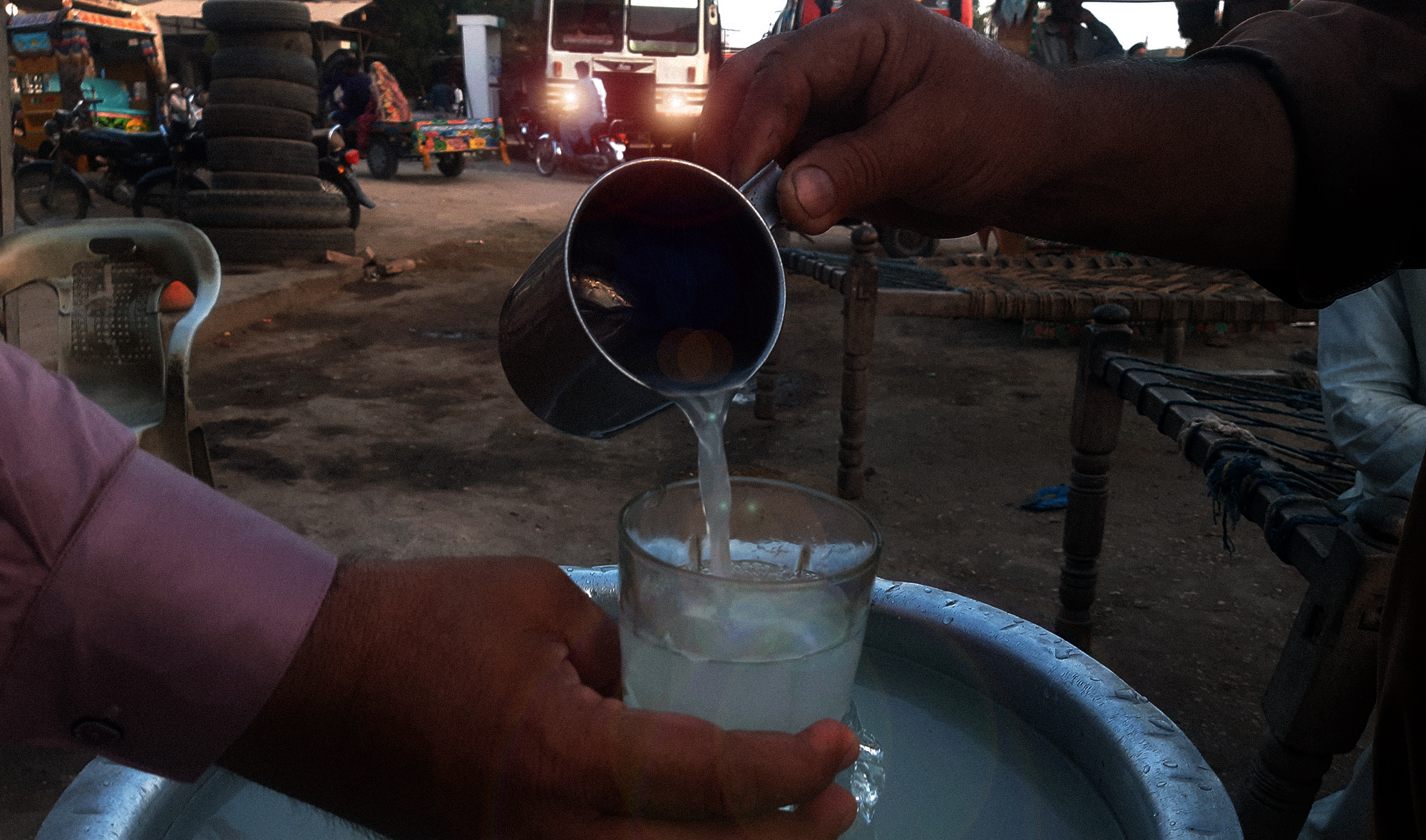


A roadside stall serves Maaz Thadal in Sanghar, Sindh, Pakistan on April 27, 2022. (AN photo by Zulfiqar Kunbhar)

“Thadal is a product of Indus civilization and has been here for centuries,” Maaz’s grandson, Aziz Rehman, told Arab News at his shop, Maaz Dawakhana, in Nawabshah.

“My grandfather used to prescribe this recipe to his patients, however, it was my father who took the Thadal formula to the next level and introduced the bottled Thadal in formal packaging with the brand name.”

Thadal first became a hometown success, selling in Nawabshah’s local market, but soon its taste gained fame across the country.
 
“Today it is one of the souvenirs of Sindh because of its natural ingredients and unique taste,” Rehman said, adding that the secret behind the success is the recipe, more than half a century old, which has never been changed.

Shahzad Ahmed Khaskheli, a resident of Nawabshah, sends Thadal bottles to his family and friends in other cities of Pakistan and abroad.

“It is more than a souvenir,” he said. “It is a perfect summer drink with health benefits.”
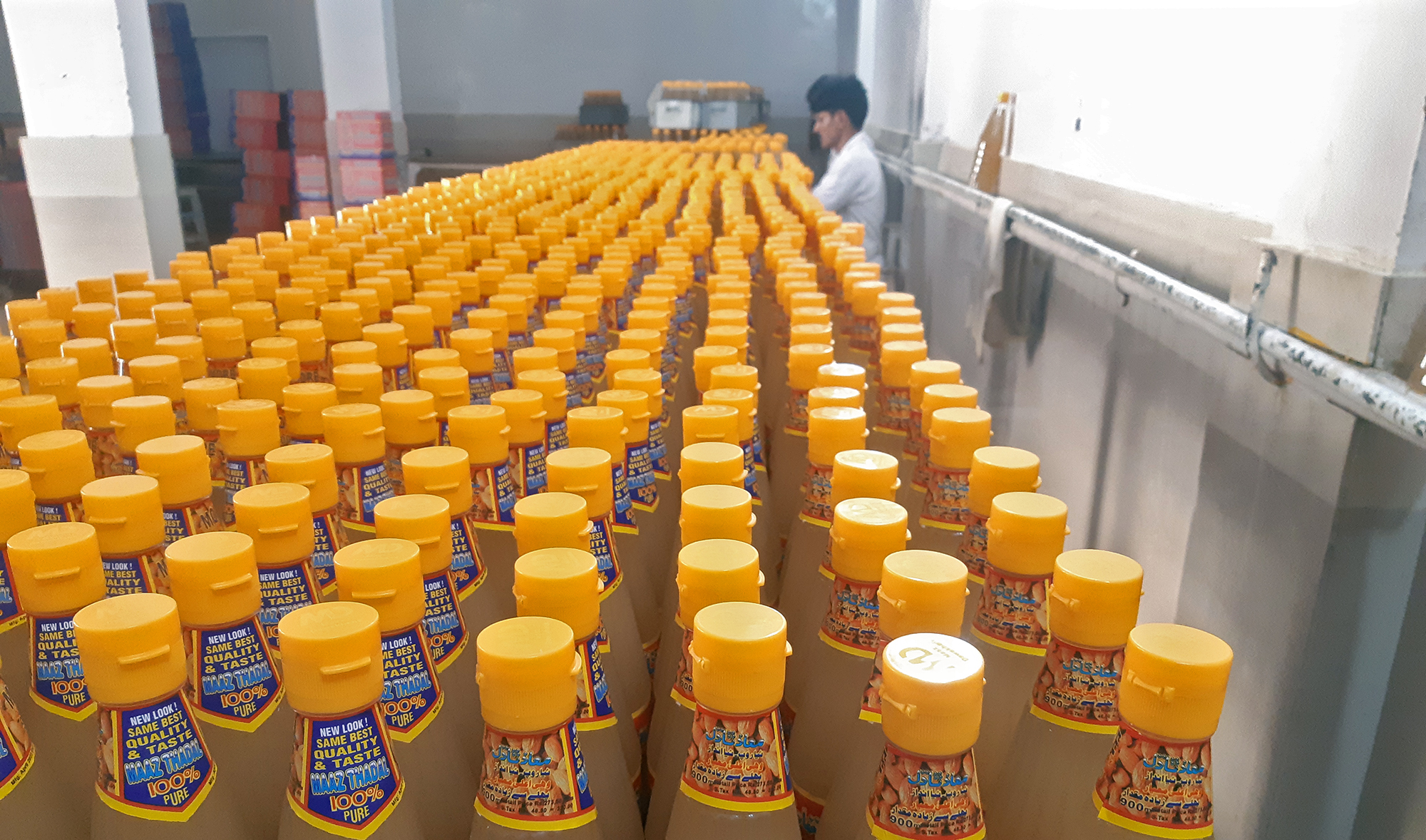


A worker at Maaz Dawakhana in Nawabshah, Sindh, Pakistan, labels Maaz Thadal bottles on April 25, 2022. (AN photo by Zulfiqar Kunbhar)

Originally a drink of the pehlwan, traditional Pakistani wrestlers, which helped regulate their body temperature, Thadal is a preferred beverage to break the fast with during Ramadan.

It is present on most tables in Sindh for iftar dinners that begin after sundown.

“The word Thadal comes from ‘thandai,’ which means coolant,” Rehman said. “Consumption increases in Ramadan, especially if it arrives in summers.”

Dr. Sadia Safdar, a dentist from Karachi, said the drink has special importance across Sindh and is a must-have food item in every household.

“Thadal has remained popular among all age groups,” she added. “My 83-year-old aunt drinks Thadal even today.”


Customs seize narcotics, smuggled goods, vehicles worth $4.9 million in southwest Pakistan

Updated 16 December 2025
Follow

Customs seize narcotics, smuggled goods, vehicles worth $4.9 million in southwest Pakistan

  • Customs seize 22.14 kg narcotics, consignments of smuggled betel nuts, Hino trucks, auto parts, says FBR
  • Smuggled goods enter Pakistan’s Balochistan province from neighboring countries Iran and Afghanistan

ISLAMABAD: Pakistan Customs seized narcotics, smuggled goods and vehicles worth a total of Rs1.38 billion [$4.92 million] in the southwestern Balochistan province on Tuesday, the Federal Board of Revenue (FBR) said in a statement. 

Customs Enforcement Quetta seized and recovered 22.14 kilograms of narcotics and consignments of smuggled goods comprising betel nuts, Indian medicines, Chinese salt, auto parts, a ROCO vehicle and three Hino trucks in two separate operations, the FBR said. All items cost an estimated Rs1.38 billion, it added. 

Smuggled items make their way into Pakistan through southwestern Balochistan province, which borders Iran and Afghanistan. 

“These operations are part of the collectorate’s intensified enforcement drive aimed at curbing smuggling and dismantling illegal trade networks,” the FBR said. 

“All the seized narcotics, goods and vehicles have been taken into custody, and legal proceedings under the Customs Act 1969 have been formally initiated.”

In the first operation, customs officials intercepted three containers during routine checking at FEU Zariat Cross (ZC) area. The containers were being transported from Quetta to Pakistan’s Punjab and Khyber Pakhtunkhwa provinces, the FBR said. 

The vehicles intercepted included three Hino trucks. Their detailed examination led to the recovery of the smuggled goods which were concealed in the containers.

In the second operation, the staff of the Collectorate of Enforcement Customs, Quetta, intercepted a ROCO vehicle at Zariat Cross area with the local police’s assistance. 

The driver was interrogated while the vehicle was searched, the FBR said. 

“During interrogation, it was disclosed that drugs were concealed inside the spare wheel at the bottom side of the vehicle,” it said. 

“Upon thorough checking, suspected narcotics believed to be heroin was recovered which was packed in 41 packets, each weighing 0.54 kilograms.”

The narcotics weighed a total of 22.14 kilograms, with an estimated value of Rs1.23 billion in the international market, the FBR concluded. 

“The Federal Board of Revenue has commended the Customs Enforcement Quetta team for their effective action and reiterated its firm resolve to combat smuggling, illicit trade and illegal economic activities across the country,” it said.