

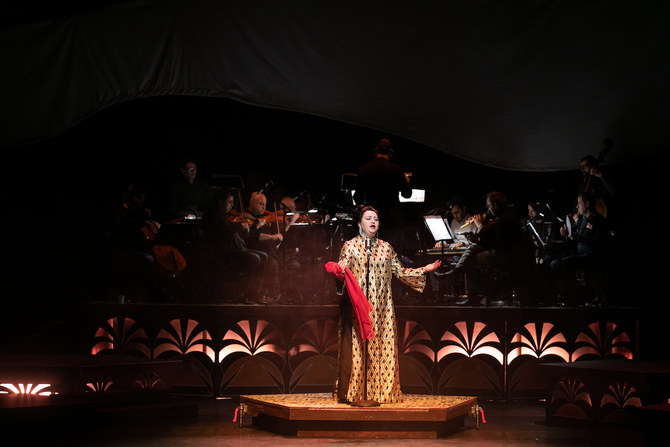

DUBAI: When it comes to musical theater, London’s West End is second only to Broadway in terms of significance. It’s a rare occasion, though, when an Arab-focused production finds its way into the ranks of globally renowned shows such as “The Lion King,” “Wicked” and “Les Misérables.”
But in 2020, just a couple of weeks before the COVID-19 pandemic forced theaters worldwide to close their doors, Saudi playwright, producer and arts patron Mona Khashoggi introduced Londoners to “Umm Kulthum & The Golden Era” — a show based around the life story and seminal songs of the late Egyptian singer, who died in 1975. The show will make its Middle East debut at Dubai Opera on May 3.
Khashoggi came up with the idea for the show when she arrived at the sad realization that musical theater had become a lost art in the region.
“I was sitting there thinking, ‘Why don’t we, Arabs, make something like “Mamma Mia”?’
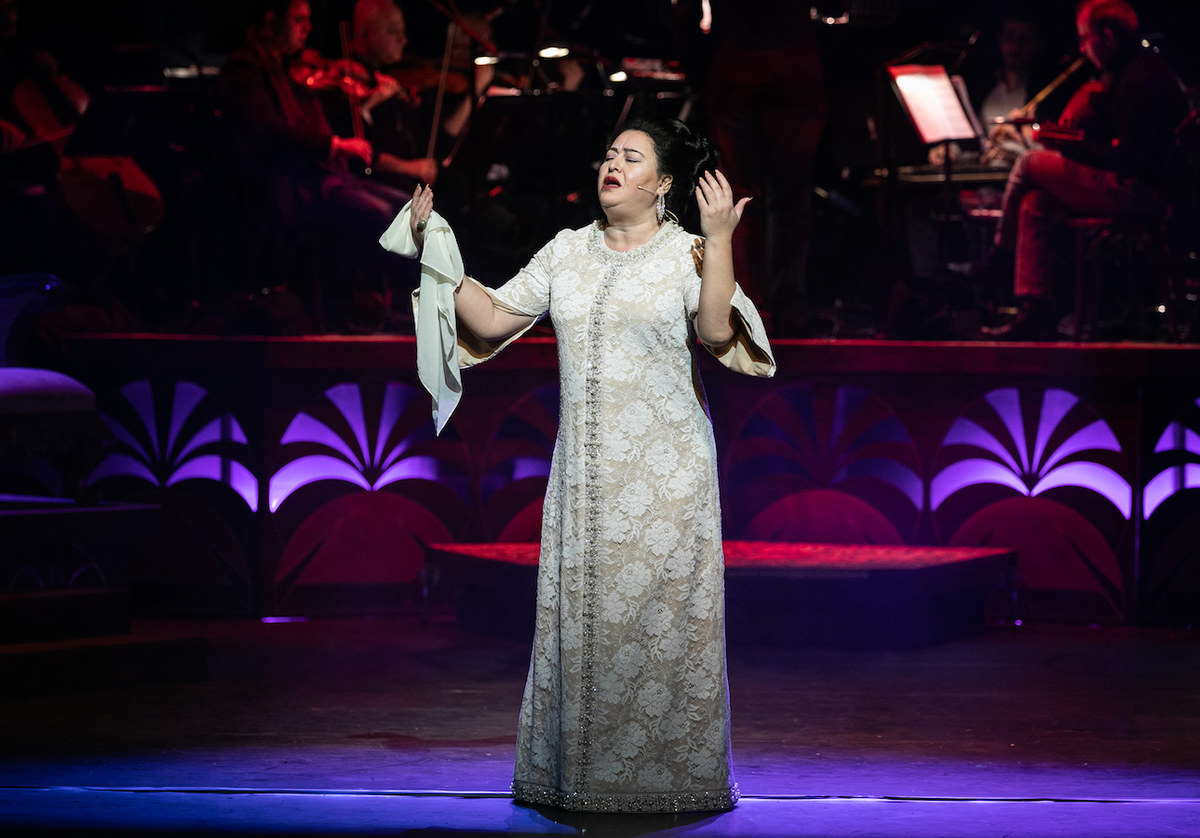
Lubana Al-Quntar as Umm Kulthum in the musical 'Umm Kulthum & The Golden Era.' (Supplied)
There used to be so many musicals in the Arab world, but now — apart from some in Lebanon — it’s just concerts,” Khashoggi tells Arab News. “I wanted to do a musical in the West End, but with an Arab story.”
That proved to be a hard sell. “I went to all of the Arab producers and nobody wanted to do it,” Khashoggi says. “They were all afraid to touch it, because Umm Kulthum is like a goddess.”
So the producer took matters into her own hands, writing her first international play. One that demonstrates the rise of Umm Kulthum from Qur’an orator to iconic diva.
The story begins with Umm Kulthum’s humble childhood in the rural Egyptian Delta. Her supportive father, a sheikh, played a crucial role in her life, teaching her how to read Qura’nic verses aloud. That practice had a huge influence on her singing.
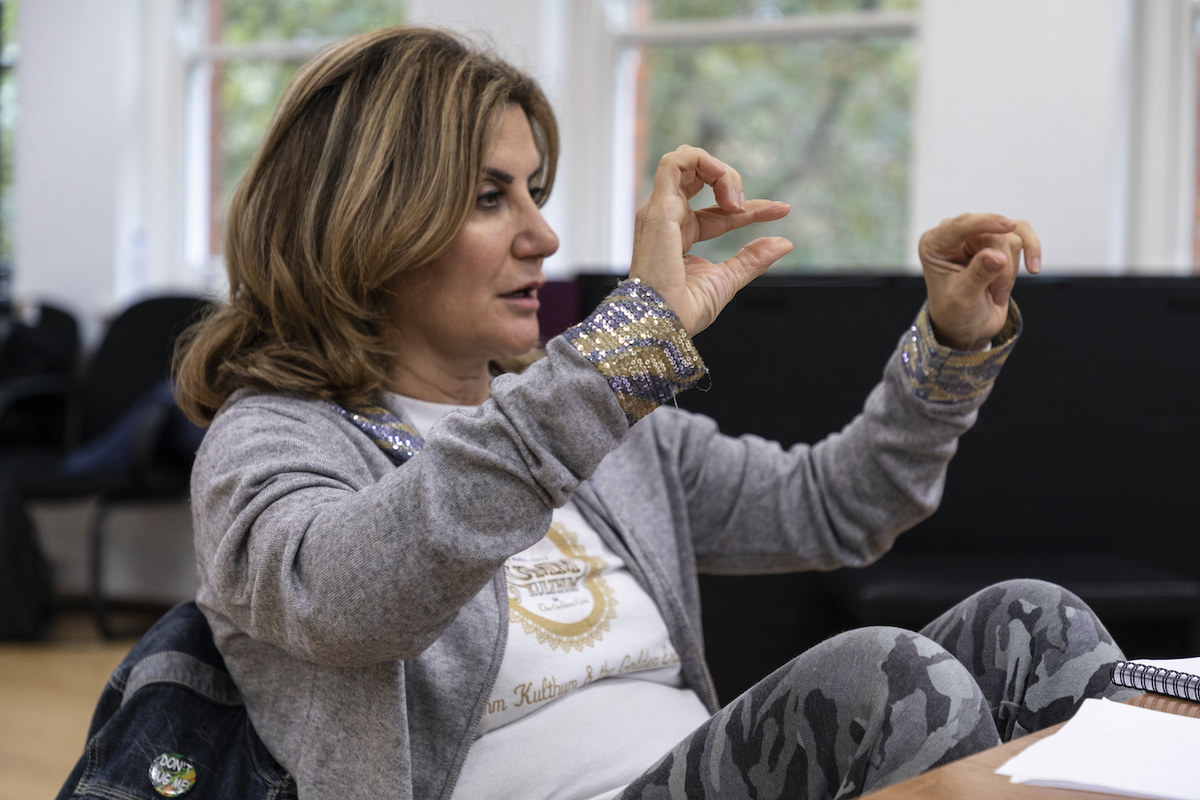
Mona Khashoggi is a Saudi playwright, producer and arts patron. (Supplied)
By the 1960s, Umm Kulthum — “The Star of the East” — was at the top of her game. She released her biggest hits, including “Alf Layla Wa Layla,” in her sixties and seventies and was revered by almost everyone in the Arab world, from all backgrounds. She had plenty of fans in the West too, including superstars like Maria Callas, Bob Dylan, and Robert Plant.
In 1967, her sold-out shows at the Olympia in Paris helped finance and rebuild the Egyptian army under the rule of her friend, Gamal Abdel Nasser. She became a symbol of national pride. “I think she was super clever,” Khashoggi says. “She was a fellaha (village girl), who became the greatest woman in the Arab world. . . She loved the soil that she stood on and was proud of who she was.”
Her death was international news. “When she died, the whole Arab world mourned her,” Khashoggi says. “Who gets that kind of treatment?”
For the producer, this was a deeply personal project. Her late father Mohammed was a good friend of Umm Kulthum and when the singer died it hit him hard.
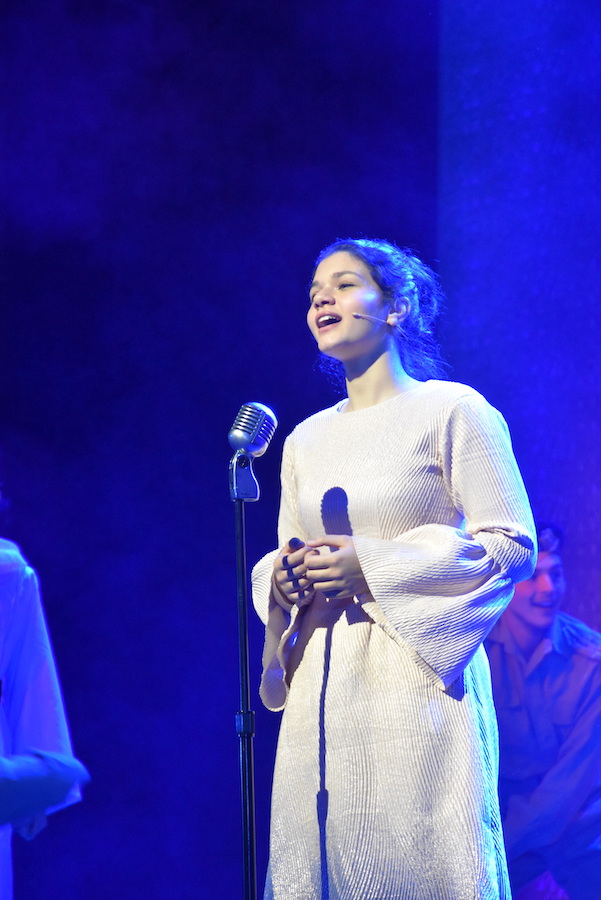
Sanaa Nabil, Umm Kulthum's great-grandniece, will perform in the show. (Supplied)
“My dad locked himself in a room for three days. As a child, it was a very traumatizing experience,” she recalls. The musical’s exploration of Umm Kulthum’s important relationship with her own father is a nod to Khashoggi’s relationship with Mohammed, who introduced her to a whole world of culture during her childhood, which was spent in Lebanon and England.
The musical has two actresses playing Umm Kulthum — Sara Masry plays the younger version and Syrian opera virtuoso Lubana Al-Quntar the older. There will also be a special guest performance by Sanaa Nabil, the great-grandniece of Umm Kulthum. While the song lyrics are in Arabic, the dialogue is in English, making it a bilingual show with the express purpose of attracting foreign and younger audiences.
The million dollar questions remains: Why has Umm Kulthum’s global popularity endured to this very day? There are a number of factors to consider, including her singular voice, her iconic image, and the stirring lyrics and memorable melodies of her romantic and patriotic songs, which are still being revisited and reinterpreted by contemporary musicians.
“She commands her audience,” Khashoggi says. “The way she expresses herself is incredible; you don’t have to understand Arabic. One minute she’s angry and the next she’s tender. She’s a rollercoaster of emotions in one minute.”


