

Mauritius supports Saudi Arabia’s hosting of Expo 2030 as it’s the best candidate: Minister

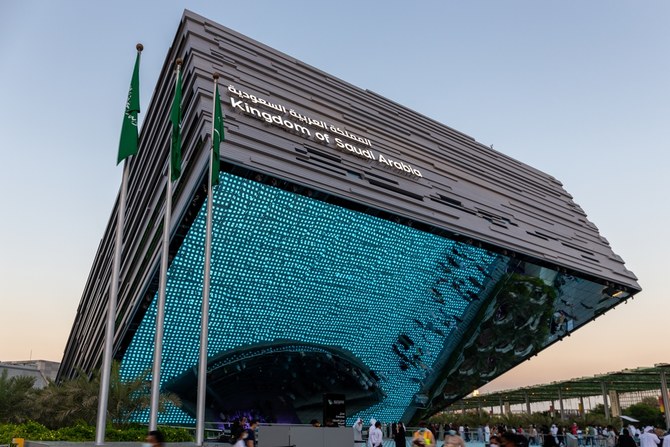
Ganoo said that he had been impressed by the Saudi Pavilion at Expo 2020 and that this had contributed heavily to the decision. (SUPPLIED)
Short Url
Updated 29 April 2022
Follow

Mauritius supports Saudi Arabia’s hosting of Expo 2030 as it’s the best candidate: Minister

RIYADH: Mauritius will vote for Saudi Arabia to host Expo 2030 because it believes the Kingdom has the best capabilities among the candidate nations, according to the Mauritian minister in charge of of foreign affairs, regional integration and international trade.

Alan Ganoo, who is also the minister of land transport and light rail, told Arab News that the current hostilities between the other two candidates — Russia and Ukraine — plus the abilities the Kingdom demonstrated with its pavilion at Expo 2020 Dubai were leading factors in the decision.

“As you know, the decision will be made next year,” he said. “Nevertheless, we have been following the selection process and we have also been attentive to selecting the ideal candidate. We believe that such a global event should be made on the basis of certain principles, such as rotation and geography.


Read More: Saudi Arabia launches bid to host World Expo 2030 in Riyadh


“Given the pertinence of the event in spearheading and in promoting economics, trade, tourism and people-to-people exchanges, it is important to us that the state should have the means and the capacity to make the event unique rather than being a usual exposition.”

Five countries — Saudi Arabia, South Korea, Italy, Ukraine and Russia — are competing to host the global event.


Alan Ganoo

Ganoo said that he had been impressed by the Saudi Pavilion at Expo 2020 and that this had contributed heavily to his country’s decision.

“We had a glimpse of what Saudi Arabia is capable of doing when we visited the Saudi Pavilion,” he added.

Opinion

This section contains relevant reference points, placed in (Opinion field)

Following his visit to the pavilion, Ganoo conveyed his views in support of the Kingdom’s Expo 2030 bid to his country’s prime minister, Pravind Jugnauth, and his colleagues.

“I must also tell you that I’ve exchanged views on the Saudi candidacy with Saudi Arabia’s Minister of State for Foreign Affairs Adel Al-Jubeir,” he said.
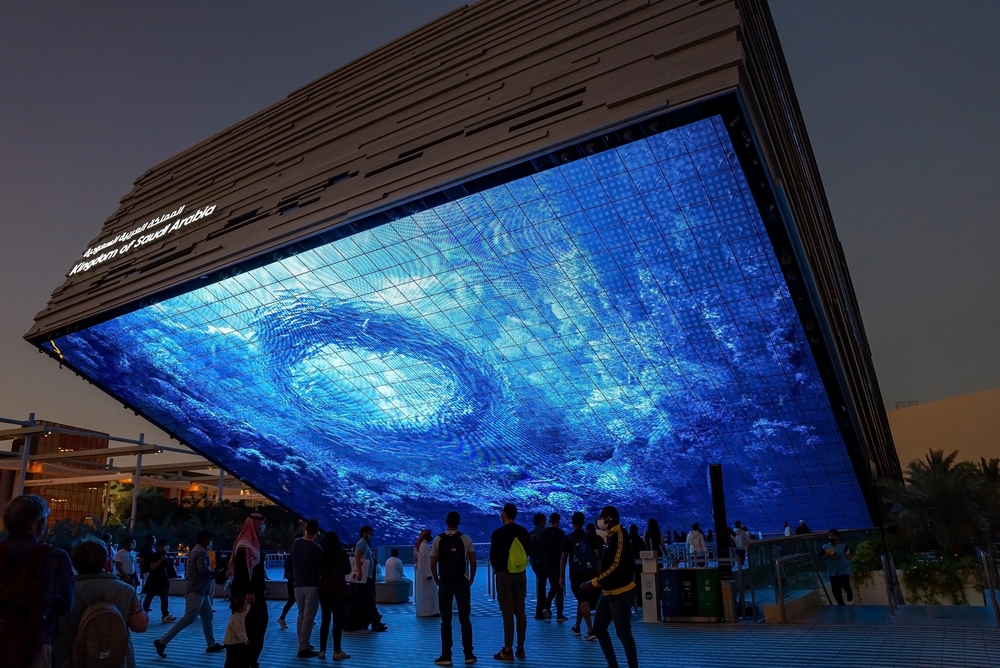


Saudi Pavilion at Expo 2020

“I informed him that Saudi Arabia has the best chance of all the candidates, especially if you consider the present world circumstances, such as the hostility between the two other candidates, Russia and Ukraine.”

Ganoo added that the Kingdom and Mauritius enjoy a close relationship and his country is exploring ways to increase the number of Saudi tourists after a decline in the number of visitors from Europe, which had been a major source of national revenue.


Jordan’s industry fuels 39% of Q2 GDP growth

Updated 31 December 2025
Follow

Jordan’s industry fuels 39% of Q2 GDP growth

JEDDAH: Jordan’s industrial sector emerged as a major contributor to economic performance in 2025, accounting for 39 percent of gross domestic product growth in the second quarter and 92 percent of national exports.

Manufactured exports increased 8.9 percent year on year during the first nine months of 2025, reaching 6.4 billion Jordanian dinars ($9 billion), driven by stronger external demand. The expansion aligns with the country’s Economic Modernization Vision, which aims to position the country as a regional hub for high-value industrial exports, the Jordan News Agency, known as Petra, quoted the Jordan Chamber of Industry President Fathi Jaghbir as saying.

Export growth was broad-based, with eight of 10 industrial subsectors posting gains. Food manufacturing, construction materials, packaging, and engineering industries led performance, supported by expanded market access across Europe, Arab countries, and Africa.

In 2025, Jordanian industrial products reached more than 144 export destinations, including emerging Asian and African markets such as Ethiopia, Djibouti, Thailand, the Philippines, and Pakistan. Arab countries accounted for 42 percent of industrial exports, with Saudi Arabia remaining the largest market at 955 million dinars.

Exports to Syria rose sharply to nearly 174 million dinars, while shipments to Iraq and Lebanon totaled approximately 745 million dinars. Demand from advanced markets also strengthened, with exports to India reaching 859 million dinars and Italy about 141 million dinars.

Industrial output also showed steady improvement. The industrial production index rose 1.47 percent during the first nine months of 2025, led by construction industries at 2.7 percent, packaging at 2.3 percent, and food and livestock-related industries at 1.7 percent.

Employment gains accompanied the sector’s expansion, with more than 6,000 net new manufacturing jobs created during the period, lifting total industrial employment to approximately 270,000 workers. Nearly half of the new jobs were generated in food manufacturing, reflecting export-driven growth.

Jaghbir said industrial exports remain among the economy’s highest value-added activities, noting that every dinar invested generates an estimated 2.17 dinars through employment, logistics, finance, and supply-chain linkages. The sector also plays a critical role in narrowing the trade deficit and supporting macroeconomic stability.

Investment activity accelerated across several subsectors in 2025, including food processing, chemicals, pharmaceuticals, mining, textiles, and leather, as manufacturers expanded capacity and upgraded production lines to meet rising demand.

Jaghbir attributed part of the sector’s momentum to government measures aimed at strengthening competitiveness and improving the business environment. Key steps included freezing reductions in customs duties for selected industries, maintaining exemptions for production inputs, reinstating tariffs on goods with local alternatives, and imposing a 16 percent customs duty on postal parcels to support domestic producers.

Additional incentives in industrial cities and broader structural reforms were also cited as improving the investment climate, reducing operational burdens, and balancing consumer needs with protection of local industries.