Commodities Update — Gold down, silver up; China iron ore, steel futures rebound

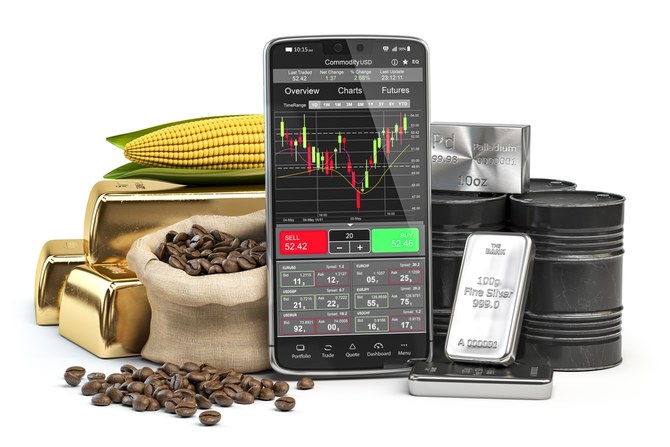
Spot gold was down 0.4 percent at $1,897.86 per ounce, as of 0612 GMT. (Shutterstock)
Short Url
Updated 27 April 2022
Follow

Commodities Update — Gold down, silver up; China iron ore, steel futures rebound

RIYADH: Gold prices fell on Wednesday as the US dollar consolidated at its highest level in more than two years and pressured demand for greenback-priced bullion.

Spot gold was down 0.4 percent at $1,897.86 per ounce, as of 0612 GMT. US gold futures slid 0.3 percent to $1,898.80.

Silver gains, platinum dips

Spot silver gained 0.2 percent to $23.53 per ounce. 

Platinum dipped 0.1 percent to $920.23, and palladium firmed 0.6 percent to $2,200.40.

Wheat eases

Chicago wheat ticked lower on Wednesday after climbing more than 2 percent in the previous session, although concerns over tightening world supplies limited the losses.

Corn fell after two straight sessions of gains, while soybeans slipped for the fourth day.

A decline in the US winter crop rating and delays in spring planting provided some support to prices.

The most-active wheat contract on the Chicago Board of Trade fell 0.5 percent to $10.89-1/4 a bushel, as of 0405 GMT. 

Corn gave up 0.3 percent to $7.99 a bushel, while soybeans slid three-quarters of a cent to $16.71 a bushel.

China iron ore, steel futures rebound

Chinese iron ore and steel futures rose on Wednesday after falling for two consecutive days, as concerns stoked by the COVID-19 outbreak eased.

Benchmark iron ore futures on the Dalian Commodity Exchange had plunged more than 8 percent this week until Tuesday, while construction-used rebar on the Shanghai Futures Exchange lost some 3 percent on fears over sluggish demand outlook due to recurring COVID-19 outbreaks in China.

The most-active iron ore contract for September delivery jumped as much as 3.5 percent to $127.19 a ton in the morning session. 

Spot prices of iron ore with 62 percent iron content for delivery to China rose 50 cents to $139.5 a ton on Tuesday, according to SteelHome consultancy.

Indonesia widens palm oil export

Indonesia’s planned export ban on cooking oil’s raw material will cover crude palm oil, refined palm oil and used cooking oil, among other palm oil products, its chief economic minister said on Wednesday.

The announcement was a reversal of the minister’s statement a day earlier, in which he had said the export ban would only cover refined, bleached, and deodorized palm olein. The ban comes into force at midnight, 1700 GMT Wednesday.

(With inputs from Reuters) 


Gulf-EU value chain integration signals shift toward long-term economic partnership: GCC secretary general

Updated 03 February 2026
Follow

Gulf-EU value chain integration signals shift toward long-term economic partnership: GCC secretary general

RIYADH: Value chains between the Gulf and Europe are poised to become deeper and more resilient as economic ties shift beyond traditional trade toward long-term industrial and investment integration, according to the secretary general of the Gulf Cooperation Council.

Speaking on the sidelines of the World Governments Summit 2026 in Dubai, Jasem Al-Budaiwi said Gulf-European economic relations are shifting from simple commodity trade toward the joint development of sustainable value chains, reflecting a more strategic and lasting partnership.

His remarks were made during a dialogue session titled “The next investment and trade race,” held with Luigi Di Maio, the EU’s special representative for external affairs.

Al-Budaiwi said relations between the GCC and the EU are among the bloc’s most established partnerships, built on decades of institutional collaboration that began with the signing of the 1988 cooperation agreement.

He noted that the deal laid a solid foundation for political and economic dialogue and opened broad avenues for collaboration in trade, investment, and energy, as well as development and education.

The secretary general added that the partnership has undergone a qualitative shift in recent years, particularly following the adoption of the joint action program for the 2022–2027 period and the convening of the Gulf–European summit in Brussels.

Subsequent ministerial meetings, he said, have focused on implementing agreed outcomes, enhancing trade and investment cooperation, improving market access, and supporting supply chains and sustainable development.

According to Al-Budaiwi, merchandise trade between the two sides has reached around $197 billion, positioning the EU as one of the GCC’s most important trading partners.

He also pointed to the continued growth of European foreign direct investment into Gulf countries, which he said reflects the depth of economic interdependence and rising confidence in the Gulf business environment.

Looking ahead, Al-Budaiwi emphasized that the economic transformation across GCC states, driven by ambitious national visions, is creating broad opportunities for expanded cooperation with Europe. 

He highlighted clean energy, green hydrogen, and digital transformation, as well as artificial intelligence, smart infrastructure, and cybersecurity, as priority areas for future partnership.

He added that the success of Gulf-European cooperation should not be measured solely by trade volumes or investment flows, but by its ability to evolve into an integrated model based on trust, risk-sharing, and the joint creation of economic value, contributing to stability and growth in the global economy.

GCC–EU plans to build shared value chains look well-timed as trade policy volatility rises.

In recent weeks, Washington’s renewed push over Greenland has been tied to tariff threats against European countries, prompting the EU to keep a €93 billion ($109.7 billion) retaliation package on standby. 

At the same time, tighter US sanctions on Iran are increasing compliance risks for energy and shipping-related finance. Meanwhile, the World Trade Organization and UNCTAD warn that higher tariffs and ongoing uncertainty could weaken trade and investment across both regions in 2026.