

NRG matters - China to ramp up coal output by 300m tons; UK taking steps to achieve net-zero economy by 2050

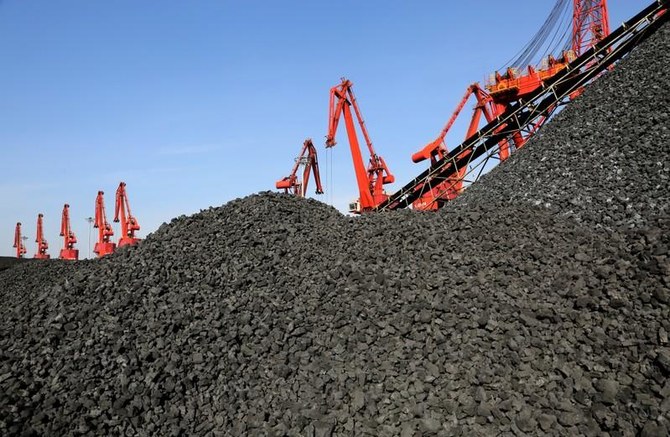
Despite efforts to slash carbon emissions, China is set to ramp up coal production. Reuters
Short Url
Updated 25 April 2022
Follow

NRG matters - China to ramp up coal output by 300m tons; UK taking steps to achieve net-zero economy by 2050

RIYADH: Countries around the world are looking for different options to meet their energy requirements. Ukraine, for example, is seeking help from the International Atomic Energy Agency to operate nuclear plants safely amid the ongoing war with Russia. China, on the other hand, is allowing for a coal comeback to curb energy shortages, and the UK is urging financial firms and listed companies to publish strategies to achieve a net-zero economy.

Looking at the bigger picture: 

  •   Ukraine has requested a comprehensive list of equipment from the International Atomic Energy Agency to help it operate its nuclear plants in the light of geopolitical tensions with Russia, Reuters reported, citing IAEA Director General Rafael Grossi.

The equipment includes power supply systems, radiation measurement devices, computer-related assistance, among others.

  •  Despite efforts to slash carbon emissions, China is set to ramp up coal production by 300 million tons in 2022, Bloomberg reported, citing official plans. 

This comes as the Asian country tries to recover from the drop in economic growth because of energy shortages, which resulted in blackouts and plants shutting down.

  •  The UK has revealed plans to write rules urging financial companies and listed firms to publish strategies in 2023 to back targets to transition to a net-zero economy by 2050.

The strategies by each firm should include goals to diminish climate risk, interim goals in the period between 2023 and 2050, and the measures which the firms intend to take in order to meet those goals, Reuters reported, citing British Finance Minister, Rishi Sunak.


Lower funding costs driving credit growth in Saudi banks

Updated 13 sec ago
Follow

Lower funding costs driving credit growth in Saudi banks

The operating environment for Saudi banks has turned increasingly supportive of credit expansion, reflecting a broad-based decline in key interest-rate benchmarks, including the repurchase and reverse repurchase agreement rates and the Saudi Interbank Offered Rate. 

This easing cycle, evident by November 2025, has reshaped funding conditions across the banking system and reinforced the sector’s capacity to support economic activity.

Policy rate reductions by the Saudi Central Bank have lowered short-term funding costs and contributed to a marked softening in interbank rates. This trend is clearly illustrated by the movement in three-month SAIBOR, which declined to 4.97 percent in November 2025, down from 5.53 percent in the same month a year earlier. The decline signals not only improved liquidity conditions but also strengthening confidence within the interbank market.

In parallel, cuts to repurchase and reverse repurchase agreement rates have further enhanced system-wide liquidity, enabling banks to deploy capital more efficiently. Improved funding affordability has encouraged lenders to continue extending credit, particularly to the corporate sector, while the decline in SAIBOR has translated directly into lower pricing for floating-rate loans. Together, these factors have eased borrowing conditions and strengthened demand for bank financing.

Against this backdrop, the reduction in banks’ cost of funds is expected to incentivize clients—especially small and medium-sized enterprises—to expand their financing needs. 

For SMEs, lower borrowing costs can be pivotal in unlocking investment, supporting working capital requirements, and facilitating business expansion. For banks, stronger credit demand helps offset some of the pressure on net interest margins typically associated with a lower interest-rate environment.

More broadly, declining interest rates are supporting sustained growth in bank lending to the private sector. Saudi banks have demonstrated financial resilience in this environment, adapting effectively to the lower-rate backdrop while maintaining their central role in financing economic activity. Their ability to balance margin management with credit expansion underscores the sector’s operational flexibility.

Saudi banks have responded positively to the reduction in funding costs, as evidenced by the continued and steady expansion of private-sector lending. Total bank credit to the private sector rose by 10.6 percent year on year in November 2025, reaching SR3.1 trillion ($838 billion). This growth reflects both stronger demand and banks’ willingness to lend amid improved funding conditions.

The expansion in credit has been broad-based, with notable gains across segments that are particularly sensitive to interest-rate movements. Lending to SMEs has shown especially strong momentum. Total bank credit to SMEs reached SR427.7 billion in the third quarter of 2025, accounting for 11 percent of total private-sector lending, compared with SR311.8 billion in the same period of 2024, when SMEs represented 9.1 percent of the lending portfolio. This shift highlights the growing role of SMEs in the Kingdom’s economic landscape.

Mortgage lending has also maintained its upward trajectory, increasing by 10.8 percent to around SR938 billion in the third quarter of 2025. Lower financing costs, combined with ongoing housing initiatives, have continued to support demand for residential mortgages, reinforcing the banking sector’s contribution to higher homeownership rates.

Household credit demand strengthened further in the third quarter of 2025. Consumer loans totaled SR476.6 billion, while credit card lending reached SR33.4 billion. These segments recorded year-on-year growth of 3.1 percent and 10.3 percent, respectively, reflecting both improved consumer confidence and more favorable borrowing conditions.

Islamic banking has remained a key driver of sectoral growth, supported by rising demand for Shariah-compliant products. Total Islamic financing reached SR2.7 trillion in the third quarter of 2025, representing a year-on-year increase of 13.5 percent. This expansion underscores the depth and maturity of Islamic finance within the Saudi banking system.

Importantly, the growth in credit has been underpinned by the sector’s strong capital position, ample reserves, and solid profitability metrics, all of which reinforce financial soundness. In November 2025, capital and reserves accounted for 18.76 percent of total deposits, comfortably exceeding regulatory requirements.

Aggregate net income before zakat and taxes rose to SR93.7 billion, up 16.7 percent from SR80.3 billion a year earlier, highlighting banks’ ability to generate earnings despite a lower-rate environment.

In sum, the easing of monetary conditions has created a favorable operating environment for Saudi banks, supporting robust credit growth across corporate, SME, mortgage, household, and Islamic banking segments. This expansion, driven by a lower cost of funds, aligns closely with the objectives of Saudi Vision 2030, particularly in fostering private-sector development, expanding SME participation, increasing homeownership, and deepening the Islamic finance ecosystem.

While lending growth has outpaced deposit growth, Saudi banks have maintained prudent liquidity positions and financial resilience. Diversified funding sources, effective balance-sheet management, and improved funding affordability have enabled the sector to navigate this phase of the cycle.

Within the framework of the Kingdom’s countercyclical economic policy approach, sustained credit expansion alongside declining funding costs is expected to support non-oil economic activity, enhance financial intermediation, and help banks manage profitability pressures while contributing to overall macroeconomic stability.


Talat Zaki Hafiz is an economist and financial analyst.

X: @TalatHafiz