KARACHI: Children aged five to six excitedly scurry to the middle of a dimly lit street in Lyari, hoping to get the chance to kick a football as their elder brothers take a short break from a match.
A poor area of narrow streets and multi-story buildings in the southern port of Karachi, Lyari is often referred to as Pakistan’s “Mini Brazil” — for the love its inhabitants hold for football.
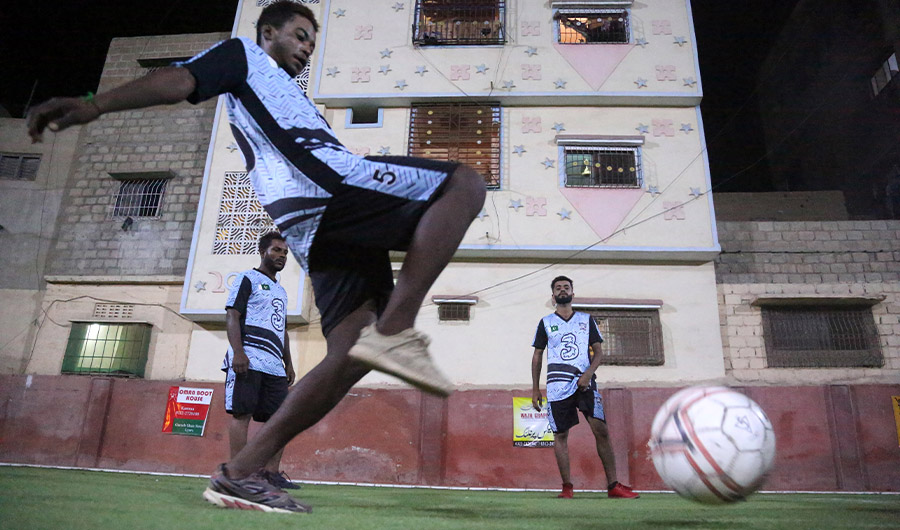
Surrounded by multi-story buildings, young men play football at Coach Emad Football Academy stadium in Lyari locality, Karachi, Pakistan, on April 22, 2022. (AN Photo/S.A. Babar)
Football fever on the streets of Lyari reaches a high every Ramadan night when young people take to its formal and informal grounds to play from iftar until sahoor.
“I wait for Ramadan impatiently because this month brings us a lot of football matches,” Usman Tariq, one of the teenage players told Arab News at the Coach Emad Football Academy in the locality.
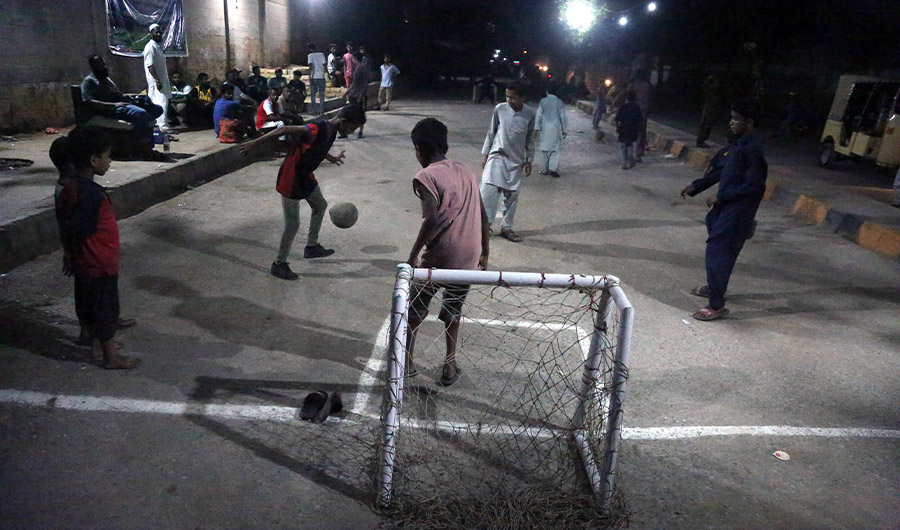
Children play football on the streets of Lyari locality in Karachi, Pakistan, on April 22, 2022. (AN Photo/S.A. Babar)
Football grounds in Lyari are small and big, and most of them are not even properly built. Many are filled with dust, and few have proper turf. But that does not discourage anyone from playing.
“In Lyari you will see football games everywhere,” Tariq said. “There is a match going on at every ground. In the streets, you will see boys kicking a football.”
The comfort of playing football in the area has greatly improved since police in Karachi cracked down on the city’s notorious crime and drug gangs in 2013.
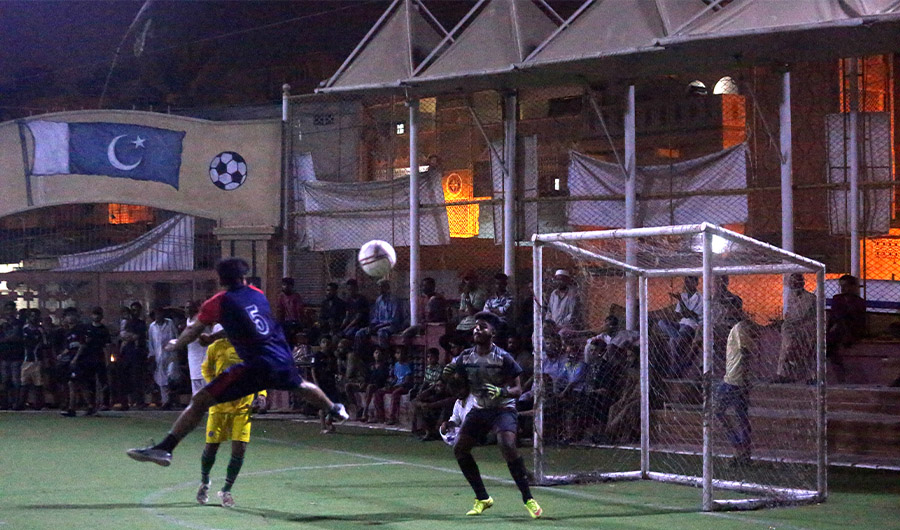
Young footballers play at the Coach Emad Football Academy stadium in Lyari, Karachi, Pakistan on April 22, 2022. (AN Photo/S.A. Babar)
“We would hear sounds of blasts and see gangsters’ faces,” Tariq said. “Now, we hear cheering crowds and see sportsmen.”
Zaid Abdul Latif, 14, said they would run from one ground to another and between different streets of Lyari to play multiple matches during Ramadan nights.
“Sometimes, we have to play four matches a night throughout different localities in Lyari,” he added. “We have to catch a rickshaw. Some go on bikes and others just run from one ground to another.”
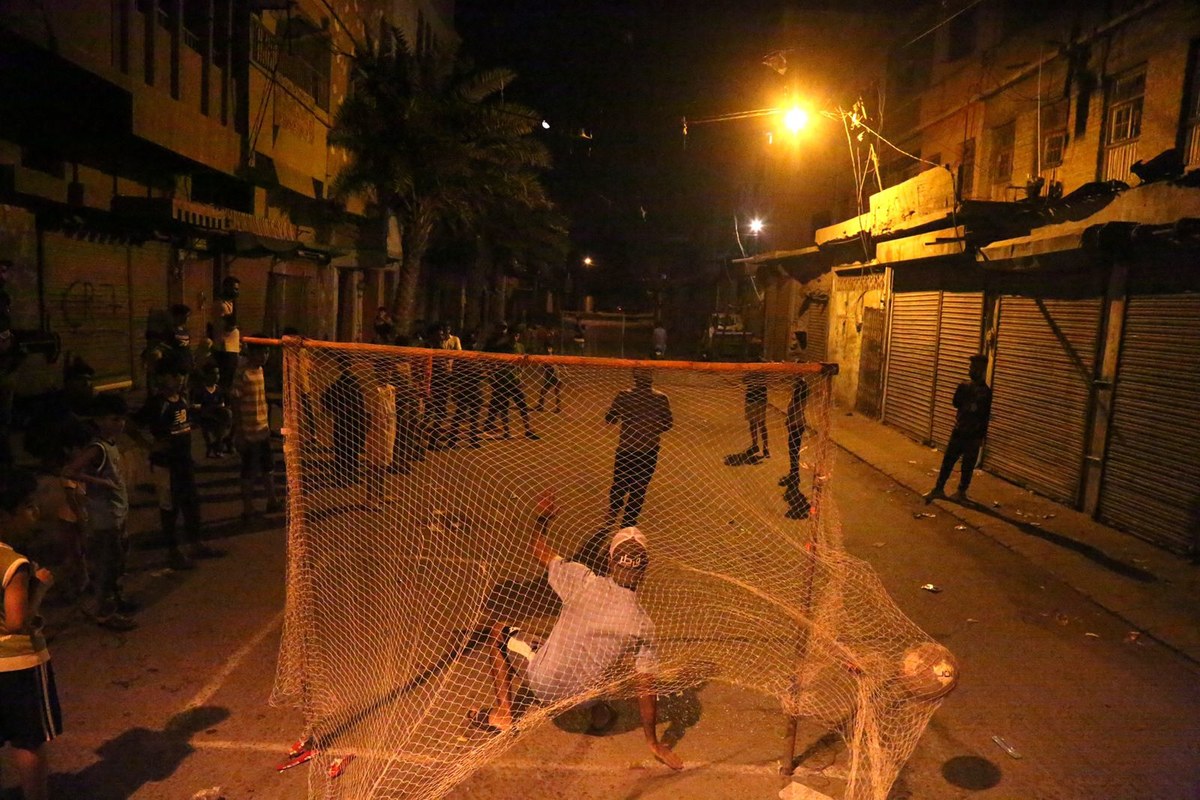
Children play in a street in Lyari, Karachi, before Sehri meal on April 22, 2022. All these kids in Pakistan’s Mini-Brazil need is a net for setting up a goalpost and a light to turn an empty street into a playground for their late-night Ramadan matches. (AN Photo/S.A. Babar)
Cricket-crazy Pakistan has never favored football much. Its national team has never won any major accolades in the sport, and the country’s infrastructure is not fit for international-level training.
But hope is not lost for young Lyari talent that gained praises from football stars such as Ronaldinho, Nicolas Anelka, Ryan Giggs, Robert Pires, David James, George Boateng and Luis Boa Morte who visited Karachi in 2017.
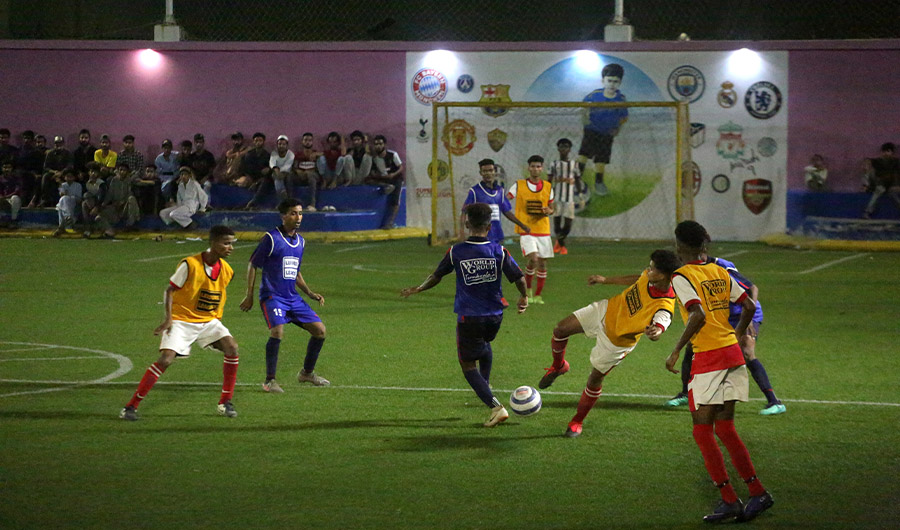
Young footballers play at the Coach Emad Football Academy stadium in Lyari, Karachi, Pakistan on April 22, 2022. (AN Photo/S.A. Babar)
Legend Liverpool striker Michael Owen, who came to Lyari in January, said it was a “hotbed of talent for football.”
“It was great to go visit it and to see it for myself,” he told Arab News at the time.
Not only foreigners but also local professional players have lately taken more interest in Lyari’s youth-dominated football scene since Karachi became safer.
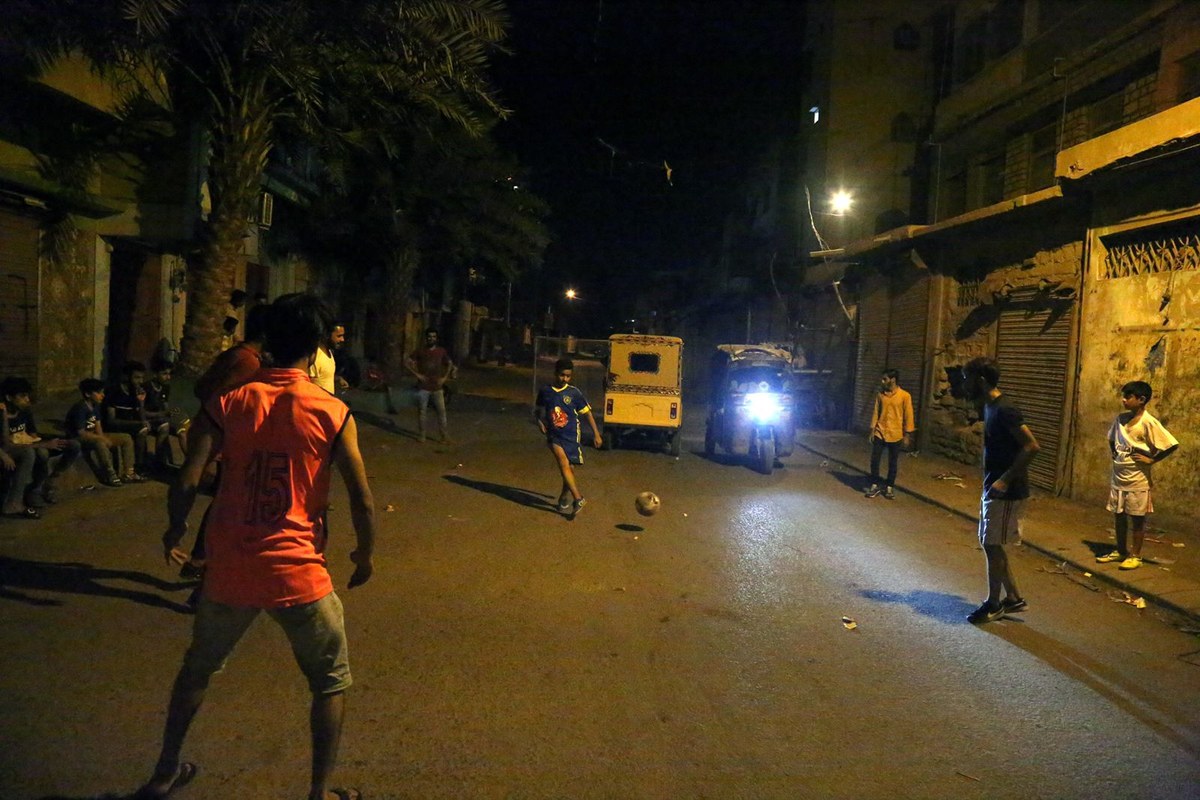
An auto-rickshaw passes by as a child kicks a ball here in Lyari, Karachi before Sehri meal on April 22, 2022. A team from Lyari, qualified for the semi-final of the World Street Football Cup in 2014 (AN Photo/S.A. Babar)
Waseem Sarbazi, a former player and tournament organizer, said they would come from all over the city to play in Lyari.
Beberg Baloch, the organizer of a night football tournament, said Ramadan matches are held at 16 big grounds and dozens of small ones.
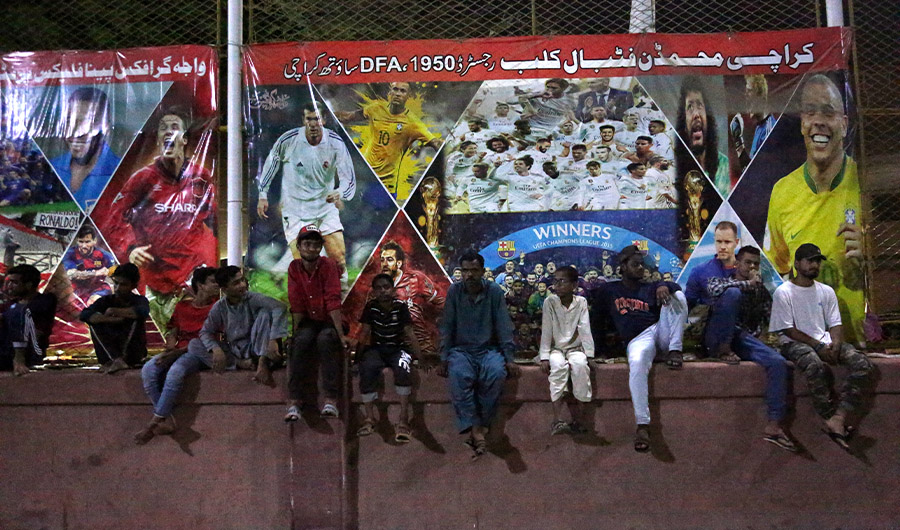
With portraits of international football players hanging in the background, fans watch their team's match at the Gabol Sports Ground in Karachi's Lyari, Pakistan on April 22, 2022. (AN Photo/S.A. Babar)
“You may also find football matches on hundreds of streets,” he added.
“You may see them playing football, but when they kick a ball, they hit drugs, they kick crimes and other negative things that have been attached to our locality.”