India In-Focus — Reliance calls off $3.4bn retail deal; Indonesian palm oil ban to hit India; UK-India free trade deal on cards

Britain and India aim for a free trade deal by October. (Shutterstock)
Short Url
Updated 24 April 2022
Follow

India In-Focus — Reliance calls off $3.4bn retail deal; Indonesian palm oil ban to hit India; UK-India free trade deal on cards

MUMBAI: India’s top retailer Reliance on Saturday called off its $3.4 billion deal with Future Group, saying it “cannot be implemented” after Future’s secured creditors rejected it.

The deal was at the center of legal battles since 2020 after Future’s partner Amazon.com Inc. legally blocked it, citing violation of certain contracts. Future denied any wrongdoing.

In a stock exchange filing on Saturday, Reliance said the deal now cannot go through as “the secured creditors of Future Retail have voted against” it.
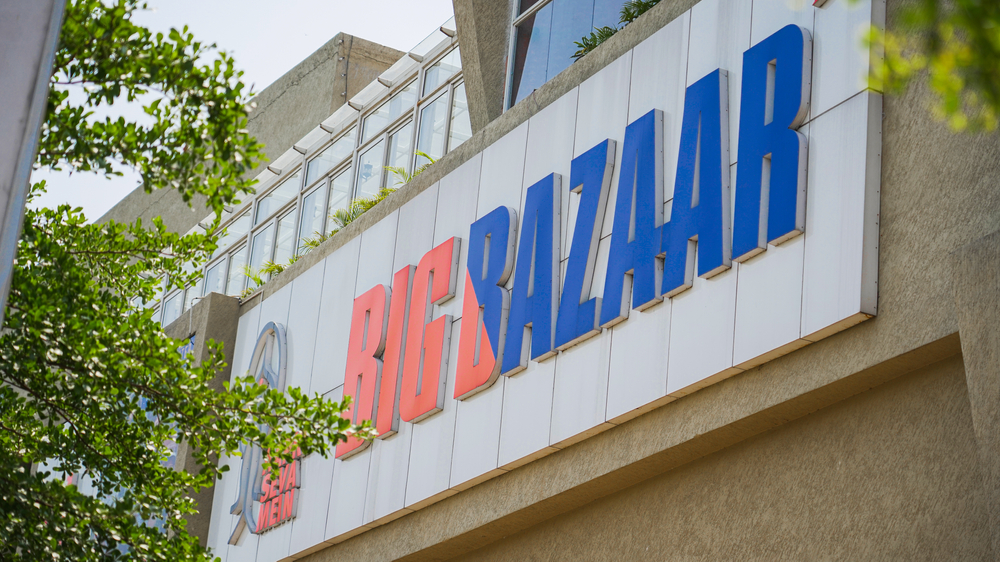


The deal was at the center of legal battles since 2020 after Future’s partner Amazon.com Inc. legally blocked it. (Shutterstock)

Future Retail and Amazon did not immediately respond to a request for comment.

Future’s secured lenders on Friday rejected the deal, and the company, once India’s second-largest retailer with more than 1,500 outlets, now faces the prospect of a bankruptcy process.

Future’s fall is “an unfortunate event,” one of the sources with direct knowledge of the dispute said on Saturday.

India to hit badly by Indonesian palm oil export ban

Indonesia’s decision to ban palm oil export is expected to hit India badly as it relies heavily on the world’s largest producer of palm oil. 

The announcement will hurt consumers in India and globally, said, Atul Chaturvedi, president of trade body the Solvent Extractors Association of India.

“This move is rather unfortunate and totally unexpected,” he said.
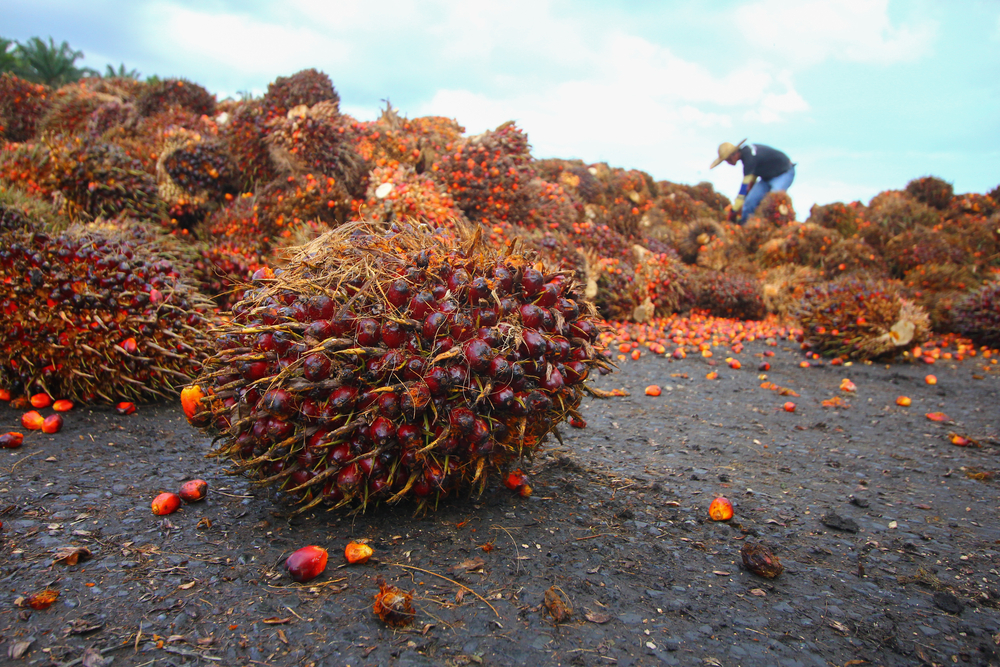


China and India are among the big importers of palm oil from Indonesia. (Shutterstock)

Indonesia’s new palm oil export ban will hurt other countries but is necessary to try to bring down the soaring domestic price of cooking oil, driven up by Russia’s war in Ukraine, Indonesia’s finance minister told Reuters on Friday.

Sri Mulyani Indrawati said that with demand exceeding supplies, the ban announced earlier on Friday is “among the harshest moves” the government could take after previous measures failed to stabilize domestic prices.

China and India are among the big importers of palm oil from Indonesia, which accounts for more than half the world’s supply. Palm oil is used in products from cooking oils to processed foods, cosmetics and biofuels.

Britain and India aim for a free trade deal

Britain and India agreed on Friday to step up defense and business cooperation during a visit to New Delhi by Boris Johnson, who said a bilateral free-trade deal could be wrapped up by October.

On his first visit to the Indian capital as UK prime minister, Johnson discussed with his Indian counterpart Narendra Modi ways to boost security ties with India, which buys more than half of its military hardware from Russia.

India’s foreign secretary, however, said Johnson did not put pressure on Modi over New Delhi’s position on Russia’s invasion of Ukraine.
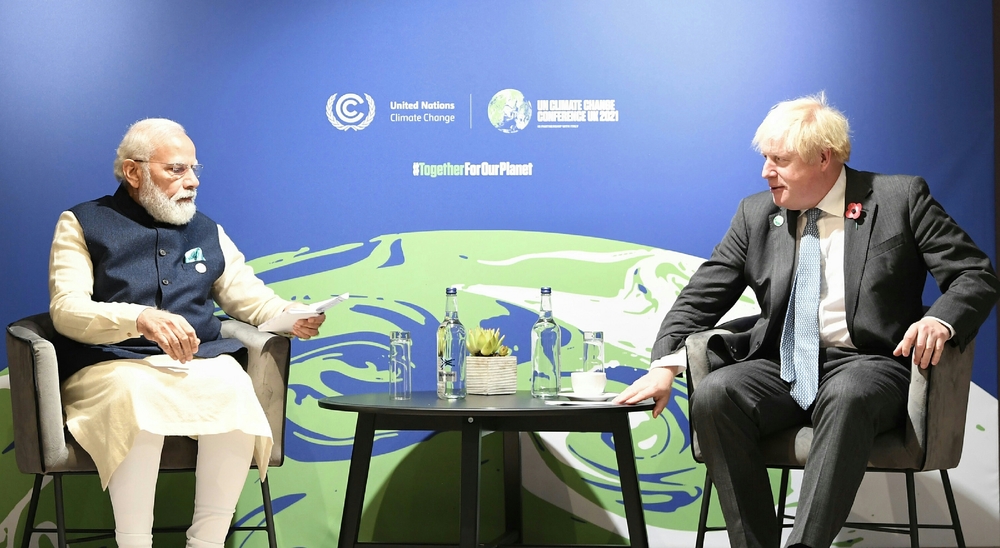


Britain and India agreed on Friday to step up defense and business cooperation. (Sutterstock/File)

“Prime Minister Johnson shared his perspective on it, Prime Minister Modi shared ours — which is that the Russia-Ukraine war should end immediately,” Harsh Vardhan Shringla told reporters. “There was no pressure of any kind.”

India abstained from a United Nations vote condemning the invasion of Ukraine and unlike Britain and other Western nations has not imposed sanctions on Moscow, which calls Russia’s actions in Ukraine a “special military operation.”

Johnson said after meeting Modi it was unlikely India would end its long-standing ties with Russia.

(With inputs from Reuters)


Saudi stocks rebalance after Kingdom opens market to global investors

Updated 7 sec ago
Follow

Saudi stocks rebalance after Kingdom opens market to global investors

  • Foreign access reforms trigger short-term volatility while underlying market fundamentals hold

RIYADH: Saudi Arabia’s stock market experienced a volatile first week following a landmark decision to fully open the market to foreign investors—a move analysts view as essential to funding the Kingdom’s sweeping economic transformation plans.

The Tadawul All Share Index began the week with a sharp decline, falling 1.89 percent on Feb. 1, the same day new regulations eliminating key restrictions on international investment officially came into force. The index rebounded the following session and remained in positive territory for three consecutive days before slipping once more, ultimately ending the week down 1.34 percent.

Ownership data from Tadawul as of Feb. 1 indicated that foreign non-strategic investors reduced their holdings in nearly half of the companies listed on the TASI. An analysis conducted by Al-Eqtisadiah’s Financial Analysis Unit showed that foreign ownership declined in 120 firms, increased in 97 others, and remained unchanged across the remainder. Despite these shifts, the total number of shares held by foreign investors showed no overall change.

Speaking to Arab News, economist Talat Hafiz addressed the initial volatility in the TASI, explaining: “Stock markets in the Kingdom and globally naturally experience fluctuations driven by profit-taking and price corrections.”

He added that the index’s decline and subsequent recovery “appears to be primarily the result of technical and sentiment-related factors rather than a direct reaction to the opening of the market to foreign investors.”

Hafiz emphasized that this was particularly evident given that foreign participation in the Saudi market is not entirely new, having previously existed under alternative regulatory structures.

The market turbulence coincided with sweeping reforms enacted by the Capital Market Authority and announced in January. These measures included the removal of the restrictive Qualified Foreign Investor framework, which had imposed a $500 million minimum asset requirement, as well as the elimination of swap agreements. The reforms aim to attract billions of dollars in fresh investment while improving overall market liquidity.

Hafiz noted that an initial surge of foreign capital was widely expected to generate short-term volatility as portfolios were rebalanced and liquidity dynamics adjusted. However, the rapid recovery of the index suggests that the market’s underlying fundamentals remained strong and that investor confidence was not significantly undermined.

Earlier in January, experts had told Arab News that the reforms could unlock as much as $10 billion in new foreign inflows. Tony Hallside, CEO of STP Partners, described the move as a pivotal evolution, signaling that the Kingdom is committed to building the most accessible, liquid, and globally integrated financial markets in the region.

Hafiz reinforced this optimistic outlook, stating that broader market access is likely to yield positive effects by boosting liquidity, widening participation, and supporting overall market recovery—ultimately contributing to greater long-term stability once near-term adjustments ease.

He said: “TASI’s swift rebound reflects the market’s constructive response to increased openness and deeper investor participation.”

Hafiz said he does not believe the market opening is primarily intended to function as a conventional financing channel. Instead, he argued that its broader objective lies in the internationalization of the Saudi market, a goal underscored by its inclusion in major global indices.

He explained that attracting foreign capital should be understood less as a short-term funding solution and more as a structural reform aimed at strengthening market depth, efficiency, transparency, and global integration.

The Saudi economist added that while increased foreign participation can indirectly support Vision 2030 by enhancing liquidity and reducing the cost of capital, the opening of the market is “not designed as a direct mechanism to revive or fast-track projects that may have faced funding constraints.”

Rather, it creates a more resilient, globally connected financial ecosystem that can sustainably support long-term development ambitions, according to Hafiz.

As the market continues to stabilize, investors and observers are monitoring which sectors are expected to attract the largest share of investment in the coming weeks and months.

Hafiz told Arab News that foreign investment is expected to initially focus on companies operating in strategically significant, high-growth sectors such as healthcare, transportation, and technology, in addition to mining, energy, and telecommunications.

He added that experienced foreign investors are likely to gravitate toward firms demonstrating strong financial disclosure practices, sound corporate governance, adherence to environmental, social and governance standards, and a track record of consistent dividend payouts.