

Lebanese painter Aref El-Rayess’ daughter pays tribute to her late father in retrospective exhibition

'Technologies et revolution,' 1968, from 'Blood and freedom.' (Supplied)
Short Url
Updated 23 April 2022
Follow

Lebanese painter Aref El-Rayess’ daughter pays tribute to her late father in retrospective exhibition

  • The exhibition — now showing in Sharjah — covers five decades of the Lebanese modernist’s work

DUBAI: For Hala El-Rayess, the moment had finally come. For years, she had tried to organize a comprehensive exhibition paying tribute to her late father, the prolific Lebanese modernist Aref El-Rayess, who died in 2005. And in late 2021, such a show was held at Beirut’s Sfeir-Semler Gallery, displaying the artist’s diverse body of work; including paintings, sculptures and collages.

“I remember walking in at the opening and standing there looking at the artworks. Tears just started running down my face. . . it was very emotional,” El-Rayess, the founder of the Aref El-Rayess Foundation, tells Arab News from her base in London. The exhibition, featuring works from five decades of her father’s artistry, has now travelled to the United Arab Emirates and is being hosted by the Sharjah Art Museum, in collaboration with Sharjah Art Foundation,  until August 7. 
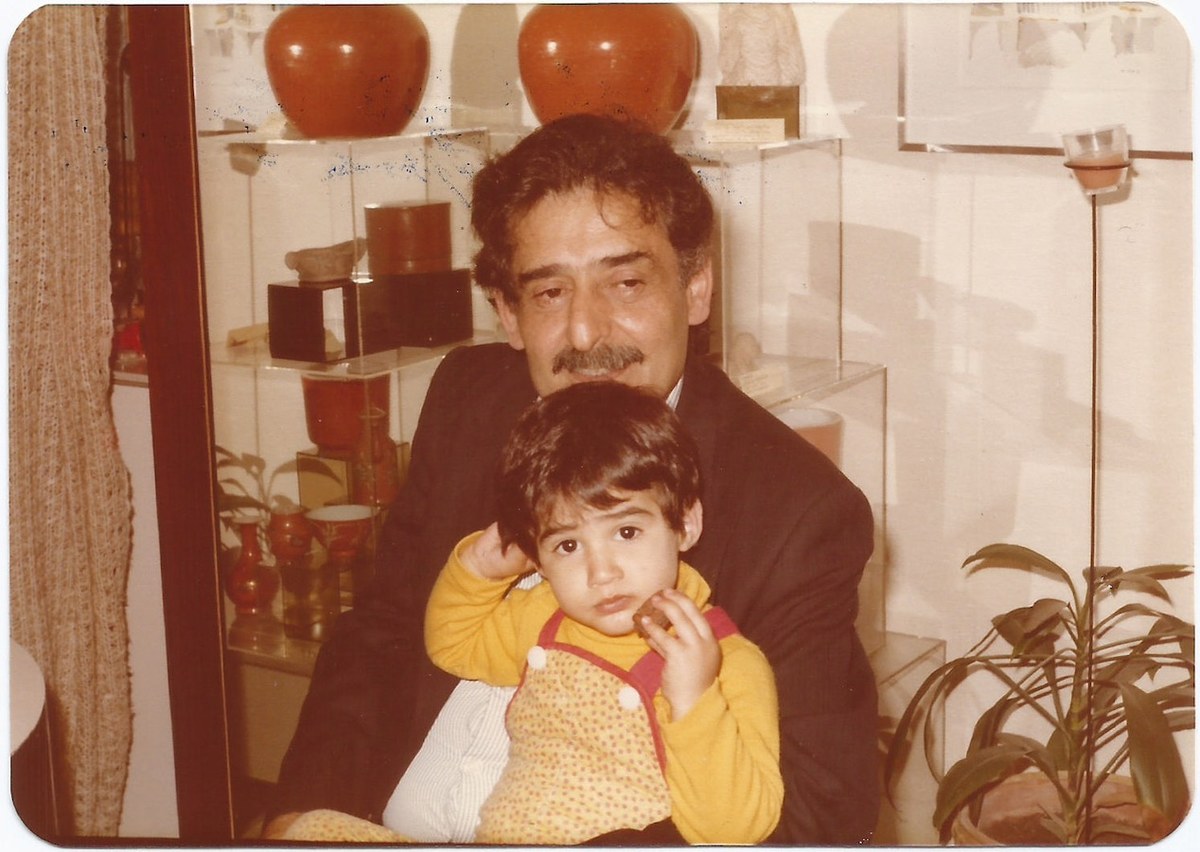


Aref and Hala at Gallery Epreuve d'Artist. (Supplied)

“Seeing it in Sharjah — at an institution, not a gallery — was a very happy moment for me. ‘I’ve done it, after all these years,’” says El Rayess. “And the space is so beautiful and complements the work so well.”

She remembers a childhood perfumed by turpentine in her playful father’s atelier in Saudi Arabia in the Eighties. “I’d walk in and the smell was so strong, I think I was around five or six then. It brings back warm memories of happy childhood days. One of the things that used to drive my mum crazy was that she’d shower me, get me all dressed up, and ready to go out, then she’d find me covering myself in paint, from top to bottom. That was my dad — just letting me play,” she says.

But beneath the jokester persona lay a deeply political artist, whose work reflected troubled times in the Arab world in the second half of the 20th century. 
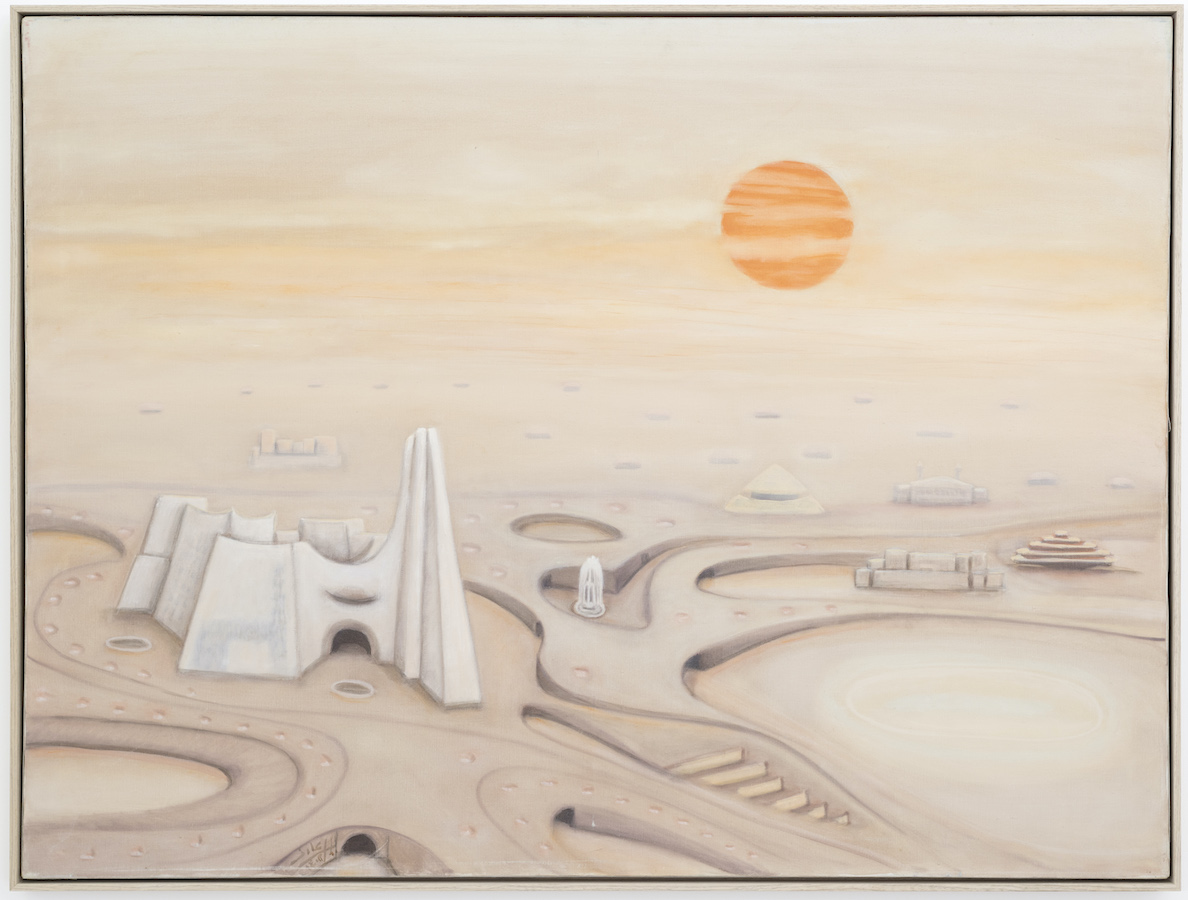


Aref El-Rayess, Untitled, 1986. From ‘Deserts series.’ (Supplied)

“He was extremely vocal. Like his works, he wouldn’t keep anything in and he never really cared about what people thought — not out of disrespect; he would try to get reactions out of them, purposely. Reactions were what he was always after. Some people hated him,” says El-Rayess with a laugh.

Aref’s father hoped his son would turn to the world of business, but he was drawn instead to nature and creativity. The living room of the El-Rayess family home in the city of Aley on Mount Lebanon was lined with Aref’s paintings, his daughter recalls. “I think art was just something he had within him,” she says.

As he grew older, Aref became politically active and joined Lebanese politician Kamal Jumblatt’s Progressive Socialist Party, founded in 1949. In Beirut’s artistic circle, he was a focal presence, befriending the likes of Helen Khal, Huguette Caland, and Etel Adnan. 
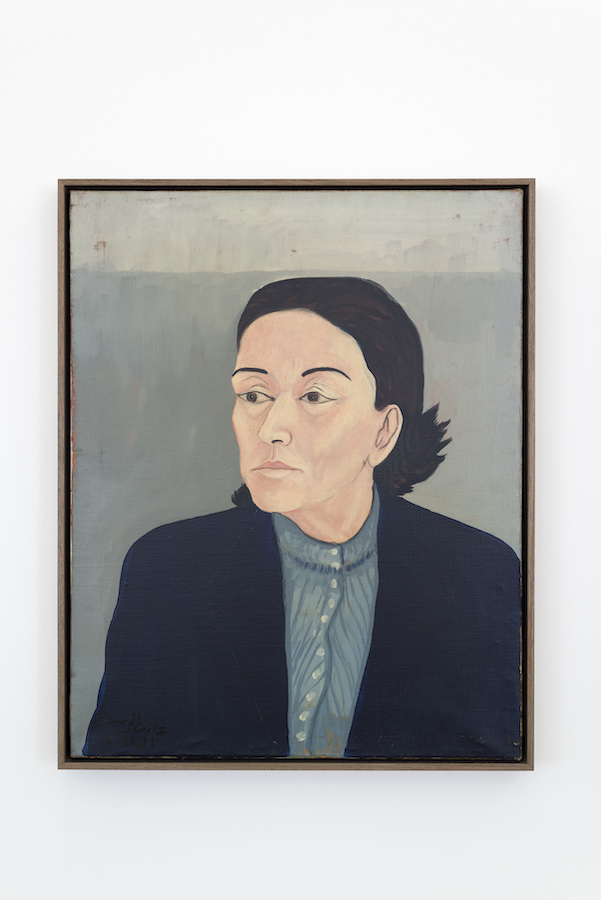


Aref El-Rayess, Alwalida (Artist's mother), 1953. (Supplied)

Aref was a witness to major political events in the region from the 1950s onwards, starting with the Algerian War of Independence to turmoil in Palestine and the Lebanese Civil War. At one point during the latter, he fled to Algeria as there was talk of him being a target of an assassination plot.

“I think he was becoming a bit too active,” says El-Rayess. “They just wanted to kill him and my grandad was like: ‘Get out. I need to save my son.’”

His dystopian, darkly comic, surrealist paintings depict scenes of war, hanged resistance fighters, a politician with a distorted face, and a mother crying in shock as she holds her deceased son. “He was definitely trying to record a moment in history. It was always about what was happening in the (moment),” observes El-Rayess.
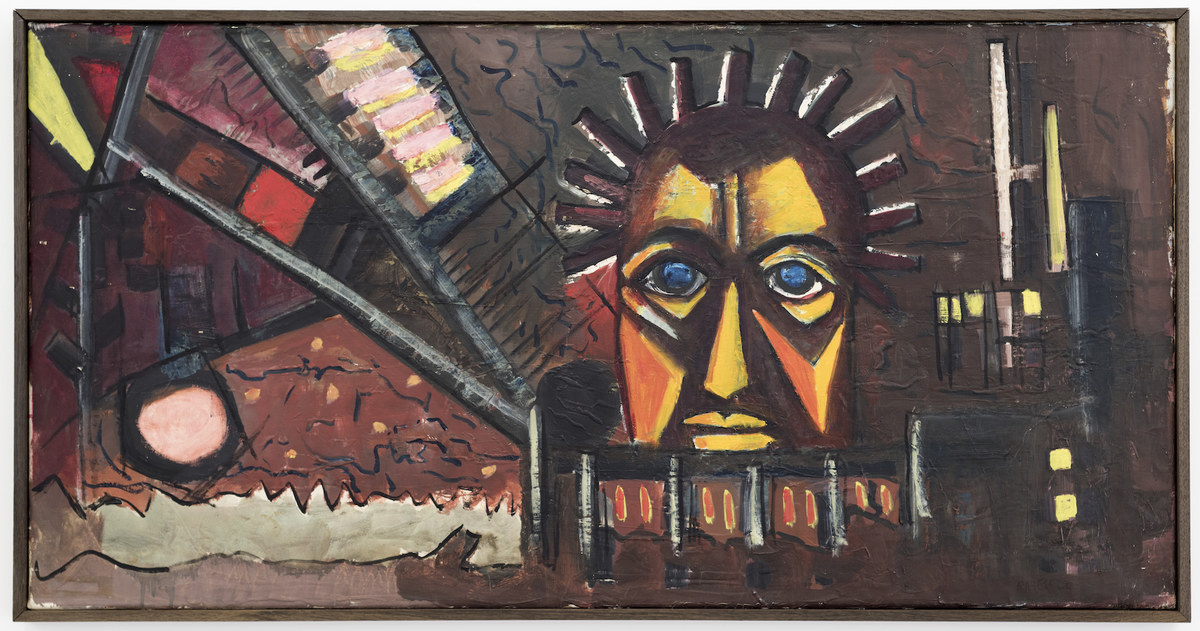


Aref El-Rayess, Eveil de l'Afrique-Algerie, 1960. (Supplied)

There is a lighter side to the artist’s work too, such as his beautiful portraits of African men and women, created during his travels in West Africa, where his father had a business. Later in his career, he experimented with making large, show-stopping collage panels made up of hundreds of newspaper clippings of major headlines, prominent politicians and stars of the 1990s, from Rafic Hariri to Princess Diana. As with his paintings, he was capturing a moment in time.

“People would tell him that he was wasting time and that this wasn’t ‘art.’ It was his way of taking a break from painting,” says El-Rayess. 

Another departure from his war-heavy paintings came about in the 1980s, during his time in Jeddah, when he created his calming, out-of-this-world “Desert” series, painting with ethereal hues.

This marked a new chapter in his life, during which he assisted Mayor Mohammed Said Farsi’s plans to build Jeddah’s sculpture park.

“I personally think that the fact he left Lebanon to become a provider, a father, was a completely different world for him,” says El-Rayess. “Being in a place where there was desert, calmness, having his own little girl. . . I think that brought some kind of peace into his soul.”


Showtime: The best television of 2025 

Updated 26 December 2025
Follow

Showtime: The best television of 2025 

  • From belly laughs to gut punches, here are the must-watch shows of the year 

‘Adolescence’ 

This harrowing drama consisted of four episodes, all shot in a single take. It told the story of 13-year-old Jamie Miller (the debut role for Owen Cooper, who deservedly won an Emmy for his faultless performance), who is accused of murdering a schoolmate, and the aftermath of that accusation for his family. “Adolescence” was the perfect blend of style and substance; you could marvel at the “balletic production processes that must have been involved,” as our reviewer noted, even while squirming in your seat at the painfully raw performances of the excellent ensemble cast. “It may be one of the most upsetting shows released this year,” our review concluded, “but it is also a remarkable work of art.” 

‘Severance’ S2 

Apple’s absorbing sci-fi comedy-drama expanded its universe in season two, as Mark S (Adam Scott) and his team of data refiners dealt with the fallout from their successful, if brief, escape from their ‘severed’ floor — where work and out-of-work memories and personalities are controlled and delineated by a chip embedded in their brains — at Lumon, during which they tried to alert the outside world to the cruelties of their working conditions. “Creator Dan Erickson and director Ben Stiller waste no time in rediscovering the subtle blend of tangible oddness and sinister dystopian creepiness that made the first season such an uncomfortable joy,” our reviewer wrote.  

‘Stranger Things’ S5 Vol. 1 

At the time of writing, we don’t know whether volume two of the final season of this epic Eighties-set sci-fi horror drama — out Dec. 26 — will be able to maintain the quality of this first volume, but all signs are good. As our reviewer wrote of volume one: “The Duffer Brothers lay down a compelling claim to be the current best-in-class when it comes to making thrilling mainstream TV. Is there anyone better at consistently building tension, releasing it a little through comedy, action, or both, then applying the pressure once again? The four episodes fly by.” There was edge-of-the-seat action and high-stakes jeopardy aplenty, but tempered by the moments of emotional interaction that have been crucial to the show’s success. 

‘Mo’ S2 

In Mo Amer’s semi-autobiographical comedy drama, he plays Mo Najjar, a Kuwait-born Palestinian refugee living in Houston, Texas, with his mother Yusra (the superb Farah Bsieso), and his older brother Sameer (Omar Elba), who’ve been waiting more than two decades to have their asylum case heard. In season two, our reviewer said, Amer continued to explore “incredibly complex and divisive topics — family, religion, imbalance of power, exile, mental health, parenthood, multiculturalism and much more — with an artful lightness of touch, without ever taking them lightly.”  

‘Andor’ S2 

The best of the multitude of TV spinoffs from “Star Wars,” “Andor” was only two seasons long, and the majority of viewers would already have known what was coming (spoiler: the events of “Rogue One” were coming). But its story of a population rising up against the erosion of their rights was both convincing and timely. “With ‘Andor,’ (creator Tony) Gilroy and (star Diego) Luna have truly set the gold standard for what future ‘Star Wars’ can be,” our reviewer wrote. “Not just a space opera, but real stories of transformation and beauty.” 

‘The Studio’ 

With “The Studio,” Seth Rogen and his co-creators manage both to skewer Hollywood and remind us why it’s still (sometimes) great (because it can still produce shows like ‘The Studio’). The star-studded comedy about a newly appointed Hollywood studio head, Matt Remick (Grogan), who believes himself to be a supporter of great art, but quickly discovers that he’ll have to park his principles and chase the money, was as sharp a satire as you could wish to see, confronting the inherent silliness of showbusiness but remaining entertaining throughout. 

‘Slow Horses’ S5 

The fifth season of this excellent, darkly humorous espionage drama wasn’t its strongest, but even so, it trumped most of the competition. British super-spy Jackson Lamb and his crew of misfit agents at Slough House were once again embroiled in high-level conspiracies when their resident tech nerd Roddy gets a glamorous new girlfriend who everyone — or, at least, everyone except for Roddy — can see is well out of his league. That led us into a plot covering Islamic extremism, the British far-right, and much more, all held together by Gary Oldman’s scene-stealing turn as Lamb. 

‘Last One Laughing’ 

Putting a group of 10 comedians in a room for six hours and telling them not to laugh isn’t the greatest premise on paper, but this UK adaptation of the Japanese show “Documental,” featuring a stellar lineup of some of Britain’s funniest people — and host Jimmy Carr — was an absolute joy. From Joe Wilkinson being eliminated by Lou Sanders’ whispered “Naughty tortie” to eventual winner Bob Mortimer’s whimsical flights of fancy, there was so much to love about this endearingly silly show. And credit to the casting directors — the mix of comics was central to its success.