

Egyptian ministry partners with CNN to highlight global partnerships for sustainable development

1 / 4
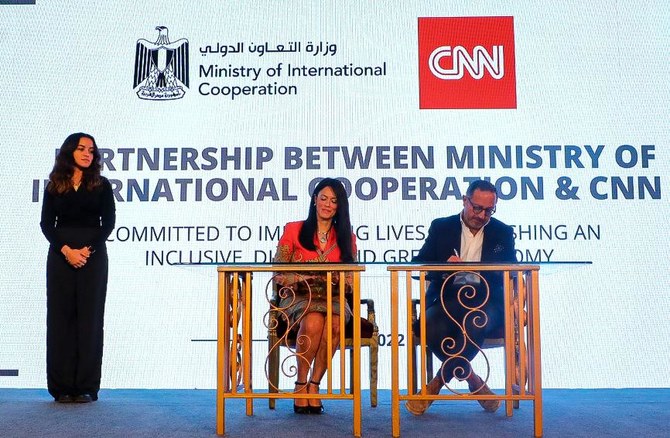
The Egyptian Ministry of International Cooperation (MOIC) and CNN International Commercial (CNNIC) are collaborating on a new global advertising campaign. (@MOICEgypt)
2 / 4
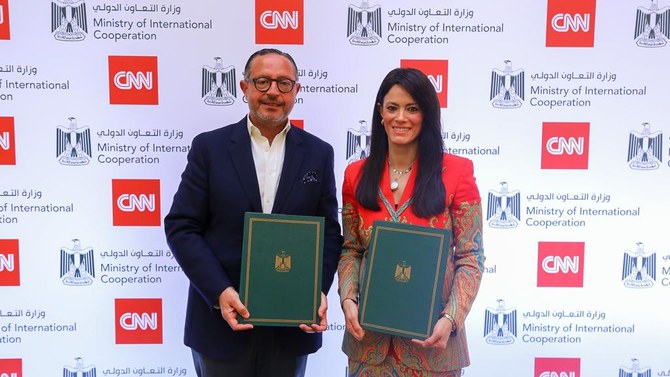
The Egyptian Ministry of International Cooperation (MOIC) and CNN International Commercial (CNNIC) are collaborating on a new global advertising campaign. (@MOICEgypt)
3 / 4
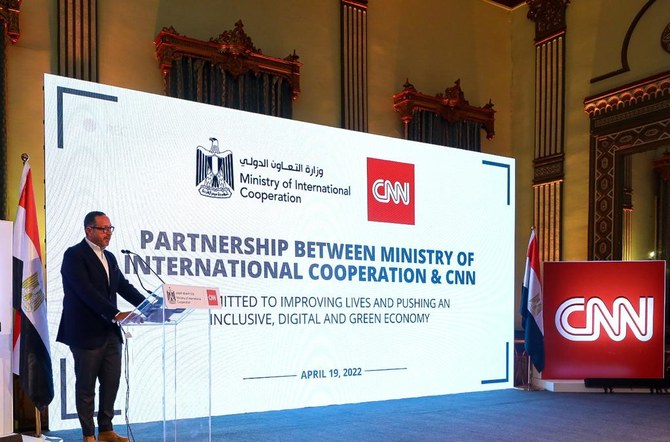
The Egyptian Ministry of International Cooperation (MOIC) and CNN International Commercial (CNNIC) are collaborating on a new global advertising campaign. (@MOICEgypt)
4 / 4
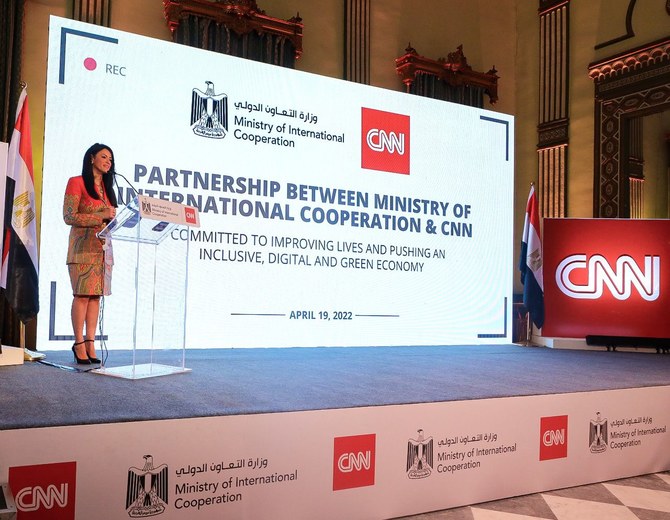
The Egyptian Ministry of International Cooperation (MOIC) and CNN International Commercial (CNNIC) are collaborating on a new global advertising campaign. (@MOICEgypt)
Short Url
Updated 21 April 2022
Follow

Egyptian ministry partners with CNN to highlight global partnerships for sustainable development

  • ‘Building Forward: Stories from Egypt’ campaign will cover topics such as energy, transportation, entrepreneurship
  • CNNIC’s global brand studio Create has produced the campaign, based on data and insights, and takes a storytelling approach

DUBAI: Egypt’s Ministry of International Cooperation and CNN International Commercial are collaborating on a new global advertising campaign, “Building Forward: Stories from Egypt.”

It aims to highlight Egypt’s international partnerships for sustainable development by illustrating the country’s collaboration with development partners and international financial institutions promoting an inclusive, digital and green economy.

The campaign is part of Egypt’s Global Partnerships Narrative, which was created by the country’s Ministry of International Cooperation’s communications framework to highlight Egypt’s work with its development partners.

The “Building Forward: Stories from Egypt” campaign will cover stories on topics such as the transition to renewable energy, advancement of sustainable transportation networks, optimization of the use of water resources, and entrepreneurship and women’s economic empowerment.

Rania Al-Mashat, Egypt’s Minister of International Cooperation, said: “Egypt’s leadership is keen on fostering transparent and interactive engagement with all stakeholders to exchange experiences, build consensus and ensure effective coordination.” 

She added: “The ministry’s partnership with CNN is an important opportunity to showcase Egypt’s successful collaboration with development partners and international stakeholders through real-life examples and projects that have been fundamental in transforming peoples’ lives and stimulating social, economic and environmental advancement.”

CNNIC’s global brand studio Create has produced the campaign, based on data and insights, and takes a storytelling approach to reach audiences across CNN International and CNN Arabic’s various platforms.

The advertising assets include factual films, which will run on CNN’s TV and digital platforms, focusing on topics such as energy, STEM schools, transportation, and wastewater management. The films show how these initiatives led to international recognition that further advanced international partnerships and mobilized investment.

Along with advertising, CNNIC will also feature editorial content, such as “Agents of Change” featuring women who are changing the world, and “Innovate,” which will cover startups in the health industry.

“Sustainability and creating a positive impact are key priorities for CNN, and are important to our audience and our partners,” Cathy Ibal, senior vice president of CNNIC, said.

The international campaign will highlight the ministry’s involvement in Egypt’s economic progress, and will reach audiences in English and Arabic, she added.


Israel extends foreign media ban law until end of 2027

Updated 23 December 2025
Follow

Israel extends foreign media ban law until end of 2027

  • Order replaces temporary emergency legislation that allowed authorization of so-called ‘Al Jazeera bill’
  • Extension of temporary order empowers Communications Ministry to restrict foreign channels deemed to cause ‘real harm to state security’

LONDON: Israel’s Knesset approved late Monday an extension of the temporary order empowering the Communications Ministry to shut down foreign media outlets, pushing the measure through until Dec. 31, 2027.

The bill, proposed by Likud lawmaker Ariel Kallner, passed its second and third readings by a 22-10 vote, replacing wartime emergency legislation known as the “Al Jazeera Law.”

Under the extended order, the communications minister — with prime ministerial approval and security cabinet or government ratification — can restrict foreign channels deemed to cause “real harm to state security,” even outside states of emergency.

Measures include suspending broadcasts, closing offices, seizing equipment, blocking websites, and directing the defense minister to block satellite signals, including in the West Bank, without disrupting other channels.

Administrative orders last 90 days, with possible extensions. Unlike the temporary measure, the new law does not require court approval to shut down a media outlet.

The move has drawn sharp criticism from human rights and media groups, who warn it entrenches restrictions on Arab and foreign outlets amid a broader erosion of press freedoms.

“Israel is openly waging a battle against media outlets, both local and foreign, that criticize the government’s narrative; that is typical behavior of authoritarian regimes,” International Federation of Journalists General Secretary Anthony Bellanger said in November after the bill’s first reading.

“We are deeply concerned about the Israeli parliament passing this controversial bill, as it would be a serious blow to free speech and media freedom, and a direct attack on the public’s right to know.”

In a parallel development, the Israeli Cabinet unanimously approved on Monday the shutdown of Army Radio (Galei Tzahal) after 75 years, with operations ceasing on March 1, 2026.

In a statement, Attorney General Gali Baharav-Miara warned the decision “undermines public broadcasting in Israel and restricts freedom of expression,” lacking a legal basis.