BEIRUT: The number of women in Lebanon dying from pregnancy-related complications has nearly tripled amid a crushing three-year economic crisis that has seen doctors and midwives leave the country, the UN children’s agency UNICEF said Wednesday.
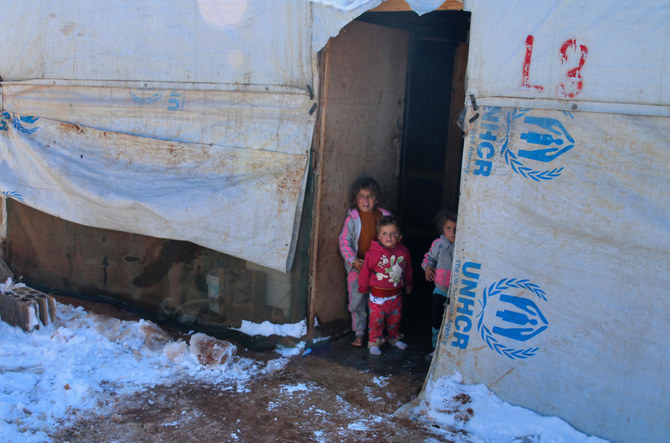
The crisis is also affecting children, especially among Syrian refugees who have fled over the border into Lebanon.
UNICEF said a third of children could not access health care by October 2021, and the number of children who die within the first four weeks after birth “increased dramatically among refugees in four provinces assessed, from 65 neonatal deaths in the first quarter of 2020 to 137 in the third quarter.”
Lebanon hosts 1.5 million Syrian refugees, making up about a quarter of the population, according to official estimates.
“Repeatedly, anguished parents and families are unable to access basic health care for their children – as many dedicated health workers struggle to keep operations running during the crisis,” said Ettie Higgins, UNICEF Lebanon representative.
Some 40 percent of doctors, including those that work specifically with children and women, have left the country, as well as some 30 percent of midwives, UNICEF said, diminishing the quality of services in a country formerly seen as a regional health care hub.
“Lebanon had achieved remarkable success in reducing maternal deaths, but numbers rose again between 2019 and 2021, from 13.7 to 37 deaths per 1,000 live births,” the agency said in a report released Wednesday. It did not give the raw numbers.
Faysal Al-Kak, coordinator of the Lebanon’s National Committee on Safe Motherhood, said the number of maternal deaths had spiked largely due to the coronavirus delta variant in 2021 but said the crisis was also a factor.
“The Lebanese crisis is a strong variable – maybe the mom is not visiting enough, afraid of going to the doctor because it costs money. It gave women a sense that ‘I can’t go to the doctor’,” he told Reuters.
“Delta and the low vaccination rate — in addition to the compounded crisis that we live in – could have affected indirectly the accessibility, cost, and transportation.”
The rising cost of transportation and services due to the collapse of the country’s currency and the removal of most subsidies on fuel and medicine has left health care out of reach for many, UNICEF said.
Childhood vaccination rates have declined, leaving hundreds of thousands of children vulnerable to preventable diseases such as measles and pneumonia.


![]()

Lebanon maternal deaths triple, children’s health at risk amid crisis, UNICEF says
Short Url
https://arab.news/8pthf
Lebanon maternal deaths triple, children’s health at risk amid crisis, UNICEF says
- Lebanon hosts 1.5 million Syrian refugees, making up about a quarter of the population


Latest updates


© 2026 SAUDI RESEARCH & PUBLISHING COMPANY, All Rights Reserved And subject to Terms of Use Agreement.