

Asylum-seeker in UK asked for help 72 times before stabbing six people

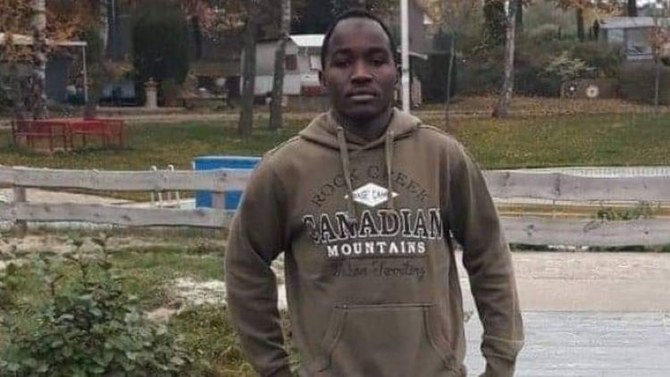
Badreddin Abadlla Adam was shot dead by police after stabbing six people in a Glasgow hotel. (Twitter Photo)
Short Url
Updated 12 April 2022
Follow

Asylum-seeker in UK asked for help 72 times before stabbing six people

  • Badreddin Abadlla Adam repeatedly called the Home Office, an accommodation company and the Migrant Help charity after being moved to a hotel during the pandemic
  • He was shot dead by police in Glasgow, Scotland, after his mental condition deteriorated and he attacked hotel staff and fellow asylum-seekers

LONDON: A Sudanese asylum-seeker in the UK made more than 70 calls to authorities asking for help, before stabbing six people.

Badreddin Abadlla Adam was shot dead by police in Glasgow, Scotland, after his mental condition deteriorated, leading him to attack hotel staff and other asylum-seekers at the city’s Park Inn hotel in June 2020.

The BBC said a report into the incident by the UK Home Office revealed that Abadlla Adam made 72 calls to the Home Office, the charity Migration Help, and Mears, a company in charge of managing asylum-seeker accommodation.

He had been moved into the hotel at the onset of the COVID-19 pandemic and the resultant nationwide lockdowns, where he and others found themselves living in cramped conditions with poor-quality food and no money.

According to the report, the conditions had a “significant impact” on the mental health of Abadlla Adam and others, and no consideration had been given to the previous trauma that many of them had experienced.

It added that the number of calls he made “individually and cumulatively (when considering the content of the contact) are not indicative of any elevated risk. However, the number of times he was in contact with the Home Office, Mears and Migrant Help — 72 times — about his accommodation and his health should have acted as a warning.”

It continued: “He also complained to staff in the hotel and was in touch with the Home Office about a voluntary assisted return. Each of those inquiries was dealt with appropriately and in keeping with the relevant operating procedures. There was no joined-up view that allowed a comprehensive view of escalation in the nature and frequency of (Abadlla Adam’s) contact.”

A Home Office spokesperson told the BBC: “Since this horrific incident we have undertaken a number of significant changes to keep asylum-seekers safe, including how we, our contractors and charities spot vulnerable individuals and provide them with wraparound support and appropriate accommodation.”



Orbán orders extra security at energy sites, claiming Ukraine plots disruptions

Updated 8 sec ago
Follow

Orbán orders extra security at energy sites, claiming Ukraine plots disruptions

  • Orbán said the Ukrainian government was using “an oil blockade” to exert pressure on Hungary
  • “We will deploy soldiers and the necessary equipment to repel attacks near key energy facilities”

BUDAPEST: Hungarian Prime Minister Viktor Orbán on Wednesday ordered extra security at critical energy infrastructure sites after claiming Ukraine was attempting to disrupt Hungary’s energy system.
Budapest has recently accused Kyiv of deliberately holding back Russian oil deliveries through the Druzhba pipeline, which crosses Ukraine’s territory. Ukrainian officials have denied the allegations, saying the pipeline, which feeds refineries in Hungary and Slovakia, was hit in a Russian drone attack.
‘An oil blockade’
In a video posted to social media, Orbán, who maintains the closest relationship with the Kremlin of any European Union leader, said the Ukrainian government was using “an oil blockade” to exert pressure on Hungary and that Hungarian national security services showed Ukraine was “preparing further actions to disrupt the operation of Hungary’s energy system.” He didn’t provide details or evidence for his claims.
“We will deploy soldiers and the necessary equipment to repel attacks near key energy facilities,” Orbán said. “The police will patrol with increased forces around designated power plants, distribution stations and control centers.”
Nearly every country in Europe has significantly reduced or entirely ceased Russian energy imports since Moscow launched its war in Ukraine on Feb. 24, 2022. Yet Hungary and Slovakia, both EU and NATO members, have maintained and even increased supplies of Russian oil and gas, and received a temporary exemption from an EU policy prohibiting imports of Russian oil.
On Sunday, Hungary threatened to block a major, 90-billion euro ($106 billion) EU loan for Kyiv, and vetoed a new round of EU sanctions against Russia on Monday. Orbán has vowed to block any other EU measures to assist Ukraine until oil shipments resume.
Druzhba has been out of commission since Jan. 27. Repairs are hazardous and the pipeline can only operate reliably if Russia stops targeting energy infrastructure, according to Ukrainian officials.
Orbán also ordered Wednesday a ban on drone operations in Szabolcs-Szatmár-Bereg County, which borders Ukraine.
A crucial election
Orban has repeatedly accused Ukraine of “blackmail” to force him to give up his anti-Ukrainian positions, and of seeking to drive up energy prices in Hungary just weeks before a pivotal election.
Orbán, who retook office in 2010, faces the strongest challenge to his power in an election set for April 12. The EU’s longest-serving leader and his right-wing Fidesz party are trailing in most independent polls to an upstart center-right challenger, Péter Magyar.
Meanwhile, Orbán has launched an aggressive anti-Ukraine media campaign portraying the embattled country as an existential threat to Hungary.
His party has pushed the message that if it loses the election, the Tisza party will drag the country into the war in Ukraine, bankrupting Hungary and getting its youth killed on the front lines.
