

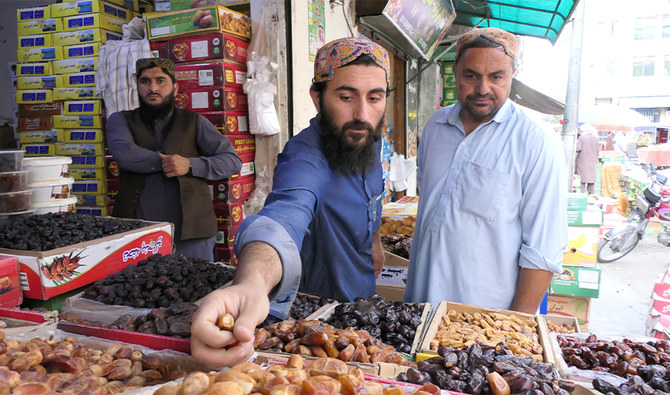

QUETTA: Production of dates in Balochistan, one of the country’s largest producers of the fruit, has been hit by colder than usual weather during the growing season last year, while high prices and decreasing purchasing power have kept buyers away ahead of the holy month of Ramadan.
Pakistan is one of the top date producers and exporters in the world, with annual date production of over 535,000 tons, according to data from the Trade Development Authority.
Balochistan in the country’s southwest is a main date producing region, with over a hundred varieties of the fruit produced in orchards spread across the province’s Panjgur, Turbat, Gwadar, Bolan and Kharan districts. Overall, Balochistan accounts for over 50 percent of Pakistan’s date production, according to data from local traders.
In Panjgur and Kech districts alone, more than 250,000 tons of the fruit is produced every year on nearly 53,392 hectares of land.
This year, however, production has dropped — in some regions nearly by half.

An old man buys the famous variety of Muzawati dates from a shop in Quetta, Pakistan, on April 10, 2022. (AN Photo)
“In Panjgur, the production of famous date varieties like Muzawati and Begum Jangi have dropped by up to 50 percent,” Hajji Muhammad Jan, a local date farmer in the area, told Arab News. “In Turbat, the production has declined by 30 percent since temperatures had dropped [below freezing point] during the previous winter spell in the Makran division. This has also impacted the price of the much-loved Ramadan fruit.”
Jan said the price of 40kg of Muzawati dates, a favorite at iftar dinners during the holy month, had gone up to Rs13,000 ($54) from around Rs8,000 ($33) last year.
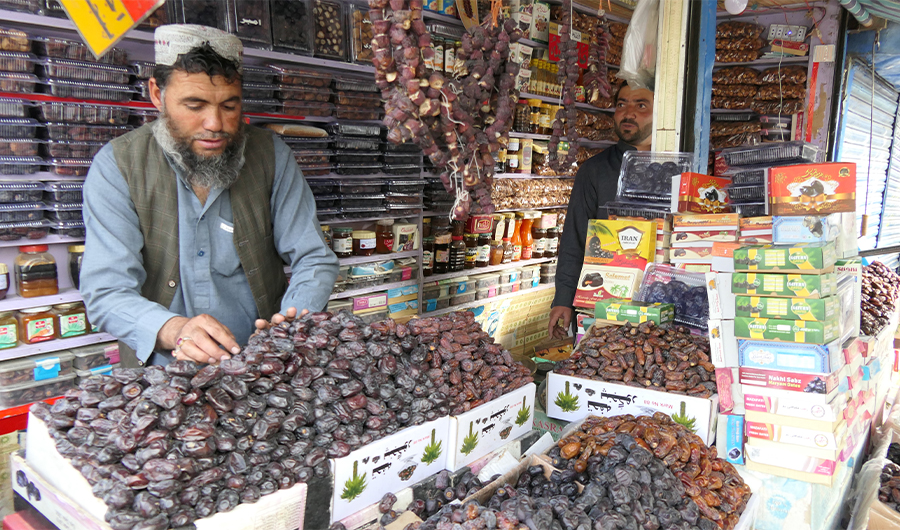
A local vendor can be seen at a date market in Quetta, Pakistan, on April 10, 2022. (AN Photo)
“This Ramadan season, the Panjguri Muzawati dates have been sold for Rs600 per kilogram which is the highest rate among Pakistani dates,” said Maqbool Alam Noori, a chief executive officer at the Durfishan Dates Processing and Packaging Company in Turbat.
At a local wholesale market of dates in Quetta, dealers complained of slow trading in the beginning of Ramadan, saying their business had been hit by spiraling inflation and high prices of other food products.
Traders say the devaluation of the Pakistani rupee has also played a major role in the high prices of dates. The Pakistani rupee has devalued by more than 16 percent this financial year.
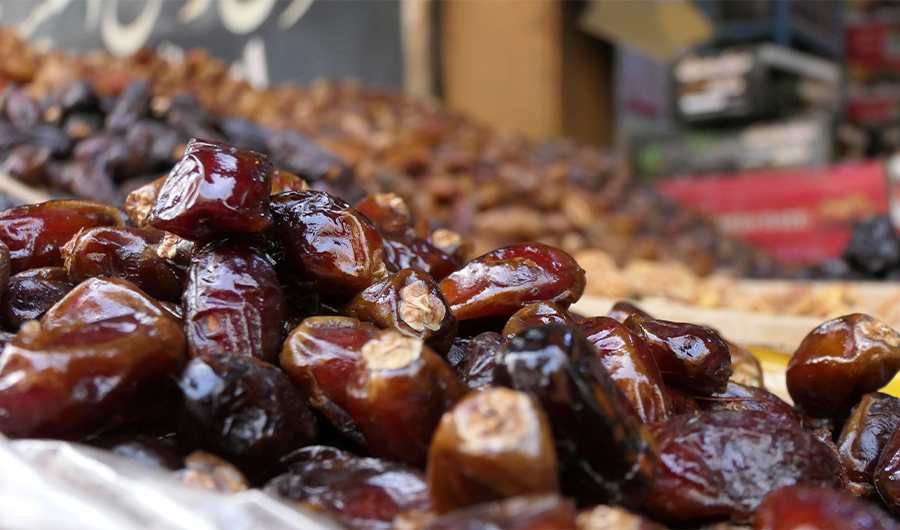
This picture shows local dates displayed outside a shop in Quetta, Pakistan, on April 10, 2022. (AN Photo)
“The lower- and middle-class families in Quetta have been preferring to buy flour, sugar and oil for Ramadan instead of dates,” Amin Agha, who owns a date shop in the market, told Arab News. “People who used to buy five kilograms of dates for the holy month are now buying only about a kilogram due to high inflation.”
Abdul Jabbar, a customer at a date market in Quetta’s Kandahari Bazaar, too complained of price hikes.
“Even ordinary dates are being sold for Rs250 in this market,” he said. “The quality dates which are large in size and weight are being sold for Rs350 to Rs600, which is beyond the reach of poor customers this Ramadan.”


