TAIF: With its unique Islamic designs that embodied the era of its construction in the mid-20th century, the King Abdulaziz Palace in Al-Muwayh governorate in Taif is an architectural masterpiece that became one of Saudi Arabia’s most noted historical monuments.
So named because the founder of the modern Saudi Arabian state, King Abdulaziz, frequented it more than 85 years ago, the palace was known as one of the main stations for the late king when he performed Hajj, Umrah, traveled for the summer or went hunting.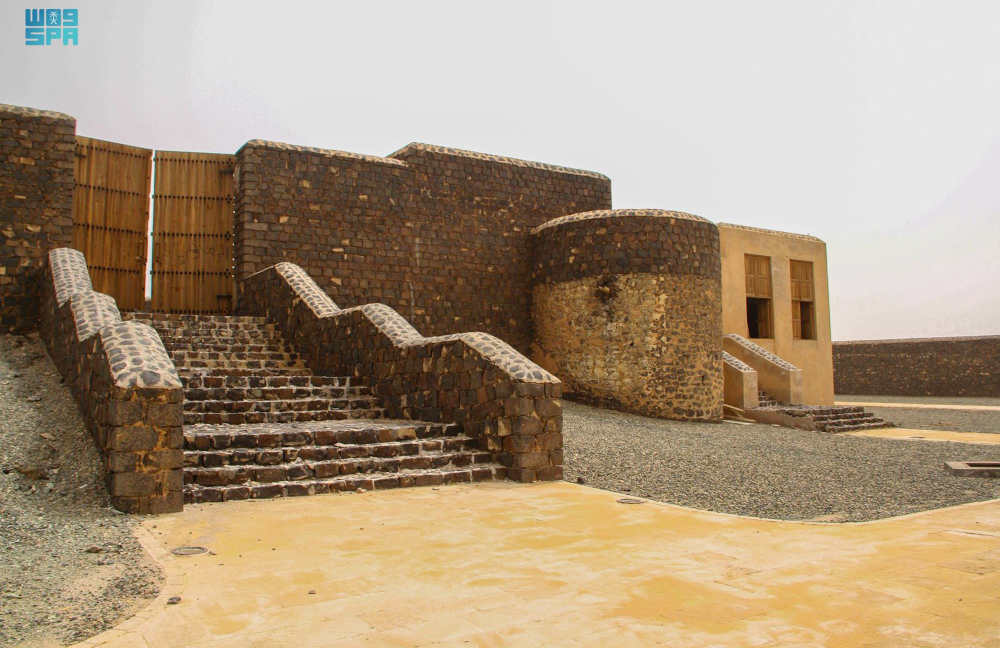
He also used to meet with citizens at the palace during his annual visit to the area.
The palace is characterized by its central location among adjacent villages, and its proximity to the Hajj road between old Al-Muwayh (Al-Muwayh Al-Qadim) and new Al-Muwayh.
With an estimated area of 14,900 square meters, the palace is almost 185 km from Taif to the east. It is surrounded by a wall of solid black stone, 4.5 meters high and a meter thick.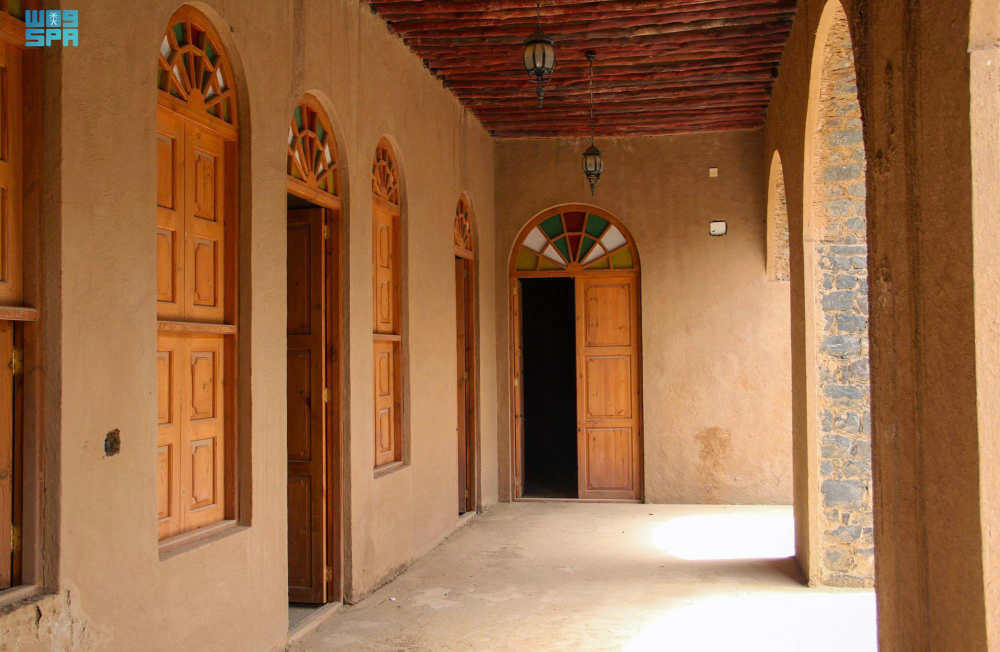
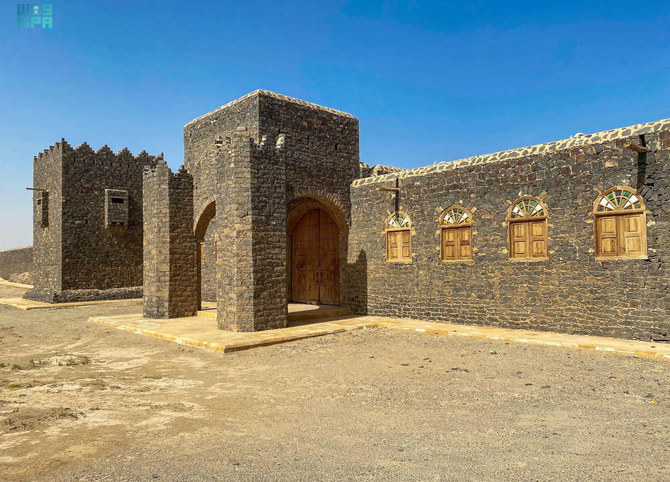
Its construction embodied the identity of the area. The palace itself is secured by several watchtowers and keeps, and features royal apartments and protocol halls for receiving guests, as well as meeting rooms for prominent figures and accompanying government delegations.
The palace has two entrances, with the main entrance at the north leading to housing and service units, a dining room, bedrooms, bathrooms, and a guest area, in addition to several rooms overlooking an uncovered yard.
Two wells secured water for its occupants, with a mosque, rooms for preparing coffee, a bedroom and even a gas station on site.


![]()

King Abdulaziz Palace, one of Saudi Arabia’s historical monuments in Taif
Short Url
https://arab.news/pxxz4
King Abdulaziz Palace, one of Saudi Arabia’s historical monuments in Taif
- The palace itself is secured by several watchtowers and keeps, and features royal apartments and protocol halls for receiving guests, as well as meeting rooms for prominent figures and accompanying government delegations


Latest updates



© 2026 SAUDI RESEARCH & PUBLISHING COMPANY, All Rights Reserved And subject to Terms of Use Agreement.