

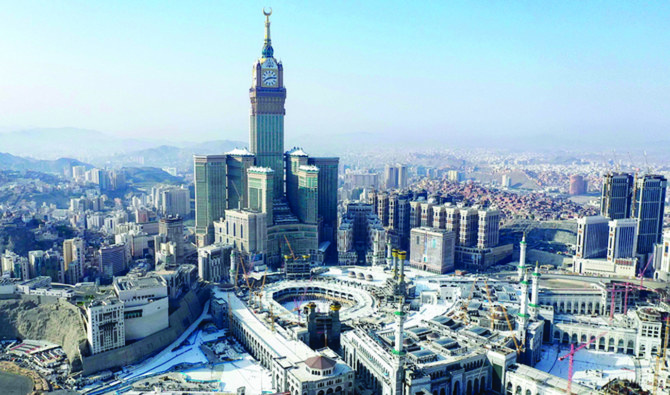

MAKKAH: Occupancy rates at leading hotels in central Makkah rose to 95 percent in the first week of Ramadan, a sign that the holy city’s hospitality sector is recovering from the economic shock of the pandemic, observers say.
Aziz Awliyaa, former head of the Makkah Chamber of Commerce and Industry’s tourism and hotels committee, said that the gradual, safe return of the hotel sector comes as pilgrims from countries around the world prepare to visit Saudi Arabia.
The hospitality sector, a key segment of Makkah’s economy, was badly hit by pandemic lockdowns and travel restrictions, he said.
However, five-star hotels are gradually returning to life, thanks to Makkah residents’ long-held belief in “refadah,” or showing hospitality to pilgrims, Awliyaa said.
The Saudi government’s renewal of licenses for the coming period has also helped to revive the sector in the wake of the pandemic.
Awliyaa said that the COVID-19 pandemic had turned Makkah’s 300,000-plus hotel rooms into “lifeless concrete blocks” after employees and hospitality professionals were forced to leave the industry. About 55,000 hotel professionals lost their jobs, according to Makkah Chamber of Commerce statistics.
The hospitality sector is still grappling with a shortage of skills as well as demand, Awliyaa said.
Today, there are about 2,000 hotels in Makkah and Madinah with 384,500 hotel rooms and almost 1.5 million beds, he added.
Calling for a clear strategy to increase hotel demand, Awliyaa said that establishing a minimum room price would ensure a stable tax return, as well as protect job security and guarantee reliable service — one the most important practices worldwide in creating a sustainable and prosperous sector.
Fadel Manqal, a tourism and hotel specialist, said that hotels in Makkah face big challenges in restoring life to one of the Kingdom’s most important economic sectors.
Thousands of men and women lost their jobs amid the fallout from the pandemic, he said.
Manqal told Arab News that with the easing of pandemic restrictions and the resumption of international flights, many people want to visit Makkah to perform Umrah rituals.
Redeployment of trained national cadres is essential as the sector redoubles its efforts to return to a sound economic footing, he said.
Occupancy rates at central Makkah’s five-star hotels during the first weekend of Ramadan reached 95 percent, Manqal said.
“We are witnessing a gradual return in the sector, a glimmer of hope that the entire sector will be able to recover, especially since we have more than 1,300 hotels in Makkah, and they represent a huge economic force.”
Restoring traveler confidence and providing advanced services will help to build a comprehensive, more resilient and reliable tourism sector, he said.
Manqal said that Makkah has many tourist attractions, and a strong and well-organized infrastructure.
The holy city also has extensive experience dealing with large crowds, organizing tourist trips, and serving pilgrims from the time of their arrival until their departure.
He predicted that the number of Umrah pilgrims from all over the world will continue to rise as initiatives to increase demand bear fruit.


