

GCC not at risk of food insecurity but inflation as Ukraine crisis disrupts supply

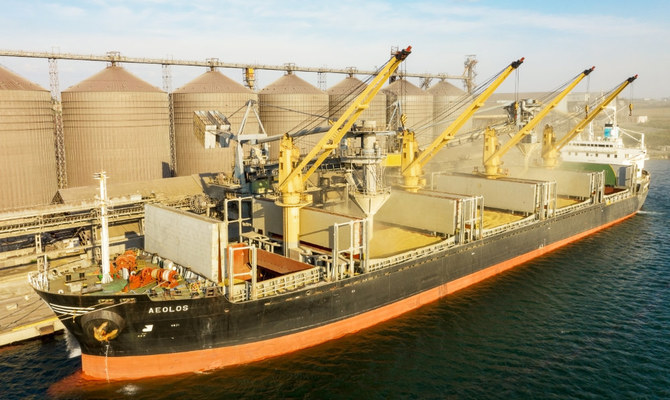
As food protectionism is spreading, many countries have begun to halt the export of essential food items to secure domestic supply amid rising global supply chain concerns. (Shutterstock)
Short Url
Updated 03 April 2022
Follow

GCC not at risk of food insecurity but inflation as Ukraine crisis disrupts supply

  • While Gulf region imports nearly 85% of its food supplies, it is among most food-secure regions

RIYADH: The ongoing war between Russia and Ukraine is creating major disruptions in global food supplies, creating fear of food insecurity and inflation in some countries heavily reliant on imports amidst rising energy costs. 

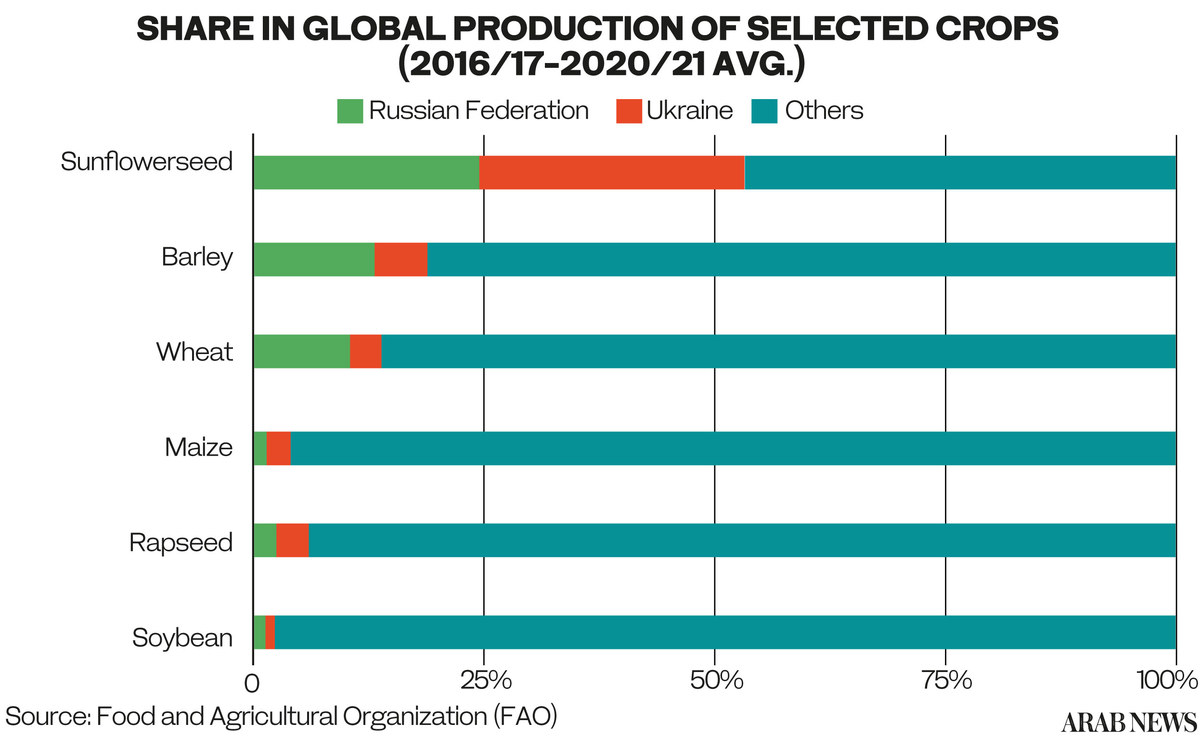
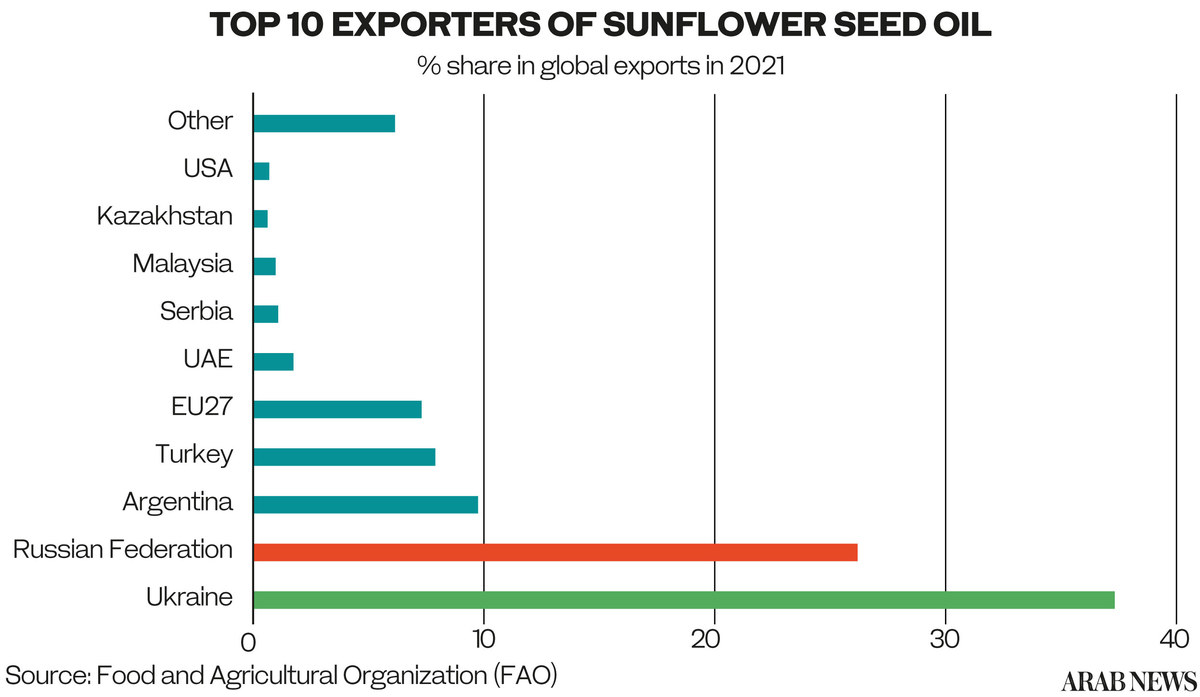
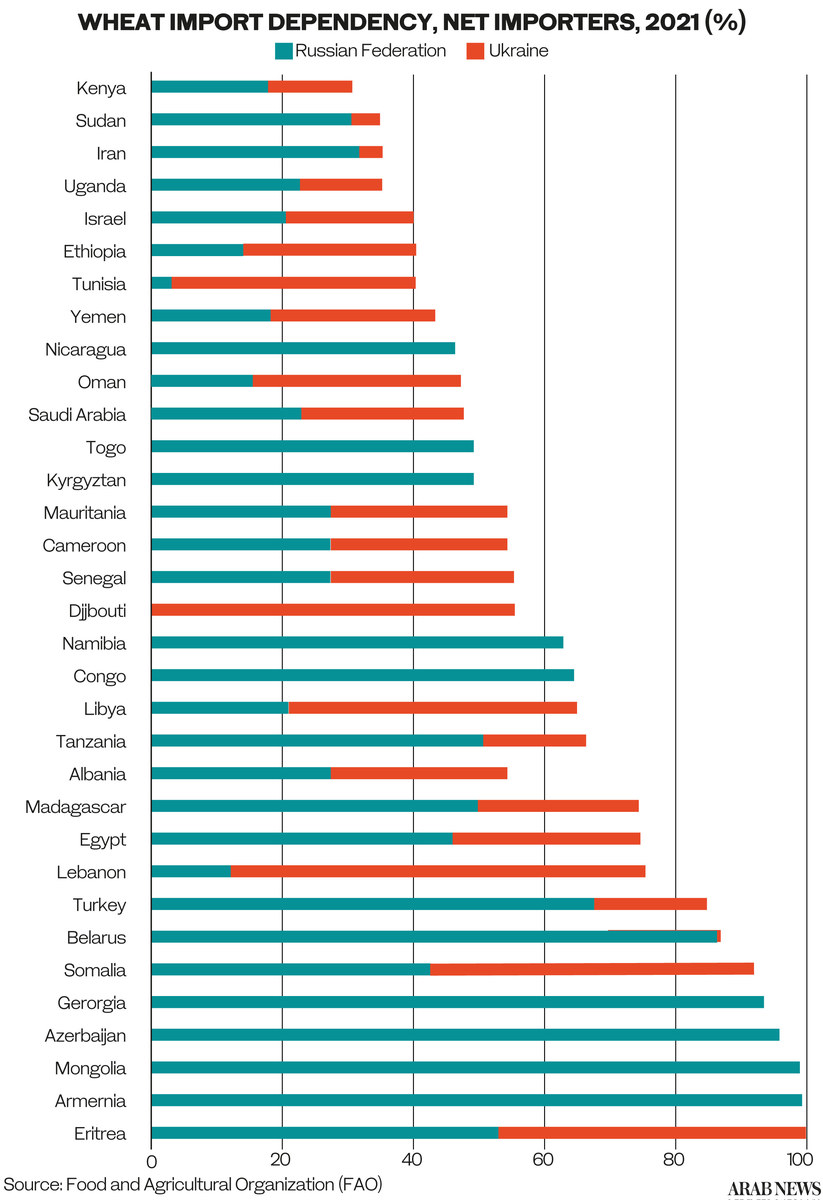
The two countries ranked among the top three global exporters of wheat, maize and sunflower oil, among others, according to a new paper by the Food and Agriculture Organization of the United Nations, or FAO. 

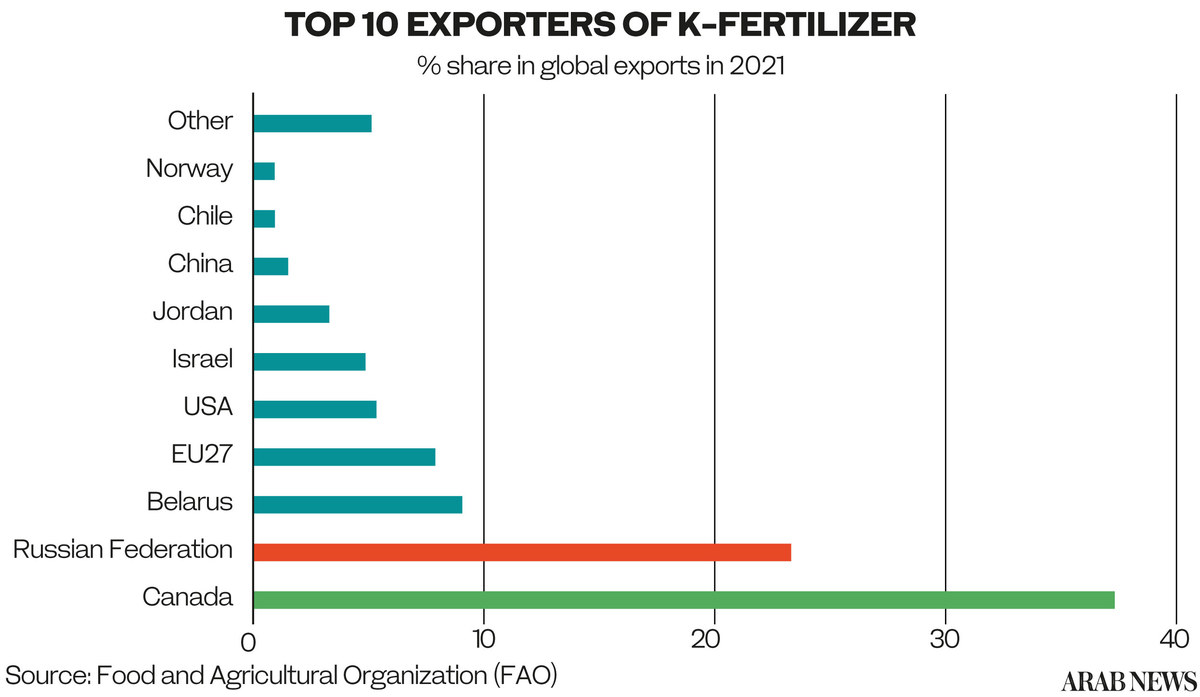
In addition, Russia is also one of the leading exporters of fertilizer, an essential material used in the farming business.

These disruptions, combined with rising transportation costs due to energy prices hikes, could lead to food insecurity for many countries in the Arab region.

“With the Ukraine crisis, we are getting challenged by constant changes in the availability of raw material used in finished (food) products,” said Sasha Marashlian, managing director of Imagine FMCG, an international distributor covering the GCC markets.

He said that countries exporting food commodities are now blocking or capping raw material exports. “This is translating into a lack of availability of certain products and a massive hike in food pricing due to supply and demand dynamics.” 
“In my opinion, every food product will be impacted,” he added, underscoring that food prices could rise by 17 to 20 percent over the next 18 months in the GCC.

Food protectionism 

As food protectionism is spreading, many countries have begun to halt the export of essential food items to secure domestic supply amid rising global supply chain concerns.  

On March 14, for instance, Russia temporarily banned grain exports to ex-Soviet countries and most of its sugar exports. This came on the back of Hungary deciding to ban grain exports on March 5. Egypt followed suit by banning exports of strategic commodities for three months, namely lentils and beans, wheat, and all kinds of flour and pasta. 
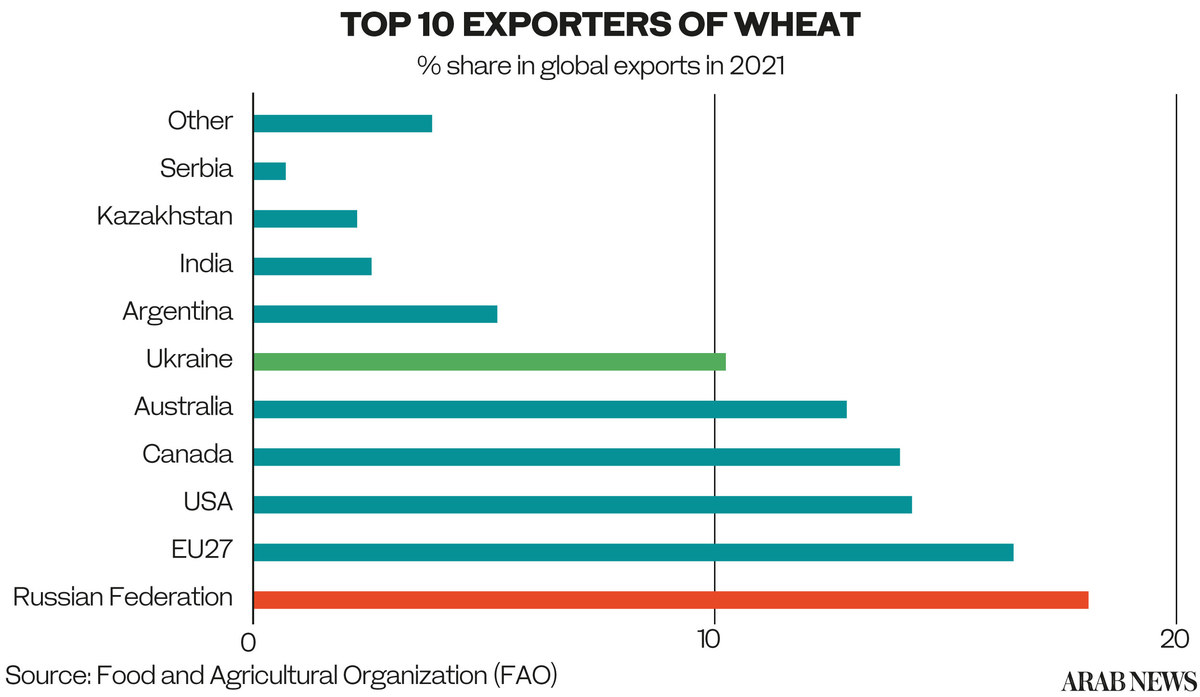
Food-producing countries are using export bans to preserve stocks of essential commodities amid what is turning into a severe global crisis.

Rising fuel prices are worsening the situation, leading to higher transportation and freight costs. “Shipment costs are now four to five times compared to two years ago, and the freight cost is at its highest ever,” pointed out Marashlian.

The international distributor believes that the impact will be fully priced in, after Ramadan, once local safety stocks start depleting.

“Countries that are most at risk in the MENA region include Lebanon, Egypt, Yemen, Iran, Libya, and Sudan,” warned Devlin Kuyek, a researcher at GRAIN, which focuses on monitoring and analyzing global agribusiness trends. 

The expert who exclusively spoke with Arab News believes that Saudi Arabia and Oman will be impacted to a lesser extent, as they have the means to source elsewhere.

The impact of food supply chain disruptions will depend on each country’s access to imports. “Price is less of an issue for the GCC than supply,” said Kuyek. 

However, he underlined that during the food price spike of 2007, the GCC countries struggled to get access to the food they needed, at any given price, as food-producing countries started to block exports in order to control domestic prices.

“Another question worth asking is, will these countries continue to source from Russia?” he pondered. 
Russia is still exporting, even if at a lower capacity. Due to their relatively good relations with Moscow, some MENA countries may be able to continue getting grains from Russia.

GCC preserves food security  

History shows that when food prices soared in 2007, GCC countries responded to global disruptions by taking certain measures to maintain and protect their food supplies. 

“Sovereign wealth funds (in these countries) countered (food price rise) by buying up farmland in Africa and securing more supplies,” said Aliya El-Husseini, senior associate — Equity Research at Arqaam Capital, in an interview with Arab News. 

Since then, she said, they started building strategic reserves and local production capacity, which is reflected in the more muted inflation figures this year.

The researcher added that while the GCC still imports nearly 85 percent of its food supplies, it continues to be considered among the most food-secure regions globally.

Food supplies had already started to be disrupted by the COVID pandemic, highlighted El-Husseini. 
This prompted at the time regional governments to launch immediate measures to preserve food security, including financial exemptions and credits to farmers and agribusinesses, movement exceptions for agricultural workers during strict lockdowns, and packaging and distribution support, she explained.

“Subsidy regimes in the region have helped maintain inflation for several years, but a lot of subsidies have been phased out since 2016, while some subsidies still remain and are being expanded to help mitigate price hikes,” added El-Husseini.

Saudi Arabia capped local fuel prices last June, she said. This has helped keep the transport inflation in check, but, El-Husseini pointed out that it is not enough to offset the rising prices in the other major categories of the food baskets.

“The partial reversal of the VAT, which was increased from 5 percent to 15 percent on 1 July 2020, in Saudi Arabia, could be one key measure to help further contain prices, as the GCC is running fiscal surpluses, thanks to high oil prices and relatively tight fiscal spending plans,” she emphasized.

Other factors that could help GCC countries weather the food crisis are that they have been outsourcing farming to other countries for years. This ensured that they had more direct control over grain trading companies. 
In order to meet their local population demand, the GCC countries have acquired agricultural land in foreign states in Africa and Asia, as well as Arab countries in the Nile Basin, according to a paper titled “Land grabs reexamined: Gulf Arab agro-commodity chains and spaces of extraction” by researcher Christian Henderson.

Yet Kuyek does not seem to view this particular strategy as full proof. “I don’t think the purchase of land in other countries has done much to buffer the GCC demand for imports. Many of the overseas projects collapsed or never got off the ground,” he observed.

Projects that are up and running could also face significant challenges in the form of export bans imposed by foreign countries. Sudan, which is home to a number of GCC mega-farms, is one example where such a scenario could happen.

The GCC countries have nonetheless taken a step further by buying stakes in major food companies. 

“Abu Dhabi took a 45-percent stake in Louis Dreyfus last year, and part of the purchase was predicated on prioritizing trade to the UAE,” said Kuyek.

In 2016, Fondomonte California bought 1,790 acres of farmland in California for nearly $32 million. Fondomont’s parent company is none other than Saudi food giant Almarai.

“While we are seeing an upward pressure on price across the region, inflation is unlikely to reach the levels seen in other emerging or developed markets,” concluded El-Husseini of Arqaam Capital.


Red Sea’s oxygen balance under strain, experts warn

Updated 13 February 2026
Follow

Red Sea’s oxygen balance under strain, experts warn

  • Scientists say warming waters, nutrient runoff and coastal development could quietly erode coral resilience

RIYADH: The Red Sea may not have dead zones, but its fragile ecosystem is vulnerable to oxygen depletion — a quiet decline that can undermine coral health and disrupt marine life.

Sea dead zones are hypoxic or low-oxygen pockets that form most often when nutrient pollution — especially nitrogen and phosphorus from farm runoff and wastewater — fuels blooms that ultimately strip oxygen from the water.

Experts say the risk is not inevitable, but it depends on earlier detection and tighter control of the conditions that drain oxygen from coastal waters.

A sea that relies on its own “breathing” is also a sea shaped by geography.

FASTFACT

DID YOU KNOW?

  • The Red Sea is naturally low in oxygen because of its warm waters and high salinity — making it especially vulnerable to further oxygen decline.
  • The Red Sea’s narrow Bab Al-Mandab strait limits deepwater exchange, meaning the basin largely depends on its own internal circulation to ‘replenish’ oxygen.
  • Saudi Arabia’s coastline features steep underwater drop-offs, allowing deep, oxygen-poor water to move closer to coral reefs near shore.

Matheus Paiva, a senior oceanographer, told Arab News that “the Red Sea’s shallow Bab Al-Mandab choke point limits deepwater exchange,” meaning oxygen replenishment depends heavily on internal overturning circulation.

He said this circulation is driven as surface waters flow north, cool, become denser and sink, helping ventilate deeper layers through vertical mixing.

Paiva said the Saudi coastline’s underwater topography makes the risk more immediate close to shore.

Coral reefs along Saudi Arabia’s Red Sea coast, where scientists say warm, salty waters and limited deep-water exchange can leave ecosystems vulnerable to low-oxygen stress. (Unsplash.com)

“Unlike regions with wide, gradual shelves, our coast features narrow fringing reefs that drop sharply into deep water via steep underwater cliffs and canyons,” he said.

“This ‘step-and-drop’ topography brings deep oxygen-poor water close to shore.”

Paiva said warming at the surface can intensify stratification and reduce vertical mixing. He said that can allow low-oxygen water to creep upslope and affect shallower reef zones.

How oxygen gets consumed faster than it’s replaced is where human pressure can tip the balance.

Carlos Duarte, executive director or the Coral Research and Development Accelerator Program at KAUST, told Arab News that the Red Sea’s baseline conditions create vulnerability. “Because of its warm waters and high salinity, the Red Sea is inherently low in oxygen and, therefore, vulnerable to processes that decline oxygen further.”

He said algal blooms and heat waves raise biological oxygen demand, linking low oxygen to coral mortality.

Duarte said human-driven nutrient and organic inputs can intensify these declines.

He said poorly managed urban development and aquaculture operations can contribute nutrient and organic loads that fuel algal blooms.

Coral reefs along Saudi Arabia’s Red Sea coast, where scientists say warm, salty waters and limited deep-water exchange can leave ecosystems vulnerable to low-oxygen stress. (Unsplash.com)

Duarte said that as bloom material decomposes, it strips oxygen from the water and can lead to hypoxia.

The Red Sea’s celebrated clarity reflects a naturally nutrient-poor system. “The risk is amplified because the Red Sea is naturally oligotrophic. It is nutrient-poor and crystal clear,” Paiva said.

He added that wastewater releases and heavy rain events that trigger flash floods can push large nutrient loads into coastal waters in a short time.

In turn, those pulses can threaten biodiversity and the marine environment that underpins tourism investments along the Kingdom’s Red Sea coast.

Seeing low oxygen coming — rather than reacting after the fact — is the promise of new monitoring and analytics.

Paiva said high-accuracy oxygen data still relies on direct measurements collected during vessel surveys.

Carlos Duarte, executive director or the Coral Research and Development Accelerator Program at KAUST.

“We still depend heavily on classic vessel surveys,” he said. Teams deploy multiparameter sondes to profile the water column and collect water samples to establish a baseline.

“This ‘water-truthing’ remains the industry standard for high-accuracy data,” he said.

Saeed Al-Zahrani, general manager for Saudi Arabia at NetApp, said continuous data can help teams intervene earlier. “Oxygen depletion is rarely sudden; it tends to build over time when conditions line up,” he said.

Al-Zahrani said AI can flag anomalies, learn what “normal” looks like in specific locations, and generate short-horizon risk forecasts.

He added that it creates a decision window — guidance on when to increase sampling, where to focus response efforts, and when to tighten controls around discharges.

Coastal development that reduces oxygen risk starts, Duarte said, with what never reaches the sea.

Duarte said Saudi Arabia’s west coast investments have an advantage compared with older coastal destinations: the opportunity to design sustainability into projects from the outset rather than trying to retrofit after degradation becomes evident.

Duarte said nutrient control is a direct lever to reduce oxygen-depletion risk. “Achieve circular economies where organic products and nutrients are recycled and reused in the system to avoid discharging nutrients to the marine environment,” he said.

Al-Zahrani said wastewater and environmental systems produce huge volumes of information, but fragmentation can slow decisions.

He said connecting data in near real time can help detect problems earlier and anticipate load spikes tied to rainfall, tourism peaks, or industrial activity.

Reef resilience depends on reducing stress before heat and low oxygen overlap.

Duarte told Arab News: “Coral reefs are extremely vulnerable to oxygen depletion.” He added that it can contribute to bleaching and mortality in a warmer ocean.

He said marine heat waves can worsen oxygen stress by reducing oxygen solubility and limiting ventilation of subsurface waters, while increasing oxygen demands of organisms.

Duarte said reducing nutrient inputs and managing reefs to avoid excessive growth of seaweed can build resistance.

He also said models that account for how waves and currents interact with reef topography — work he said is being developed at KAUST — can help guide restoration toward sites more likely to remain oxygenated during heat stress.