

Philippines boosts narcotics surveillance ahead of full reopening

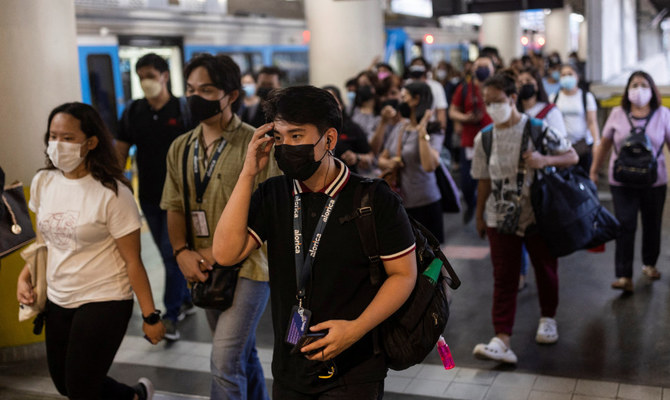
Passengers wearing masks for protection against the coronavirus disease (COVID-19) exit a Metro Rail Transit (MRT) station in Quezon City, Metro Manila, Philippines, March 29, 2022. (Reuters)
Short Url
Updated 30 March 2022
Follow

Philippines boosts narcotics surveillance ahead of full reopening

  • Nation will on Friday reopen to fully vaccinated visitors from all countries
  • Filipino government recently renewed crackdown on illegal drugs

MANILA: The Philippines is to step up the monitoring of illegal drugs at tourist destinations, authorities said on Wednesday, as the southeast Asian nation gears up to fully reopen to foreign visitors from April 1.

The Philippines opened its borders on Feb. 10 to vaccinated, COVID-19-negative foreign tourists from countries whose nationals did not require a visa, after nearly two years of coronavirus pandemic border closures. From Friday, it will allow entry to visitors from all countries.

As authorities expect a boom in arrivals at holiday destinations, tourism officials have signed an agreement with law enforcement agencies on joint clearing operations and efforts to prevent the trafficking of narcotics.

“As Philippine tourism moves toward its much-anticipated recovery, the Department of Tourism joined hands with the Philippine Drug Enforcement Agency and the Philippine National Police to beef up security in tourist destinations across the country,” the department said in a statement on Wednesday.

Under the Tourism Operation Protection Against Illegal Drugs initiative, law enforcers will be deployed to special centers in key resorts.

“We welcome this latest collaboration with our country’s police force and drug enforcement agency in an aim to provide greater deterrence and protection against the illicit trafficking of dangerous drugs in tourist destinations,” Tourism Secretary Bernadette Romulo-Puyat said in a statement.

PDEA Director General Wilkins M. Villanueva warned earlier this month that tourist destinations had traditionally been targeted by drug trafficking groups that saw a market among “foreign travelers with expendable funds for leisure.”

“We want to promote the Philippines as a tourism destination,” he said, adding that the aim was to bring in much-needed revenue to local communities.

“But we want to make it clear that recreational drug-tourism has no place in the Philippines.”

The Philippine government recently renewed its crackdown on illegal drugs. In March alone, law enforcers have seized narcotics worth more than $30 million, mainly methamphetamine, locally known as shabu — a potent stimulant that is mainly used as a recreational drug. 

The crackdown on illegal drugs comes as Filipino President Rodrigo Duterte, who has been carrying out a controversial and deadly “war on drugs” campaign since 2016, will complete his term in June.

One of Duterte’s main electoral promises was to eradicate illegal drugs from the country within months of taking office.


North Korea and China to resume passenger train service after six-year gap

Updated 59 min 44 sec ago
Follow

North Korea and China to resume passenger train service after six-year gap

  • China’s railway ⁠authority said in a notice that Beijing-Pyongyang trains will operate four times a week
  • The resumption from March 12 will “further promote China-North Korea travel, trade and economic cooperation”

SEOUL/BEIJING: Tickets for the first passenger train in six years from Beijing to North Korea’s capital, Pyongyang, were sold out ahead of its March 12 departure, an official ticketing office in Beijing said on Tuesday.
The resumption of the rail service, suspended since the onset of the COVID-19 pandemic in 2020, revives a critical transport link between the largely isolated North Korea and its primary economic ally.
Tickets for ⁠the journey — restricted ⁠to travelers holding business visas — were purchased by entrepreneurs, government officials and reporters, according to the Beijing ticketing office. Tickets were still available for the next service, scheduled for March 18.

NORTH KOREA STILL LARGELY CLOSED TO TOURISTS
China’s railway ⁠authority said in a notice that Beijing-Pyongyang trains will operate four times a week in both directions on Monday, Wednesday, Thursday and Saturday while Dandong-Pyongyang trains will run daily.
The resumption from March 12 will “further promote China-North Korea travel, trade and economic cooperation, and people-to-people exchanges to enhance mutual well-being and friendship,” the notice said.
North Korea remains closed to most foreign tourism, with limited exceptions largely ⁠for Russian ⁠tour groups under restricted arrangements, according to travel agencies organizing trips to the country.
Before the pandemic, Chinese visitors made up the largest share of foreign tourists to North Korea, the agencies said. Tour organizers said on Monday that North Korea had canceled next month’s Pyongyang Marathon for unspecified reasons. The race is one of the few events that has been open to international participants in the isolated state.